


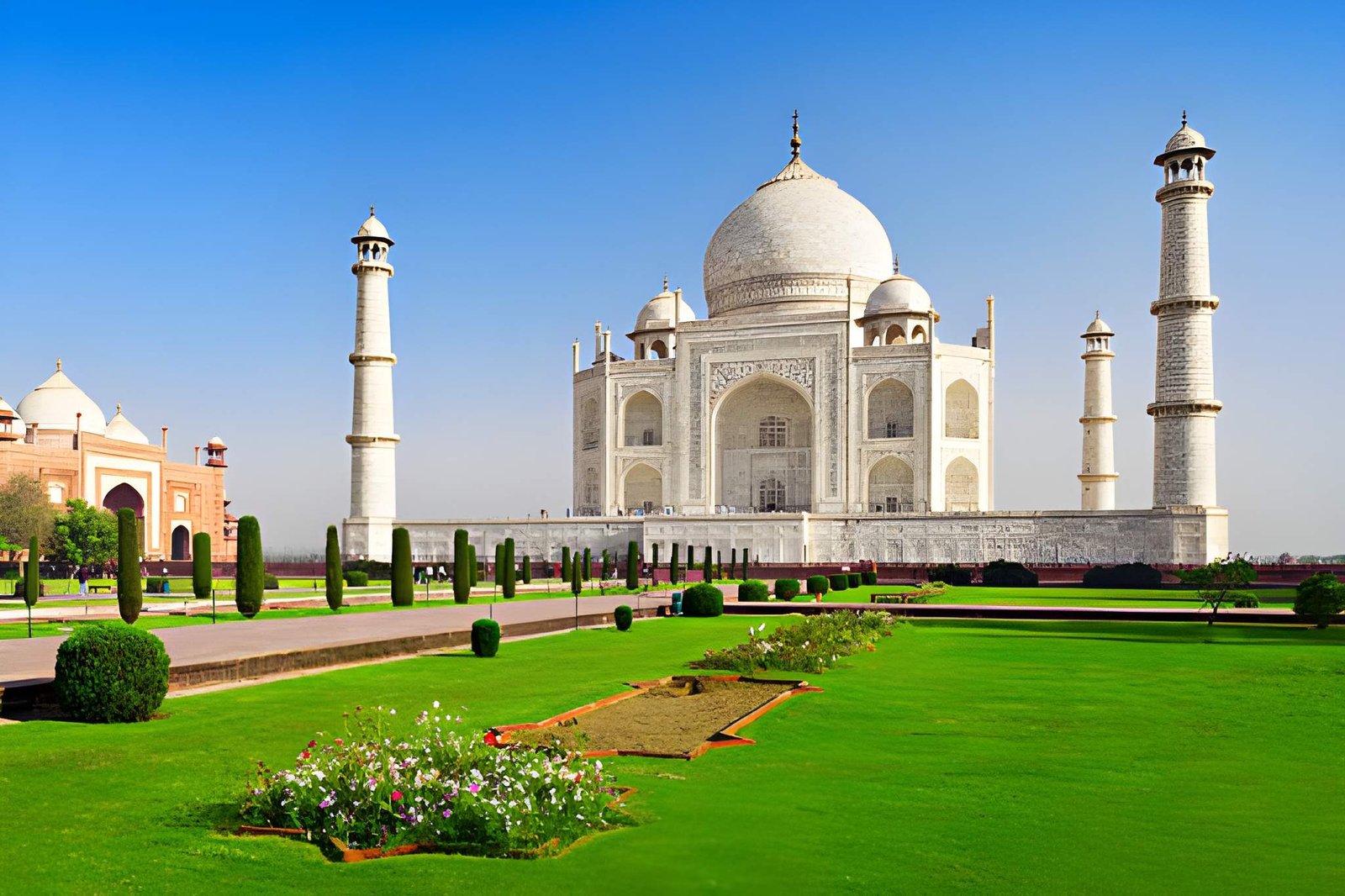
The Taj Mahal stands as one of the most iconic monuments in the world. It sits in Agra, India, and symbolizes deep love and devotion. Emperor Shah Jahan built it to honor his wife, Mumtaz Mahal. Today, it attracts millions of visitors each year. Moreover, UNESCO recognizes it as a World Heritage Site.
In addition, travelers admire it for both its emotional story and its breathtaking design. As a result, many people consider it the finest example of Mughal architecture.
History and Construction
Construction of the Taj Mahal began in 1632. It reached completion around 1653. However, builders finished some surrounding structures later.
Furthermore, thousands of artisans and craftsmen worked on the project. They came from across the Mughal Empire and beyond. The designers combined Indian, Persian, and Islamic architectural styles. Consequently, the monument reflects a rich cultural blend.
Architectural Beauty
The Taj Mahal features brilliant white marble that shines under sunlight. It stands gracefully on the banks of the Yamuna River. The central dome rises high and defines the structure’s silhouette.
Meanwhile, artisans decorated the walls with detailed carvings and gemstone inlays. They used materials such as jade, turquoise, and lapis lazuli. As a result, the floral patterns appear delicate and refined.
In addition, the complex includes a large garden, a mosque, a guest house, and reflecting pools. Designers arranged all elements symmetrically to create visual balance.
A Monument That Changes With Light
The Taj Mahal changes appearance throughout the day. For example, it looks soft pink during sunrise. During the day, it shines bright white under the sun. At night, it glows with a silver-blue tone under moonlight.
Therefore, each visit offers a different visual experience. In fact, this transformation continues to captivate photographers and travelers alike.
Engineering and Design Brilliance
The builders applied advanced engineering techniques for its time. For instance, they slightly tilted the four minarets outward. This design helps protect the main tomb during earthquakes.
Moreover, architects carefully calculated the monument’s proportions. They ensured perfect symmetry across the entire complex. As a result, the structure feels balanced and stable from every angle.
Conclusion
The Taj Mahal remains one of the greatest achievements in architectural history. It combines beauty, emotion, and engineering excellence. Furthermore, it continues to inspire visitors from all over the world.
Ultimately, a visit to the Taj Mahal offers a journey into love, history, and timeless craftsmanship.
Plan Your Visit
Experience the Taj Mahal in person and witness its beauty firsthand.
Book your tickets now at https://ticketstajmahal.com






Comment (0)