


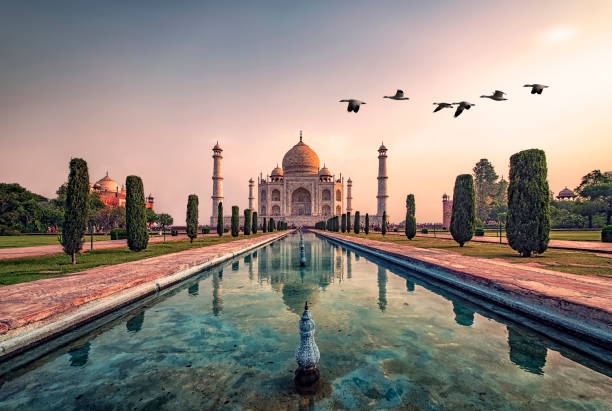
The Taj Mahal stands among the world’s most famous landmarks. Millions of visitors travel to Agra each year to admire its beauty. More than a stunning monument, it tells a powerful story of love, loss, and devotion.
A Monument Built for Love
The story began in 1631 when Mumtaz Mahal, the wife of Mughal Emperor Shah Jahan, died during childbirth. Shah Jahan was devastated by her death. To honor her memory, he decided to create a monument unlike any the world had seen before.
Construction started in 1632 and continued for more than 15 years. When the project ended, the Taj Mahal had become one of the greatest architectural achievements in history.
The People Behind the Masterpiece
Shah Jahan gathered skilled craftsmen from across his empire and beyond. Architects, stone carvers, calligraphers, and artists worked together on the project. Historical records suggest that Ustad Ahmad Lahori led the design of the monument.
More than 20,000 workers contributed to its construction. Their talent and dedication helped create a structure that still amazes visitors today.
A Blend of Architectural Styles
The Taj Mahal combines Persian, Islamic, and Indian design traditions. This blend gives the monument its unique appearance and timeless appeal.
Builders used white marble as the primary material. They decorated the walls with detailed floral patterns and colorful gemstones. Jade, lapis lazuli, and carnelian are among the precious stones found in the monument.
Why the Taj Mahal Is So Special
The Taj Mahal sits beside the Yamuna River and stands at the center of a carefully planned complex. Beautiful gardens surround the mausoleum. A mosque and other historic buildings complete the site.
Its large central dome, elegant minarets, and perfect symmetry attract architects and travelers from around the world. In 1983, UNESCO added the Taj Mahal to its World Heritage List because of its cultural importance.
Myths and Legends
Many stories surround the Taj Mahal. One popular legend claims that Shah Jahan punished the artisans after they finished their work. According to the tale, he wanted to prevent them from creating another masterpiece.
Historians have found no reliable evidence to support this story. Most experts consider it a myth rather than a historical fact.
The Taj Mahal Today
Today, the Taj Mahal ranks among the New Seven Wonders of the World. Visitors come from every continent to experience its beauty. Many choose sunrise or sunset visits because the marble changes color as the light shifts throughout the day.
The monument remains a symbol of eternal love and artistic excellence. Its story continues to inspire people from every corner of the globe.
Plan Your Visit
Ready to experience the Taj Mahal for yourself? Book your tickets in advance at ticketstajmahal.com and enjoy a smooth, hassle-free visit to one of the world’s most iconic landmarks.





Comment (0)