


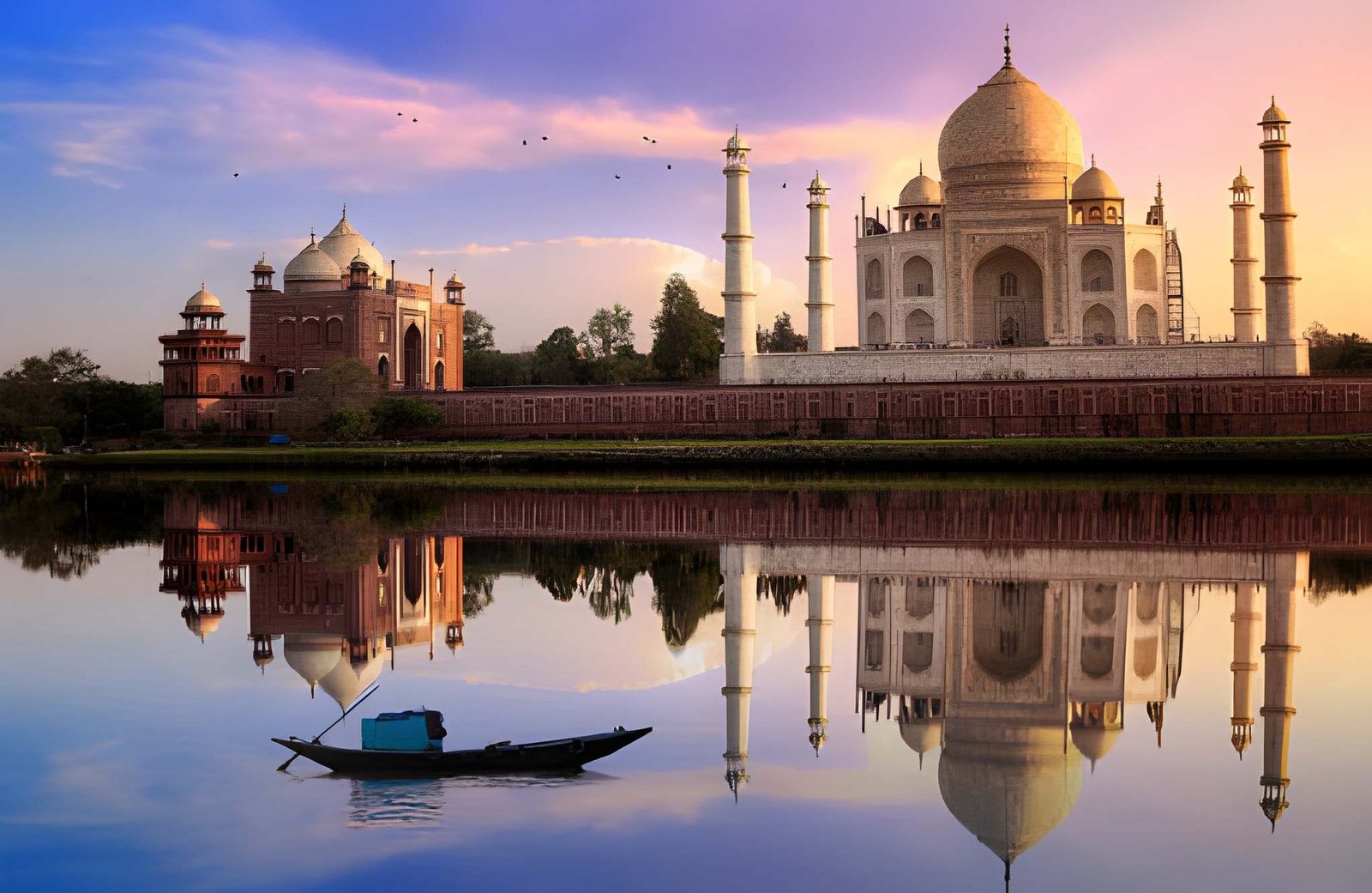
The Taj Mahal ranks among the world’s most famous landmarks, attracting millions of visitors to Agra every year. More than an architectural masterpiece, it tells a story of love, ambition, and artistic excellence. For nearly 400 years, this iconic monument has fascinated travelers, historians, and architects alike.
The Beginning of a Timeless Legacy
In 1632, Mughal Emperor Shah Jahan began building the Taj Mahal to honor his beloved wife, Mumtaz Mahal, who died during childbirth the previous year. Grief inspired the emperor to create a monument that would preserve her memory for generations. Thousands of artisans, stone carvers, calligraphers, and craftsmen worked together to bring his vision to life. They spent more than two decades constructing the mausoleum and its surrounding complex.
A Masterpiece of Design
The Taj Mahal showcases the finest elements of Mughal architecture. Its designers combined Persian, Islamic, and Indian influences to create a structure of remarkable harmony and beauty. Delicate marble inlays, intricate calligraphy, and perfectly balanced proportions highlight the extraordinary skill of its creators. The surrounding gardens, reflecting pools, and pathways enhance the monument’s sense of symmetry and elegance.
Through Periods of Change
The Taj Mahal witnessed major political and cultural changes throughout its history. As the Mughal Empire weakened, maintenance of the monument declined. Over time, weather and neglect affected parts of the complex. During the 19th century, restoration efforts helped revive its appearance and preserve its architectural details. Conservation specialists continue to protect the site today, ensuring that future generations can enjoy its beauty.
A Global Symbol
The Taj Mahal’s reputation extends far beyond India. UNESCO recognized its cultural and historical importance by naming it a World Heritage Site in 1983. Today, people around the world view it as one of humanity’s greatest architectural achievements. Its timeless story and breathtaking design have made it a symbol of enduring love and artistic excellence.
The Taj Mahal Today
Visitors still experience the same sense of wonder that inspired travelers centuries ago. The monument changes throughout the day as sunlight reflects off its white marble surfaces. Soft pink tones appear at sunrise, brilliant white shines during the day, and warm golden hues emerge at sunset. These changing colors add to the Taj Mahal’s unforgettable charm.
A visit to the Taj Mahal offers more than stunning photographs. It provides a chance to connect with one of history’s most remarkable stories and explore a masterpiece that continues to inspire the world.
Plan Your Visit
Ready to discover the beauty and history of the Taj Mahal? Book your tickets quickly and securely through our website. Visit https://ticketstajmahal.com today and make your journey to one of the world’s most extraordinary monuments effortless and memorable.






Comment (0)