


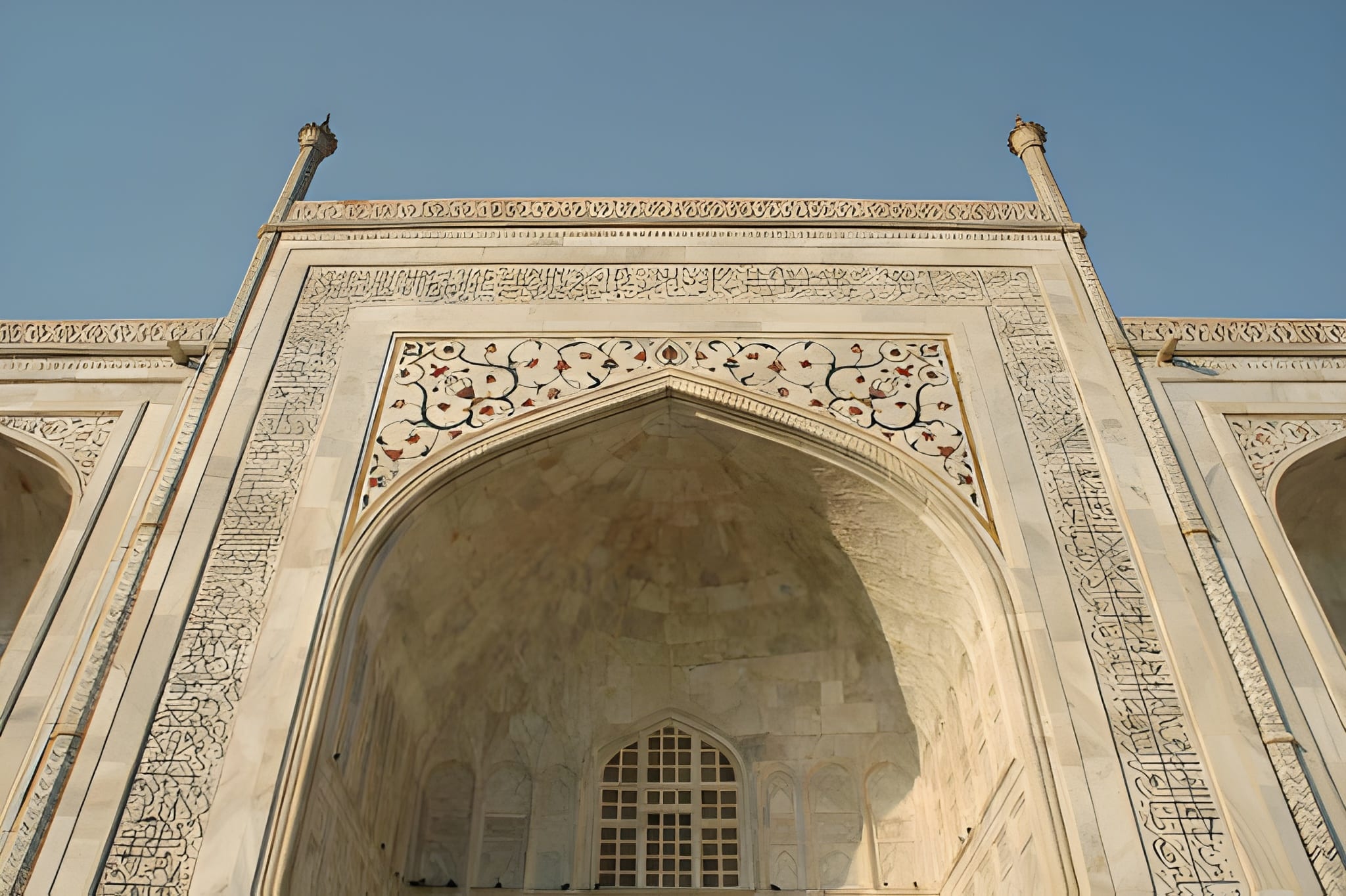
One of the most striking architectural features of the Taj Mahal is the iwan, a grand vaulted hall that dominates the monument’s façade. Each side of the iwan frames a 33-metre (108 ft) high pishtaq, or vaulted archway, which rises in perfect proportion. Two similarly shaped arched balconies sit stacked on either side, adding vertical rhythm and elegance.
The pishtaq immediately draws the eye upward, highlighting the Taj Mahal’s celestial symbolism. Its immense arches and balconies create a sense of grandeur that reflects the Mughal vision of paradise on earth. Visitors standing before the iwan experience not only its scale but also the harmony of art and mathematics woven into its design.
Architects of the Mughal era used symmetry as a guiding principle. The repetition of iwans on each side of the Taj Mahal establishes balance, while their intricate calligraphy and stone inlay showcase exquisite craftsmanship. From a distance, the iwans appear as monumental gateways. Up close, they reveal fine details that speak to centuries of dedication and artistry.
The iwan is more than a structural feature—it represents devotion, love, and eternity. It blends form with meaning, offering visitors both visual beauty and spiritual depth. Exploring these vaulted halls helps travelers understand why the Taj Mahal remains one of the world’s most celebrated monuments.
If you plan to visit, standing beneath the soaring pishtaqs is an unforgettable experience. Secure your entry with ease by booking tickets through Ticketstajmahal.com. Our platform ensures a smooth, reliable way to explore this architectural masterpiece.
Step into history, admire the elegance of the iwans, and witness how love and artistry endure in marble.






Comment (0)