


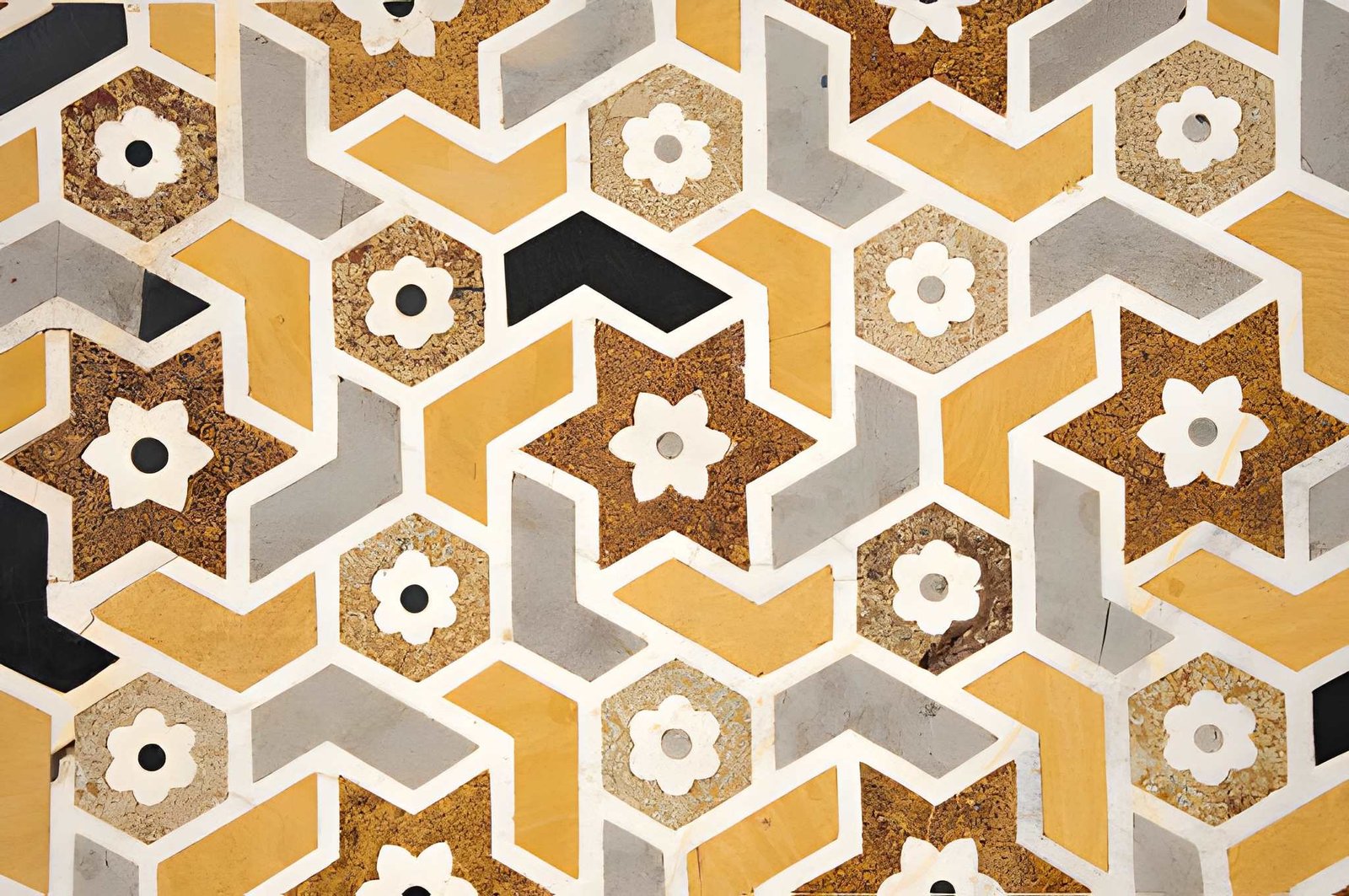
The Taj Mahal showcases some of the most refined marble craftsmanship ever created. Mughal emperor Shah Jahan commissioned the monument in the 17th century, and artisans completed it as a symbol of love and devotion. Today, visitors still admire how its detailed marble work defines its beauty.
Pietra Dura: Stone Set Like Jewelry
Artisans used pietra dura to create the Taj Mahal’s famous floral designs. They carefully cut and shaped semi-precious stones such as lapis lazuli, jade, turquoise, agate, and onyx. Then they inlaid these stones directly into the white marble surface.
This technique forms flowing floral patterns across walls, arches, and platforms. Each design reflects the idea of paradise in Islamic art. The artisans did not simply decorate the surface—they built meaning into every detail through stone.
Elegant Calligraphy in Marble
Master calligrapher Amanat Khan designed the inscriptions that run across the monument. Workers carved verses from the Quran into marble and filled them with black inlay for contrast.
They also adjusted the size of the lettering as it rises. Larger letters appear at the top while smaller ones sit lower, creating perfect visual balance when viewed from the ground. This technique shows how Mughal designers combined art with mathematical precision.
Marble That Responds to Light
The Taj Mahal’s white marble reacts beautifully to natural light. At sunrise, the structure appears soft pink. During the day, it shines bright white. Under moonlight, it turns golden and silver.
Builders used high-quality Makrana marble, known for its fine grain and reflective surface. Skilled polishing techniques enhanced its ability to reflect light, giving the monument a changing, almost living appearance throughout the day.
A Legacy Carved in Stone
The marble details of the Taj Mahal demonstrate the peak of Mughal artistry. Craftsmen carved, inlaid, and polished every surface with extreme precision. Each floral motif, inscription, and geometric pattern contributes to a unified artistic vision.
Even today, architects and historians study the monument to understand the skill and methods behind its construction. Its design continues to influence architecture around the world.
Plan Your Visit
Experience the intricate marble details of the Taj Mahal in person and see its craftsmanship up close. Book your visit today.





Comment (0)