


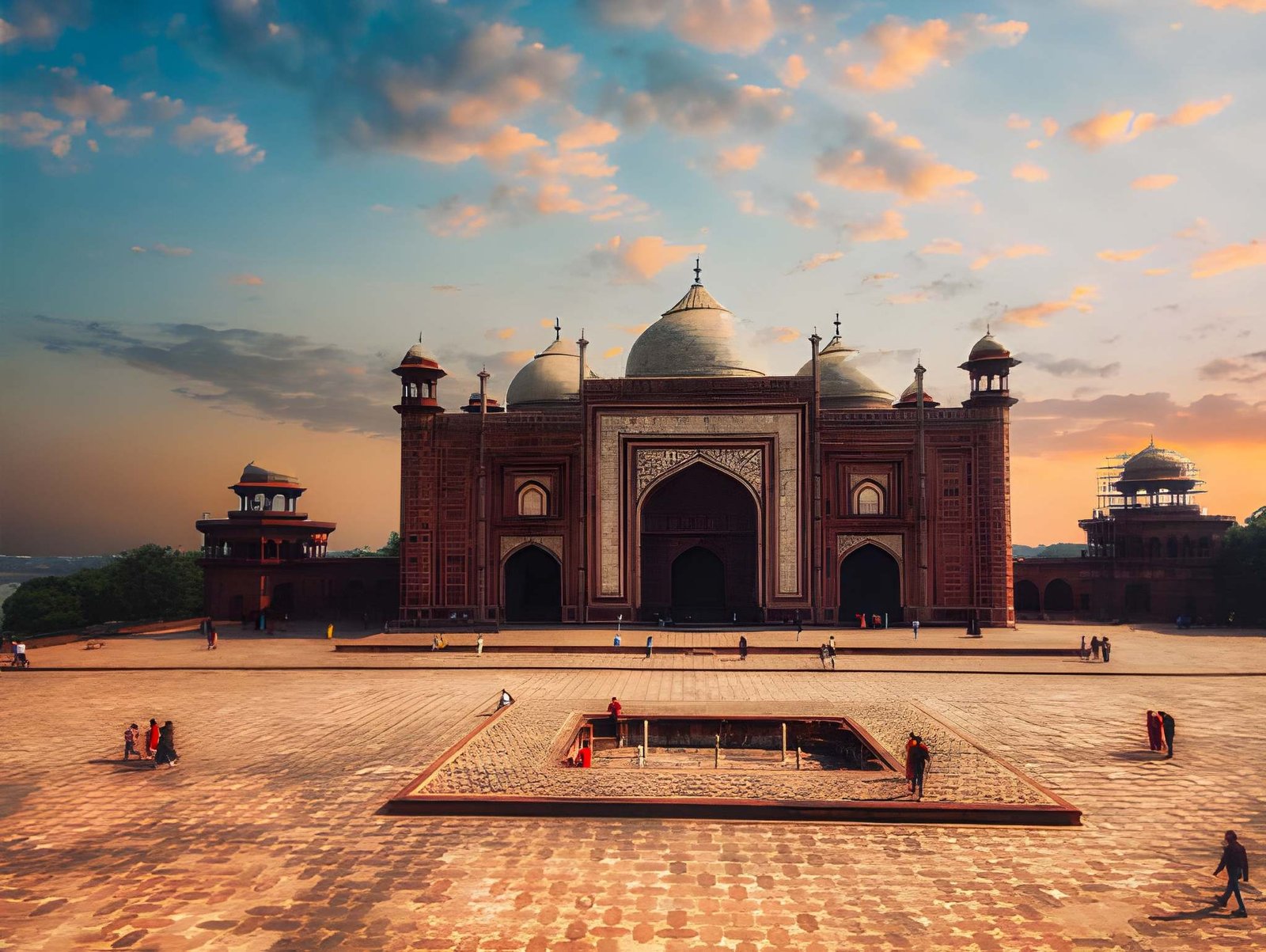
The Guest House is part of the complex of the Taj Mahal. It stands on the western side of the main mausoleum. Many visitors overlook it, but it plays an important role in the design and history of the site.
Historical Background
Builders constructed the Guest House in the 17th century during the reign of Mughal Emperor Shah Jahan. They created it at the same time as the Taj Mahal. The structure forms part of a perfect symmetrical layout with the Jawab building on the eastern side.
Historians still debate its original purpose. Some believe it served as a mosque or a resting place for guests and pilgrims. Others think the builders included it mainly to balance the overall design of the complex.
Architecture and Design
The Guest House uses red sandstone, which contrasts with the white marble of the main mausoleum. This contrast highlights the beauty of the Taj Mahal and its surrounding buildings.
The structure features:
- Arched doorways with detailed carvings
- Domes that match Mughal architectural style
- A large interior hall
- A perfectly symmetrical layout with the Jawab
Artisans added fine decorative details throughout the building. These details reflect the same craftsmanship found across the entire Taj Mahal complex.
Visitor Experience
Visitors often focus on the main mausoleum, but the Guest House offers a quieter experience. It allows visitors to see the Taj Mahal from a different angle.
From this location, guests can view the gardens, pathways, and reflecting pools. The area also provides a clear view of the monument’s symmetry. Many travelers find this spot more peaceful than the main viewing areas.
Exploring the Guest House helps visitors understand the full layout of the complex. It also gives better insight into Mughal design principles.
Plan Your Visit
A visit to the Taj Mahal becomes more meaningful when you explore all its structures, including the Guest House. Planning ahead helps you enjoy a smooth experience.
Book your tickets here: Book Your Taj Mahal Visit
A visit to the Guest House adds depth to your journey. It reveals the thought and balance behind one of the world’s most famous monuments.





Comment (0)