


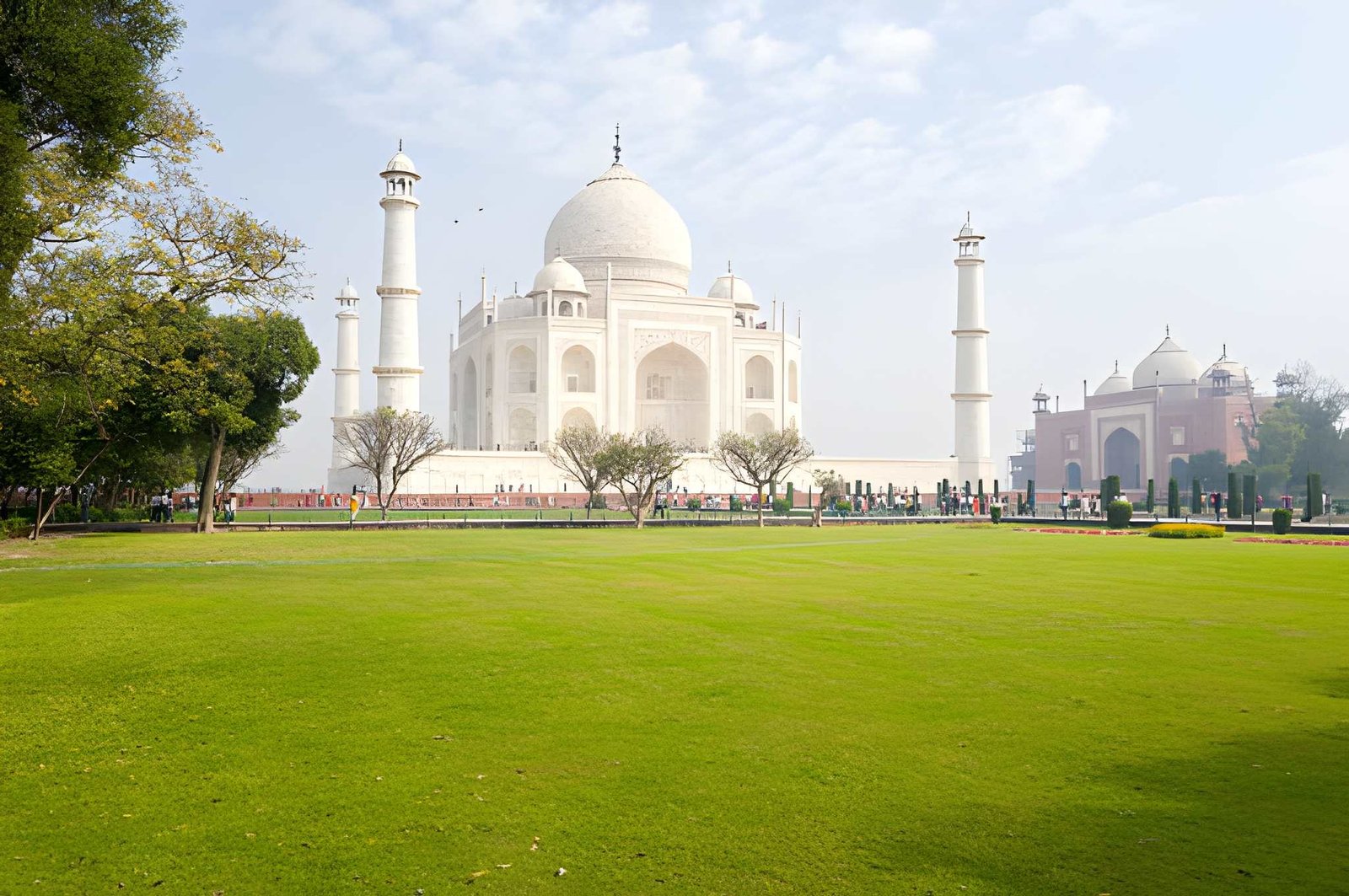
The Taj Mahal, located in Agra, India, is far more than a beautiful monument—it is a symbol of eternal love, artistic excellence, and cultural unity. Built in the 17th century by Mughal Emperor Shah Jahan in memory of his wife Mumtaz Mahal, it has grown from a personal tribute into one of the most recognized landmarks in the world.
A Story Rooted in Love and Legacy
The origin of the Taj Mahal is deeply emotional. After Mumtaz Mahal’s death in 1631, Shah Jahan commissioned the construction of a grand mausoleum to honor her memory. Construction began around 1632 and took over two decades to complete, involving thousands of artisans and craftsmen from across the Mughal Empire and beyond.
This powerful story of devotion became central to the monument’s identity. Over time, it was not just seen as a royal tomb, but as a universal symbol of love and loss—an idea that resonates across cultures and generations.
Architectural Brilliance That Captured the World
The Taj Mahal is considered one of the finest examples of Mughal architecture, blending Indian, Persian, and Islamic design traditions. Its symmetry, white marble construction, intricate inlay work, and reflective gardens make it visually unforgettable.
Its design was so advanced for its time that it continues to inspire architects and artists worldwide. The monument’s ability to change color with the light of the sun and moon adds to its mystique, making it a living piece of art rather than a static structure.
Recognition as a Global Heritage Site
International recognition played a major role in the Taj Mahal’s rise as a global icon. In 1983, it was designated a UNESCO World Heritage Site for its outstanding universal value and architectural significance.
Today, it is also counted among the New Seven Wonders of the World and attracts millions of visitors annually. Its global status is reinforced by constant media attention, tourism, and academic study.
A Symbol Beyond Borders
What makes the Taj Mahal truly global is its ability to transcend geography and culture. It represents not only Indian heritage but also universal human emotions—love, grief, memory, and beauty. Its image is instantly recognizable across the world, appearing in films, books, travel campaigns, and art.
Experience the Taj Mahal Yourself
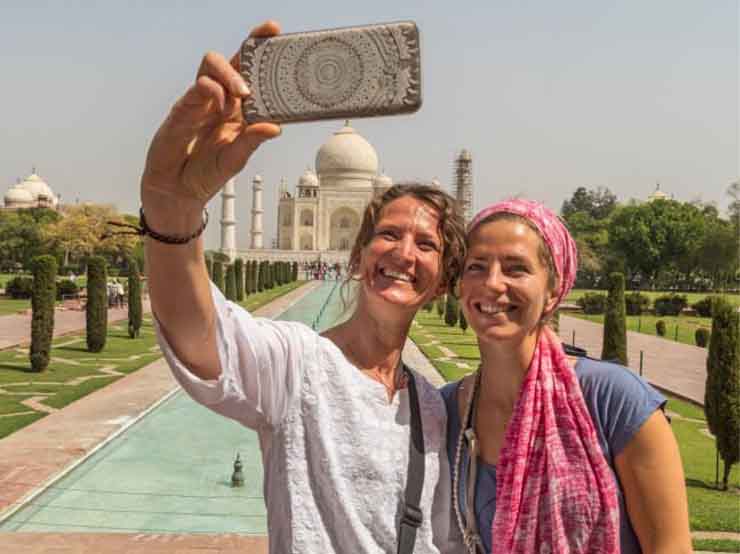
While photos and stories capture its beauty, nothing compares to seeing the Taj Mahal in person. Walking through its grand gates and standing before its marble dome is an unforgettable experience that connects you directly to history.
👉 Plan your visit today and book your tickets easily on our website:
https://ticketstajmahal.com





Comment (0)