


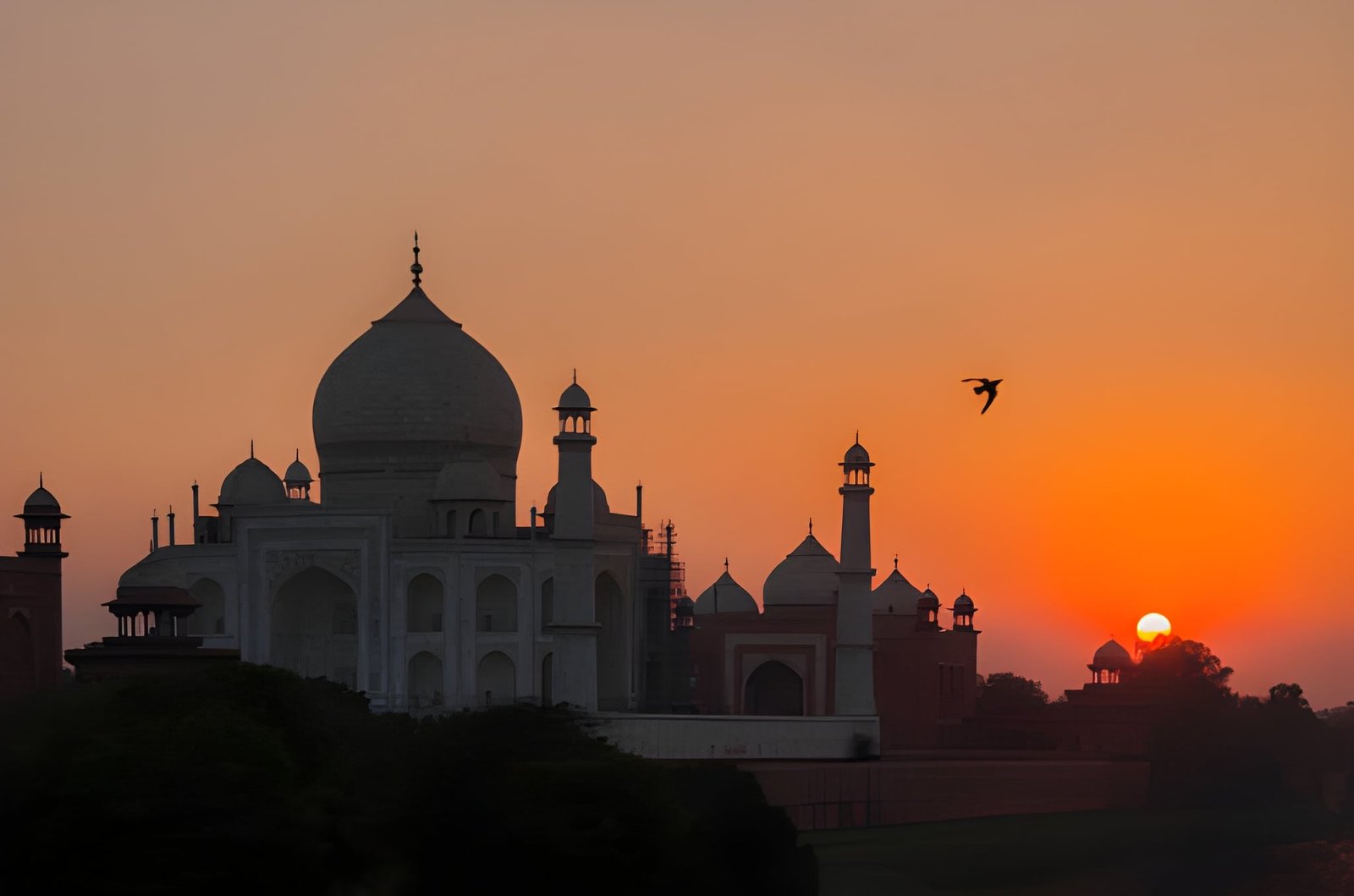
The Taj Mahal in Agra, India, stands as one of the most breathtaking monuments ever built—an enduring symbol of love, loss, and architectural brilliance. Commissioned in the 17th century by Mughal Emperor Shah Jahan in memory of his beloved wife Mumtaz Mahal, it remains one of the world’s most visited and admired heritage sites.
A Love Story Carved in Marble
The Taj Mahal was built after Mumtaz Mahal’s death in 1631, when she passed away during childbirth. Heartbroken, Shah Jahan envisioned a mausoleum that would preserve her memory for eternity. Construction began around 1632 and continued for over two decades.
More than just a tomb, the Taj Mahal represents the deep emotional bond between the emperor and his queen. Its poetic symmetry and delicate craftsmanship reflect the idea of eternal love made visible in stone.
Architectural Masterpiece of the Mughal Era
The Taj Mahal is considered the finest example of Mughal architecture, blending Indian, Persian, and Islamic design traditions. Its white marble façade, intricate inlays of semi-precious stones, and grand dome create a visual harmony that feels almost otherworldly.
The complex also includes gardens, reflecting pools, a mosque, and a guest house, all arranged in perfect symmetry. This careful design represents paradise as described in Islamic tradition, reinforcing its spiritual and symbolic meaning.
Engineering Marvel of Its Time
Built by over 20,000 artisans and craftsmen, the Taj Mahal took approximately 22 years to complete. Materials were sourced from across Asia, including marble, jade, crystal, and turquoise, transported using caravans and elephants.
Its construction was not only an artistic achievement but also a remarkable feat of engineering and coordination, especially considering the tools available in the 1600s.
The Changing Beauty of the Taj Mahal
One of the most fascinating aspects of the Taj Mahal is how it changes color throughout the day. At sunrise, it appears pinkish, at noon a bright white, and under moonlight a soft silvery glow. This effect is created by the reflective quality of the marble and natural lighting conditions.
A Legacy That Lives On
Today, the Taj Mahal is a UNESCO World Heritage Site and one of the New Seven Wonders of the World. It attracts millions of visitors each year who come to witness its beauty and hear its legendary love story.
Despite centuries of weathering and environmental challenges, it continues to inspire awe, romance, and curiosity across the world.
Plan Your Visit
Experience the magic of the Taj Mahal in person and walk through one of history’s greatest love stories.
👉 Book your visit today at: https://ticketstajmahal.com





Comment (0)