


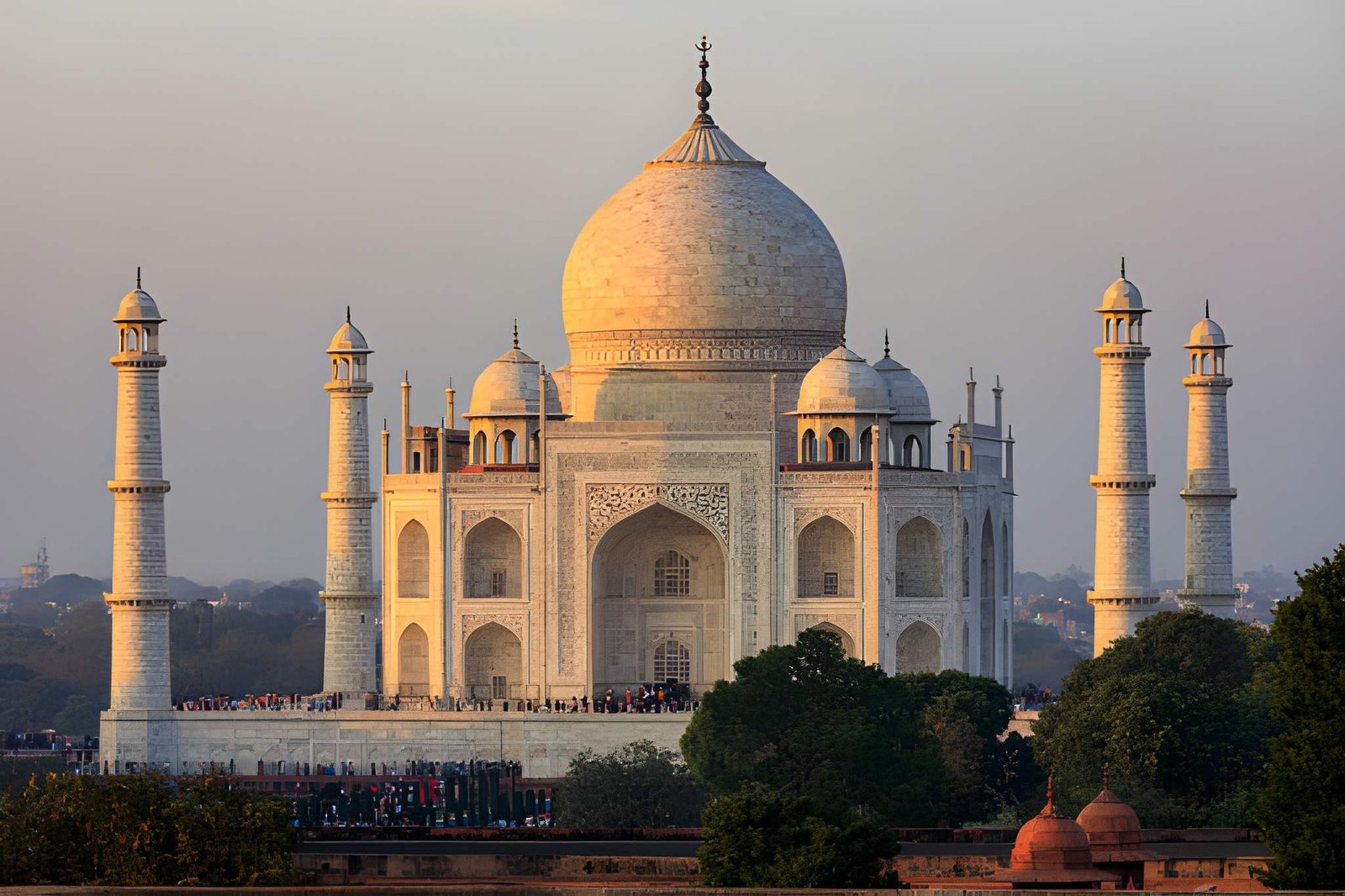
The Taj Mahal stands as one of the world’s most famous monuments. Most people admire its white marble exterior. Yet the real wonder continues inside its walls. Hidden chambers, detailed craftsmanship, and powerful history shape its story.
A Masterpiece of Mughal Design
The main inner chamber sits at the heart of the Taj Mahal. This octagonal room holds the cenotaphs of Mumtaz Mahal and Shah Jahan. Visitors see these symbolic tombs first. The actual graves lie below.
Carved marble screens, known as jali, surround the space. These screens allow soft light to pass through. The light changes during the day and creates a calm atmosphere. Floral designs made with semi-precious stones decorate the walls. Skilled artisans created every detail with precision.
The Real Tombs Below
A lower chamber sits beneath the main hall. It holds the real burial sites of Mumtaz Mahal and Shah Jahan. This space feels simple and quiet. It reflects Islamic burial traditions that emphasize humility.
Unlike the ornate upper level, this chamber avoids decoration. The contrast highlights the balance between beauty and faith in Mughal design.
Hidden Chambers and Corridors
The Taj Mahal also contains a network of rooms and passageways. These spaces, often called tahkhanas, sit below the main structure. Builders designed them to regulate temperature and support the monument’s foundation.
Many of these rooms remain closed today. Conservation teams restrict access to protect the building. Some people believe myths about secret treasures inside. However, historians confirm that no such treasures exist. The sealed areas mainly help preserve the structure.
Myths vs. Reality
Stories about hidden riches and secret rooms surround the Taj Mahal. These tales attract curiosity, but evidence does not support them. Archaeological studies show that the monument contains no hidden wealth or secret religious artifacts.
Instead, the Taj Mahal reflects careful engineering. Every space serves a purpose. The design focuses on symmetry, stability, and beauty.
A Living Symbol of Love
The Taj Mahal tells a story of love and loss. Emperor Shah Jahan built it in memory of his wife, Mumtaz Mahal. Persian, Islamic, and Indian styles blend throughout the structure. Each hallway and carved detail reflects this cultural mix.
Inside, the monument feels calm and powerful at the same time. It shows how architecture can express deep human emotion.
Plan Your Visit
The Taj Mahal offers more than a view. It offers an experience shaped by history, art, and emotion. Walking through its halls brings the story to life in a way no photo can match.
👉 Book your visit today at: https://ticketstajmahal.com





Comment (0)