


The Taj Mahal stands on the southern bank of the Yamuna River in Agra as one of the Seven Wonders of the World. Mughal emperor Shah Jahan built this breathtaking monument in memory of his beloved wife Mumtaz Mahal. Every detail—from the marble domes to the garden layout—reflects harmony, balance, and a deep sense of love.
Perfect Symmetry in Design
Symmetry defines the Taj Mahal. The entire complex follows a precise north–south alignment. At its heart rises the white marble mausoleum, surrounded by identical red sandstone buildings: a mosque on the west and a guest house on the east. The gardens, fountains, and pathways mirror one another, creating a flawless sense of order and calm. Visitors often describe the scene as a reflection of heaven on earth.
The Central Dome and Four Minarets
The central dome towers 73 meters (240 feet) high and dominates Agra’s skyline. Inspired by Persian design, its bulb-shaped structure glows softly in changing daylight. At its peak, a golden finial blends Islamic and Hindu elements, symbolizing unity in diversity.
Four graceful minarets frame the main platform. Each tower tilts slightly outward—a clever engineering touch by Mughal architects. If an earthquake struck, the towers would fall away from the main tomb, protecting the structure’s integrity. This subtle innovation shows the builders’ skill and foresight.
The Charbagh Garden and Reflecting Pool
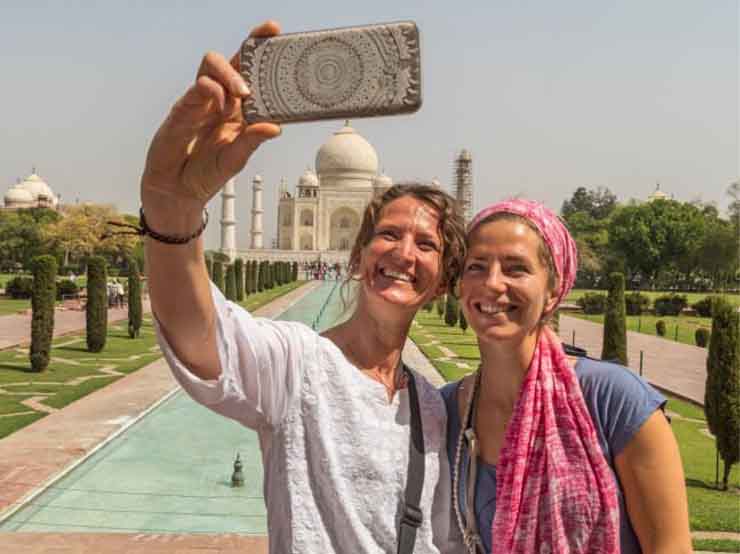
The Taj Mahal complex follows the Mughal charbagh design, a four-part garden that represents paradise in Islamic tradition. Stone pathways divide the lawns, while water channels bring a soothing rhythm to the landscape. The long reflecting pool in the center doubles the beauty of the monument, mirroring its white domes against the sky. The combination of greenery, symmetry, and flowing water gives visitors a sense of peace and renewal.
Remarkable Craftsmanship and Detail
Artisans from India, Persia, and the Ottoman Empire worked together to shape the Taj Mahal. They used Makrana marble from Rajasthan, famous for its pure white tone. Inlay artists decorated the walls with pietra dura—a mosaic technique using semi-precious stones like jade, crystal, lapis lazuli, and turquoise. Each flower and vine motif appears to glow when sunlight touches it, giving the monument a living sparkle that changes through the day.
A Monument to Eternal Love
At the heart of the Taj Mahal lie the tombs of Shah Jahan and Mumtaz Mahal. Their story turns the monument into more than an architectural masterpiece—it’s a symbol of enduring love. The calligraphy, geometric designs, and floral carvings all echo themes of eternity and devotion. Whether you visit at sunrise, sunset, or beneath a full moon, the Taj Mahal radiates a timeless charm that moves every visitor.
Plan Your Visit Today
See this marvel of architecture in person. Book your official tickets quickly and securely at Ticketstajmahal.com. Our platform makes planning your visit easy, so you can focus on the experience—not the logistics.
Step into the world of symmetry, history, and love. The Taj Mahal awaits you.





Comment (0)