


A Vision That Defies Gravity
Few monuments on earth hold the quiet majesty of the Taj Mahal. Rising from the banks of the Yamuna River, the mausoleum seems less constructed than conjured—its pearly marble domes appearing to float between ground and heavens. More than a symbol of love, the Taj Mahal is an architectural dialogue between earth and sky, a masterpiece where craftsmanship and cosmic harmony meet.
A Gateway to Another Realm
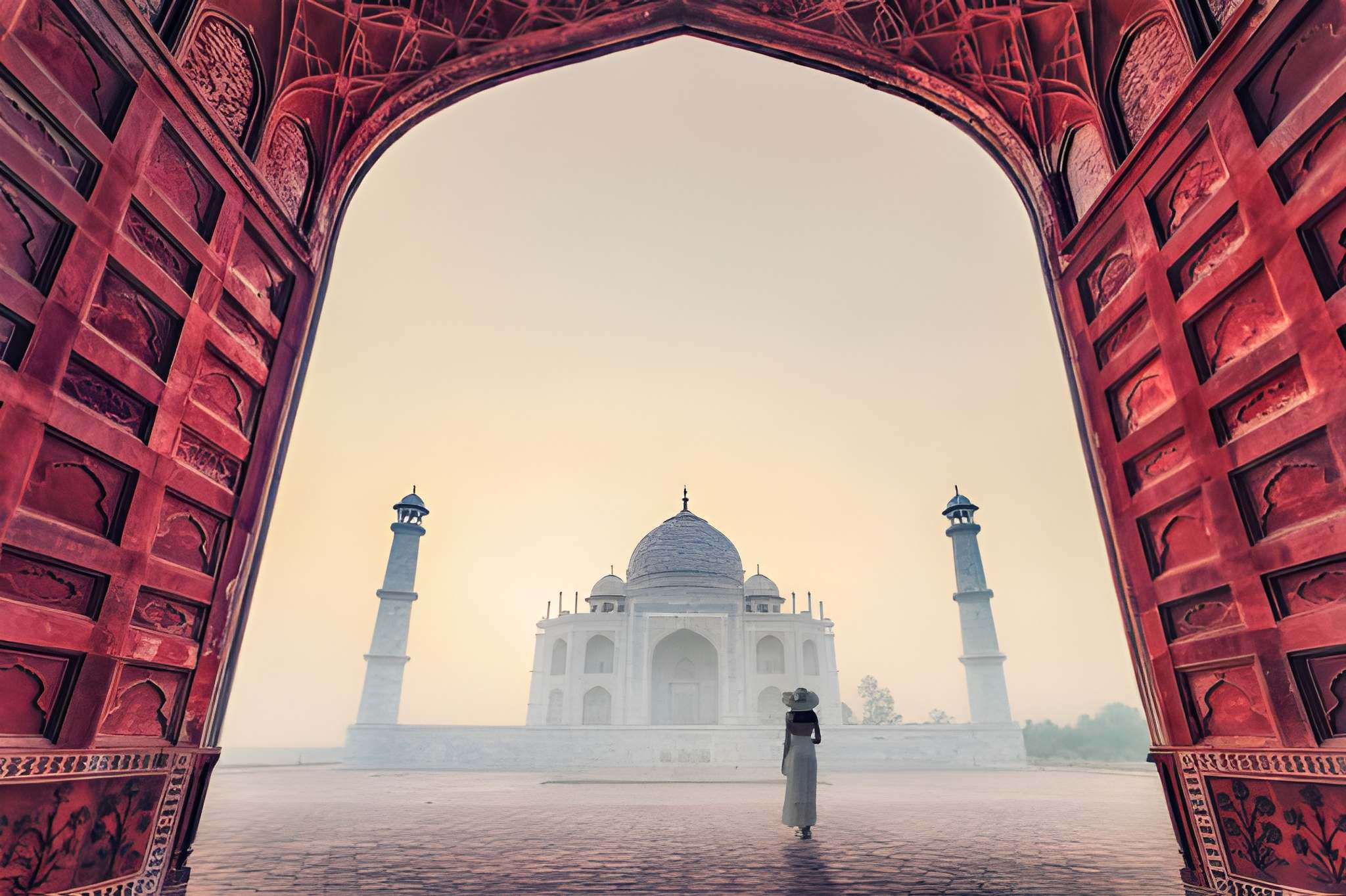
The experience begins at the grand sandstone gateway, designed to frame the mausoleum like a painting. As you step through, the Taj appears in perfect symmetry, reflected in the long central water channel. In this moment, the architects blur the line between physical structure and its mirrored counterpart. This illusion of weightlessness is intentional, signaling the monument’s transcendent purpose.
A Structure That Breathes with Light
White Makrana marble, chosen for its luminosity, allows the Taj Mahal to shift colors with the sky. At dawn it glows pink, at midday it shines pure white, and under moonlight it turns ethereal blue. Rather than dominating its surroundings, the monument responds to them, transforming throughout the day as if in conversation with the heavens.
Geometry Rooted in Meaning
Beneath the visual poetry lies extraordinary engineering. The central onion-shaped dome rises like a celestial sphere, while the four surrounding minarets stand slightly tilted outward. This subtle angle, designed to protect the tomb in case of collapse, also creates the impression that the minarets are stretching skyward. The upward thrust of the design reflects the spiritual ascent central to Mughal architecture.
Inside and out, details reinforce the monument’s cosmic inspiration. Quranic calligraphy is carved with mathematical precision, increasing in size as it rises so it appears perfectly uniform from the ground. The pietra dura inlay—thousands of semi-precious stones cut and fitted by hand—depicts flowers not strictly botanical, but symbolic representations of paradise.
Gardens that Mirror Paradise
The charbagh garden layout divides the grounds into geometric quadrants inspired by the four rivers of paradise mentioned in Islamic tradition. Water channels, pathways, and raised platforms guide visitors through a serene landscape where nature and symmetry coexist. The gardens are not simply decorative—they extend the architectural dialogue into the natural world, grounding the ethereal building in earthly beauty.
Where Every Visitor Joins the Dialogue
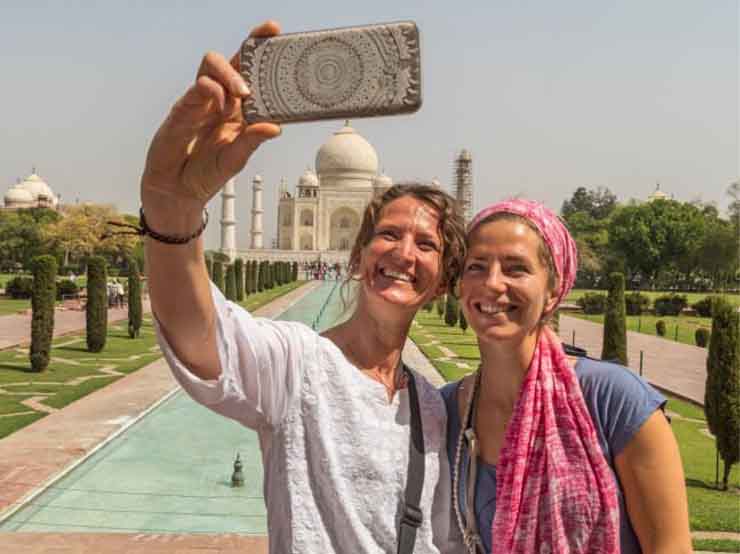
What makes the Taj Mahal remarkable is not only its perfection, but its ability to evoke emotion. Every visitor becomes part of the experience—capturing reflections, watching shifting colors, standing silently beneath the immense dome. The Taj does not just tell a story; it invites you into one.
Plan Your Visit
To fully experience this architectural harmony, planning ahead is essential. Booking online ensures a smooth, stress-free visit so you can focus entirely on the monument’s beauty. Reserve your entry at ticketstajmahal.com and explore visiting hours, ticket options.





Comment (0)