


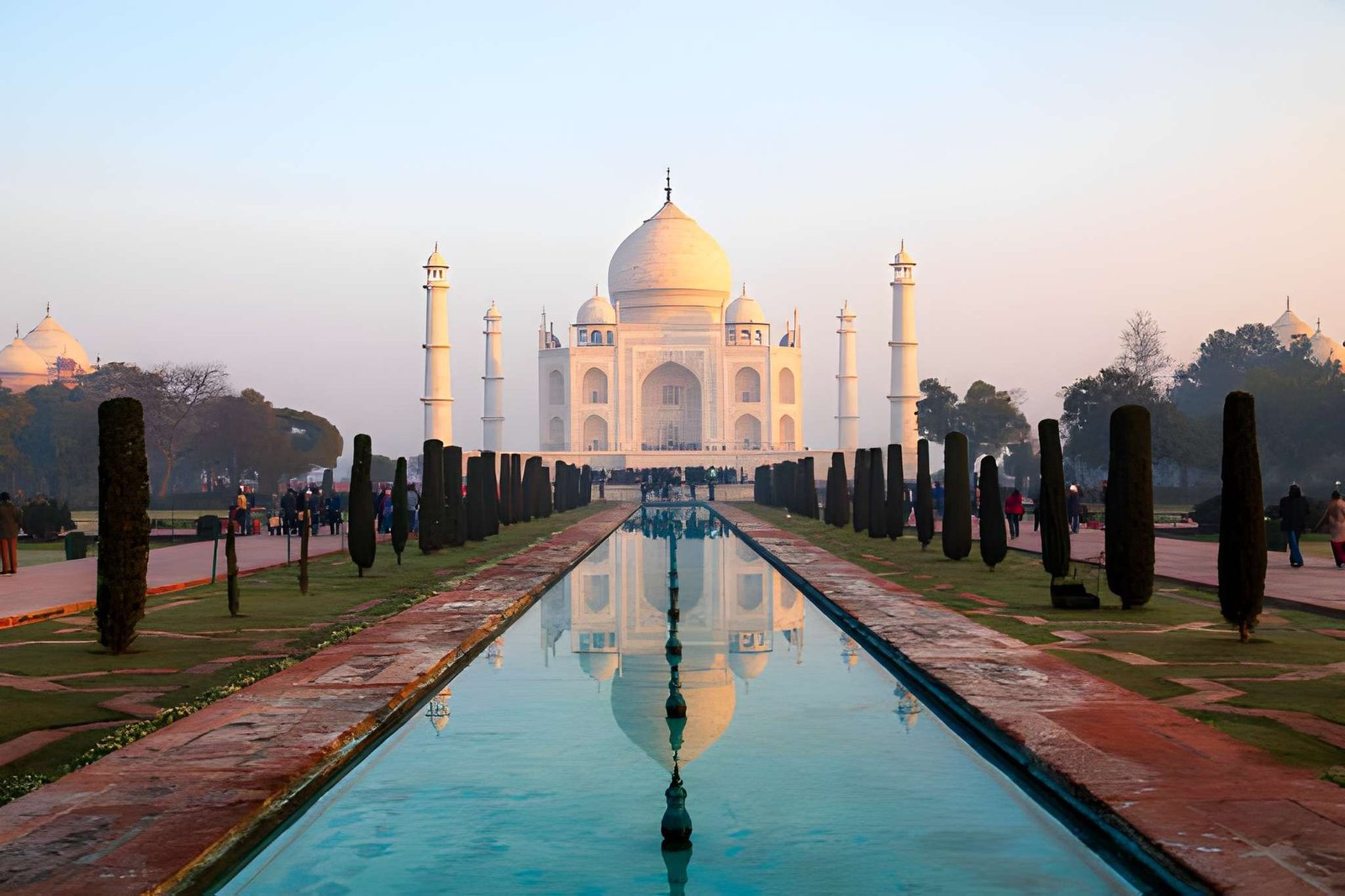
The Taj Mahal stands as one of the most beautiful buildings in the world. Not only does it look stunning, but it also follows clear design principles that anyone can understand. So, let’s break it down step by step.
1. A Symbol of Love and Symmetry
Shah Jahan built the Taj Mahal to honor his wife, Mumtaz Mahal. Most importantly, he designed it with perfect symmetry.
For example, each side mirrors the other almost exactly. As a result, the entire complex feels balanced and peaceful. In fact, this symmetry plays a big role in its timeless beauty.
2. The Main Structure: A Marble Masterpiece
The Taj Mahal uses white marble as its primary material. Interestingly, this marble changes color throughout the day.
For instance, it appears pink in the morning, bright white in the afternoon, and golden at night. Because of this, visitors enjoy a slightly different view each time they look at it.
At the center, a large onion-shaped dome rises above the structure. In addition, four smaller domes surround it, which enhance the overall balance.
3. The Four Minarets
You can see four tall minarets at each corner of the platform. These towers frame the main building beautifully.
However, they do more than just look elegant. Engineers tilted them slightly outward. Therefore, if an earthquake occurs, they will fall away from the main structure instead of onto it.
4. Beautiful Islamic Calligraphy
Artists decorated the walls with Quranic verses in stunning calligraphy. Moreover, they used a clever visual trick.
They increased the size of the letters as they moved upward. As a result, viewers on the ground see the text as evenly sized. This detail shows how carefully designers planned every element.
5. Intricate Inlay Work
The walls feature delicate floral designs made with colorful stones. Craftsmen placed these stones into the marble using a technique called pietra dura.
Because of this method, the surface looks smooth while still showing detailed patterns. In other words, the building feels both solid and artistic at the same time.
6. The Charbagh Garden Layout
In front of the monument, you will find a large garden divided into four sections. This layout, known as Charbagh, represents paradise in Islamic tradition.
Additionally, water channels run through the garden and reflect the Taj Mahal. Consequently, they create stunning photo opportunities and enhance the peaceful atmosphere.
7. Perfect Proportions
Finally, the Taj Mahal impresses visitors with its perfect proportions. Designers carefully matched every element—from arches to domes—to create harmony.
Because everything fits together so well, the monument feels naturally beautiful rather than overwhelming.
Plan Your Visit
Now that you understand its design, you can appreciate the Taj Mahal even more when you visit.
👉 Book your tickets and avoid long lines: https://ticketstajmahal.com
Experience this masterpiece of architecture up close and make your trip unforgettable!





Comment (0)