


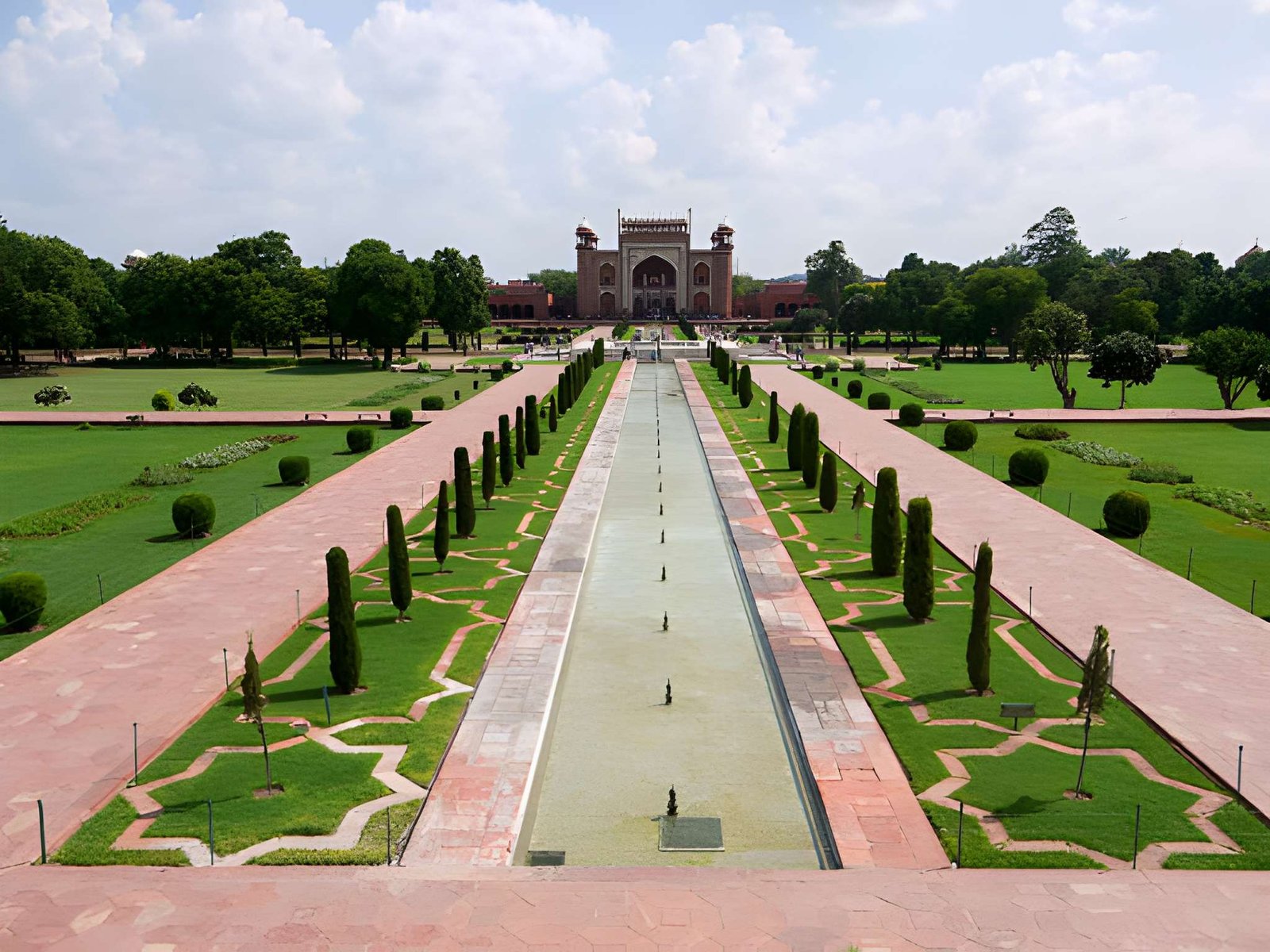
The Charbagh Gardens stand as one of the finest achievements of Mughal landscape design. Architects created them to reflect paradise on earth, and they continue to inspire visitors today. The word Charbagh comes from Persian, meaning “four gardens,” and it represents a perfectly balanced layout based on symmetry and nature.
A Design Rooted in Meaning
Mughal designers built Charbagh gardens to express spiritual ideas through geometry and nature. They drew inspiration from Islamic descriptions of paradise, where gardens contain flowing rivers and abundant greenery. Therefore, every Charbagh reflects order, peace, and divine balance.
Moreover, designers divided each garden into four equal sections. They used walkways and water channels to create this structure. As a result, visitors experience harmony as they move through clearly defined spaces.
The Power of the Four-Part Layout
The signature design of a Charbagh garden uses intersecting paths that form a cross. These paths divide the space into four equal parts. In addition, water channels often run through these divisions, bringing movement and life into the structure.
At the center, architects often place a pool or fountain. This central point draws the eye and anchors the entire design. Furthermore, it symbolizes the source of life and connects all four sections visually and spiritually.
Charbagh Design at the Taj Mahal
The most famous example of Charbagh design appears at the Taj Mahal in Agra. Designers created the garden to enhance the beauty of the white marble mausoleum. They arranged long water channels that divide the space into four symmetrical sections.
In contrast to typical Mughal gardens that place a pavilion at the center, the Taj Mahal garden places the monument at one end. This decision strengthens the dramatic view and highlights the Taj Mahal’s reflection in the water. As visitors walk through the garden, they experience a carefully planned visual journey.
Additionally, the flowing water and green pathways create a peaceful atmosphere. Consequently, the garden enhances the emotional impact of the monument.
Symbolism in Every Element
Each feature of a Charbagh garden carries meaning. Water channels represent the rivers of paradise. Trees provide shade and symbolize life and eternity. Flowers add color and represent beauty and abundance.
Moreover, symmetry reflects the idea of universal order. Because of this, the garden feels both natural and structured at the same time. Together, these elements transform simple landscapes into powerful symbolic spaces.
Lasting Influence and Experience
Charbagh gardens influenced landscape design across South Asia and beyond. Even today, architects study their structure to understand balance and harmony in design. In addition, visitors continue to admire their calm beauty and spiritual depth.
If you want to experience this remarkable heritage firsthand, you can plan your visit and explore the beauty of Mughal architecture up close.






Comment (0)