


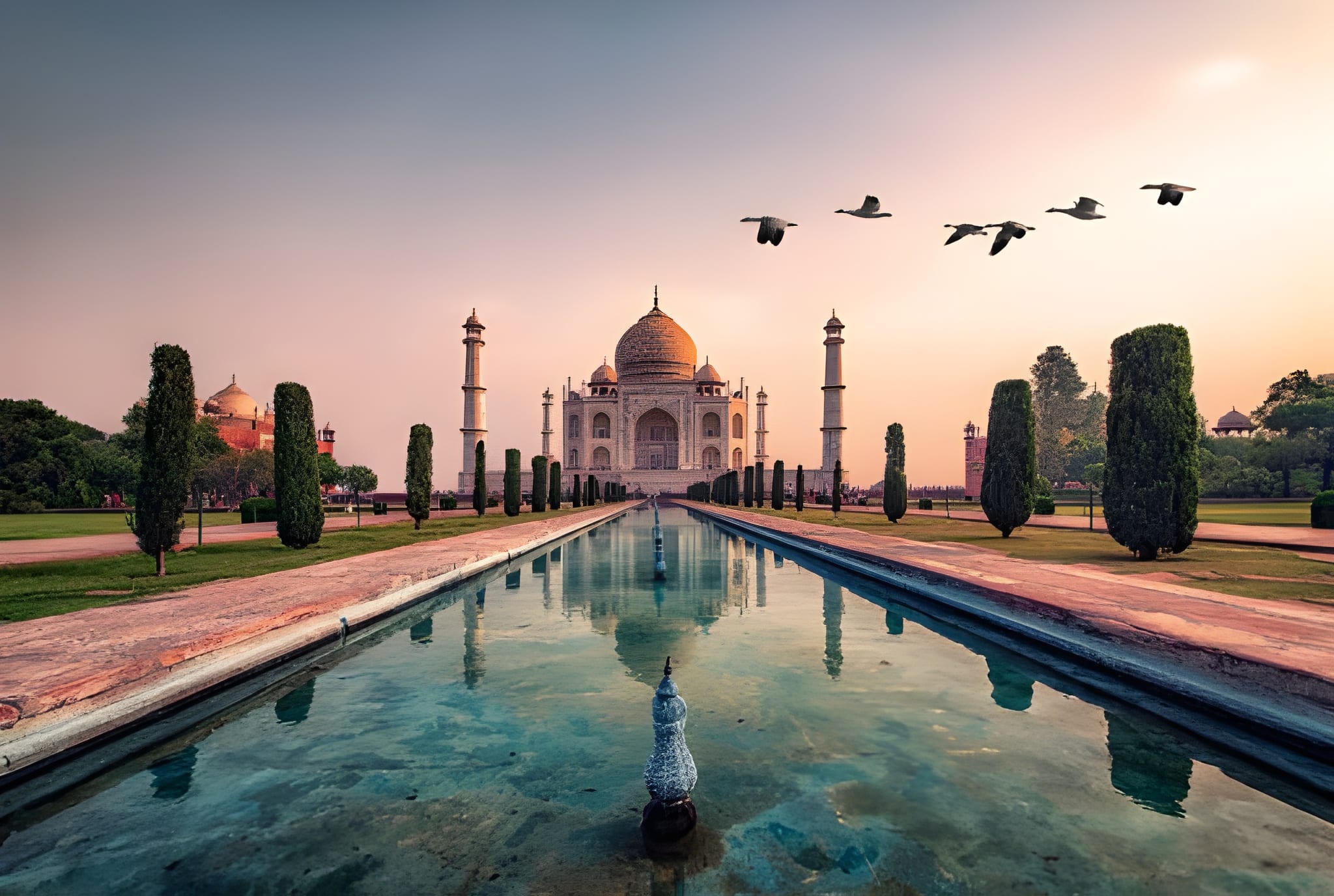
The Taj Mahal, one of the most celebrated monuments in the world, is not only admired for its breathtaking architecture but also for its intricate decorative elements. Every corner of this timeless masterpiece tells a story through artful details created with remarkable skill and dedication. The Mughal artisans used a combination of paint, stucco, stone inlays, and carvings to elevate the monument from a structure of marble to a symbol of eternal beauty and devotion.
Painted Ornamentation
Although time has softened many of the painted surfaces, historians and visitors alike can still trace the artistry that once adorned the Taj Mahal’s interiors and surrounding structures. Rich pigments were applied with great precision, bringing to life floral motifs and geometric designs. These paintings added vibrant character to the cool white marble, emphasizing the monument’s blend of elegance and grandeur.
Stucco Work
Stucco, a fine plaster used for coating walls and decorative molding, played a significant role in the detailing of the Taj Mahal. Artisans crafted delicate reliefs and ornamental flourishes, allowing shadows and textures to dance across the surfaces. Stucco decorations gave dimension to otherwise flat areas and highlighted the interplay between architecture and art.
Stone Inlays
Perhaps the most mesmerizing feature of the Taj Mahal is its exquisite stone inlay work, also known as pietra dura. Semi-precious stones like jasper, jade, and lapis lazuli were cut and fitted into the marble to form detailed floral patterns and calligraphy. This technique not only enhanced the monument’s splendor but also reflected the Mughals’ appreciation for luxury and refinement. Even centuries later, these inlays continue to shimmer in the sunlight, a testament to their enduring craftsmanship.
Carvings in Marble and Sandstone
The artisans also displayed their mastery through carvings on both white marble and red sandstone structures within the Taj Mahal complex. Geometric tracery, arabesques, and verses from the Quran were carefully etched, transforming solid stone into delicate lace-like screens. These carvings balanced strength with beauty, creating an atmosphere of reverence and peace.
A Living Legacy
The Taj Mahal’s decorative elements are not merely embellishments—they are expressions of love, devotion, and artistry that have stood the test of time. They represent the height of Mughal craftsmanship and continue to inspire visitors from across the globe. Every detail, whether painted, carved, or inlaid, contributes to the monument’s lasting charm and cultural importance.
Plan Your Visit
Experiencing the Taj Mahal in person is the best way to truly appreciate these details. As sunlight shifts throughout the day, the monument reveals different facets of its beauty. Don’t miss the chance to witness this architectural wonder up close.
Book your tickets conveniently at Ticketstajmahal.com and step into history to admire the Taj Mahal’s decorative splendor for yourself.





Comment (0)