


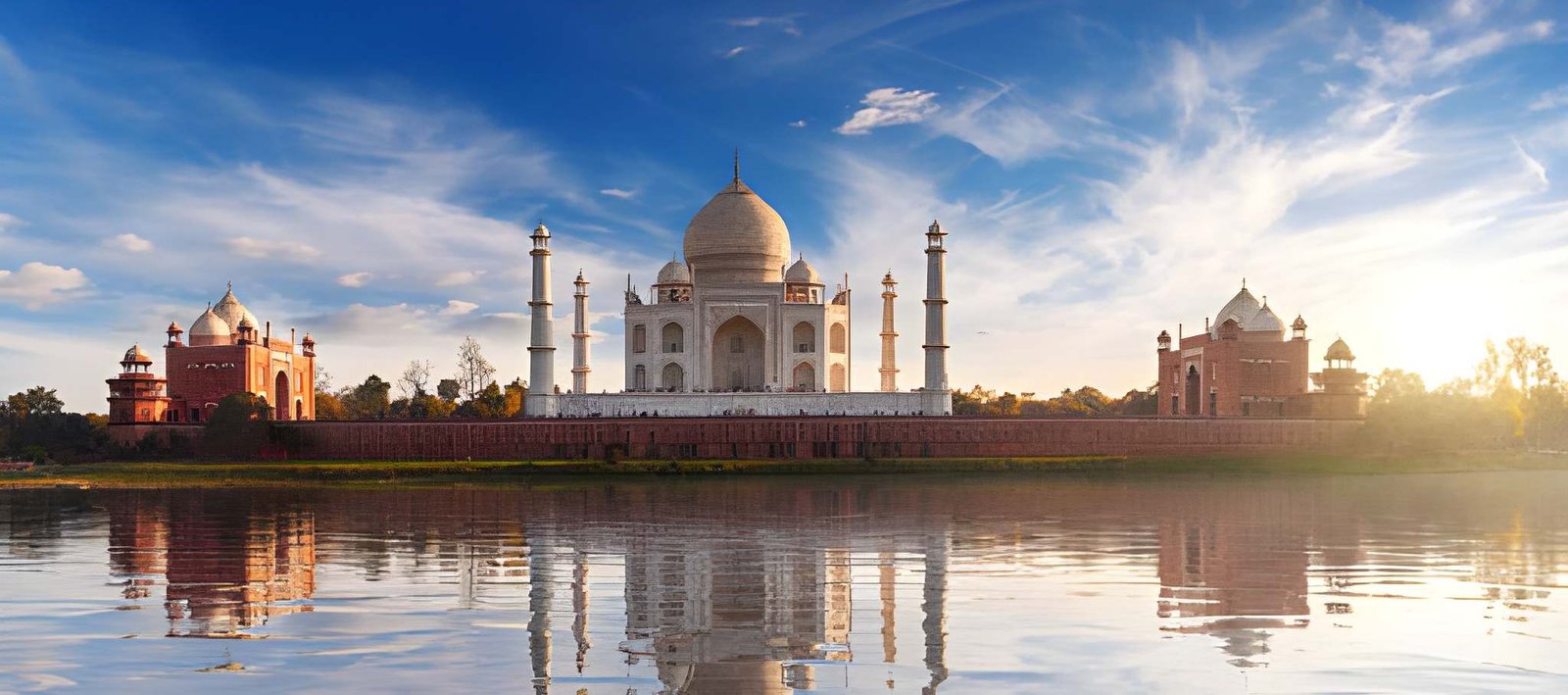
The Taj Mahal, standing gracefully on the banks of the Yamuna River in Agra, India, is more than a monument—it is a timeless symbol of love, loss, and artistic brilliance. Built in the 17th century by Mughal Emperor Shah Jahan in memory of his beloved wife Mumtaz Mahal, the Taj Mahal continues to captivate millions of visitors from around the world with its ethereal beauty and emotional depth.
A Monument Born from Love
The story of the Taj Mahal begins with profound devotion. When Mumtaz Mahal passed away in 1631 during childbirth, Shah Jahan was overcome with grief. To honor her memory, he commissioned a grand mausoleum that would reflect the purity and depth of their bond.
Construction began around 1632 and took more than two decades to complete, involving over 20,000 artisans from across the Mughal Empire and beyond. The result was not just a tomb, but a masterpiece that would stand as a testament to eternal love.
Architectural Brilliance
The Taj Mahal is widely regarded as one of the finest examples of Mughal architecture, a harmonious blend of Indian, Persian, and Islamic design traditions. Its gleaming white marble structure is adorned with intricate inlay work using semi-precious stones such as jade, turquoise, and lapis lazuli.
The symmetry of the complex is breathtaking. At its center stands the main mausoleum, flanked by perfectly balanced gardens, reflecting pools, a mosque, and a guest house. Every element is carefully designed to create a sense of balance, peace, and divine beauty.
One of its most magical features is how the marble changes color throughout the day—glowing pinkish at sunrise, radiant white in the afternoon, and soft golden under moonlight. This ever-changing appearance gives the monument a living, almost spiritual presence.
Cultural and Historical Significance
Beyond its beauty, the Taj Mahal holds deep cultural importance. It was declared a UNESCO World Heritage Site in 1983 and is recognized as one of the New Seven Wonders of the World.
For centuries, it has symbolized not only romantic love but also the artistic and cultural achievements of the Mughal era. Its design reflects a period when art, architecture, and emotion were deeply intertwined.
Despite challenges such as pollution and environmental wear, preservation efforts continue to protect this iconic structure for future generations.
A Legacy That Lives On
Today, the Taj Mahal attracts millions of visitors annually, each drawn by its unmatched elegance and emotional story. Standing before it is often described as a life-changing experience—where history, beauty, and love converge in one perfect vision.
It remains a reminder that true love can transcend time, and that human creativity can produce something truly eternal.
Plan Your Visit
Experience the wonder of the Taj Mahal yourself. Book your tickets easily and plan your journey through our website:
👉 https://ticketstajmahal.com





Comment (0)