


A Monument Born from Love
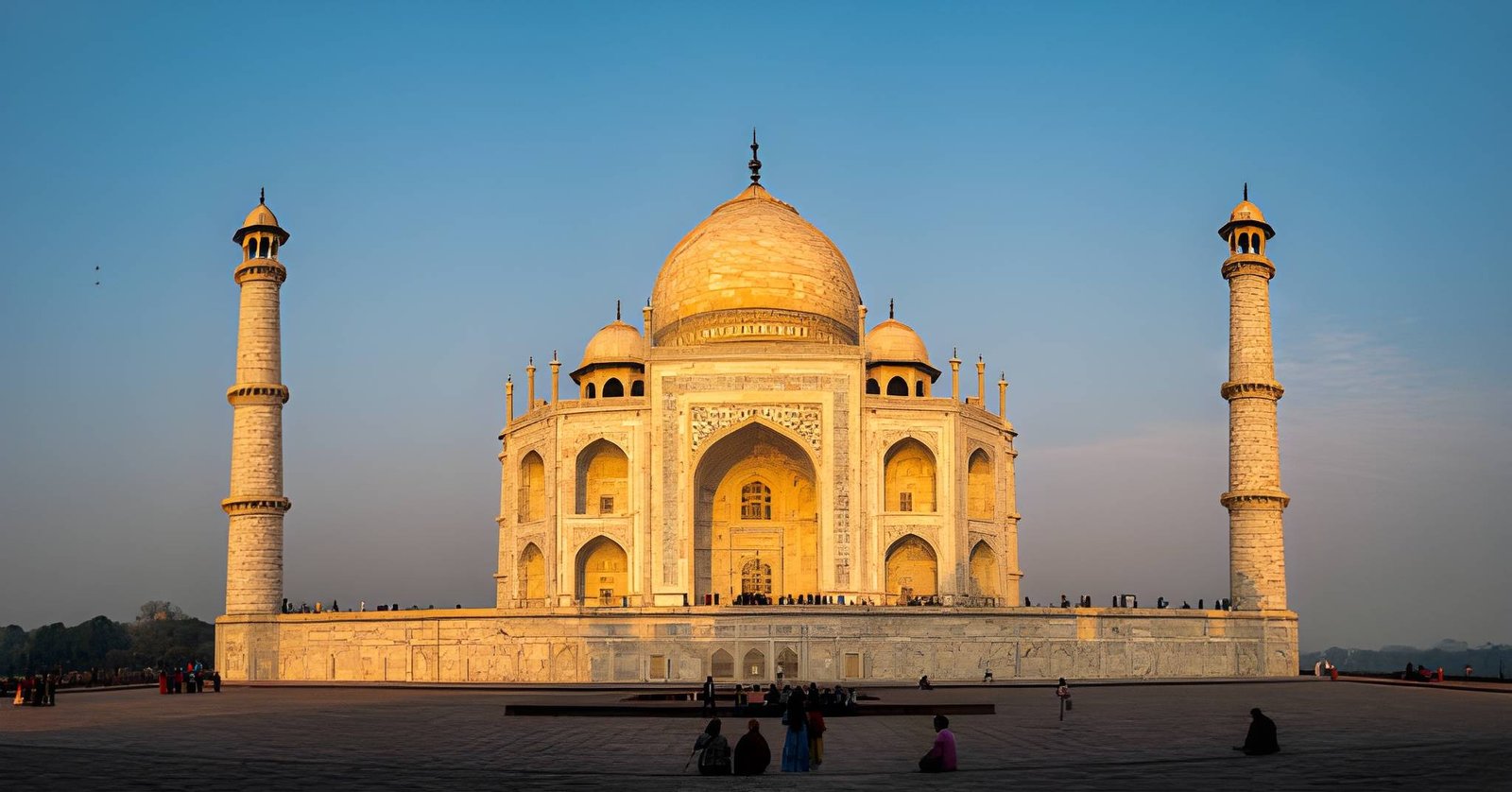
The Taj Mahal rises on the banks of the Yamuna River in Agra, India. It stands as one of the most iconic monuments in the world. Emperor Shah Jahan built it in the 17th century. He built it in memory of his wife Mumtaz Mahal.
This monument tells a powerful love story. It reflects grief, devotion, and artistic vision. Thousands of artisans worked on it for over 20 years. They shaped it into a masterpiece that still inspires awe today.
A Masterpiece of Mughal Architecture
The Taj Mahal blends Persian, Indian, and Islamic styles. This combination creates perfect harmony. Skilled craftsmen used white marble as the main material. They decorated it with fine carvings and inlaid gemstones.
The structure follows strict symmetry. The central dome stands tall and elegant. Four minarets surround it and balance the design. Every detail shows precision and intention.
A Living Work of Art
The Taj Mahal changes with the light. At sunrise, it glows soft pink. During the day, it shines bright white. Under the moon, it turns golden and calm.
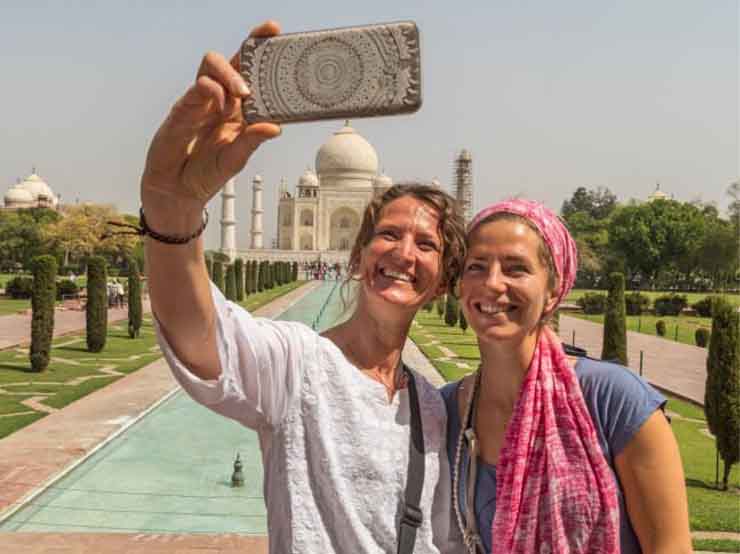
The surrounding gardens add to its beauty. Long water channels reflect the monument. Pathways guide visitors through a peaceful layout. Each element supports the idea of paradise on earth.
A Global Heritage Site
Today, the Taj Mahal is a UNESCO World Heritage Site. It is also one of the New Seven Wonders of the World. Millions of visitors come every year to see it.
The monument remains well preserved. It continues to represent love and human creativity across centuries.
Plan Your Visit
See the Taj Mahal in person and experience its timeless beauty.
Book your visit here: https://ticketstajmahal.com





Comment (0)