



The Taj Mahal has stood as a timeless symbol of love for centuries—but what will it look like a hundred years from now? While its beauty feels eternal, science and environmental trends suggest that change is inevitable.
A Future Shaped by Climate Change
In the next century, climate change could dramatically influence the Taj Mahal’s surroundings. Rising temperatures, unpredictable rainfall, and extreme weather events are already affecting heritage sites worldwide.
Studies show that many UNESCO landmarks, including the Taj Mahal, face serious water-related risks such as flooding, drought, and soil erosion . The nearby Yamuna River—essential to the monument’s foundation—could either flood more frequently or continue to shrink, both of which pose long-term structural risks.
If these trends continue, the Taj Mahal of the future may stand in a more fragile and heavily managed environment, surrounded by advanced protective barriers or redesigned landscapes.
The Changing Color of Marble
One of the most visible transformations could be the color of the Taj Mahal itself. The iconic white marble has already shown signs of yellowing due to pollution and airborne particles .
Over the next 100 years, without strict environmental controls, the monument could take on a darker or more uneven tone. However, ongoing restoration techniques—such as regular cleaning treatments—may help preserve its brightness, meaning the future Taj could look well-maintained but more “restored” than original.
Wear, Tear, and Time
Even the strongest structures are not immune to time. Cracks, erosion, and fading details have already been observed in parts of the monument . Intricate carvings and inlaid stones may become less defined over the next century, especially with millions of visitors each year.
To counter this, authorities may limit visitor numbers or introduce high-tech preservation methods, such as digital monitoring or protective coatings, ensuring the monument remains intact but slightly altered from its original craftsmanship.
A Balance Between Preservation and Tourism
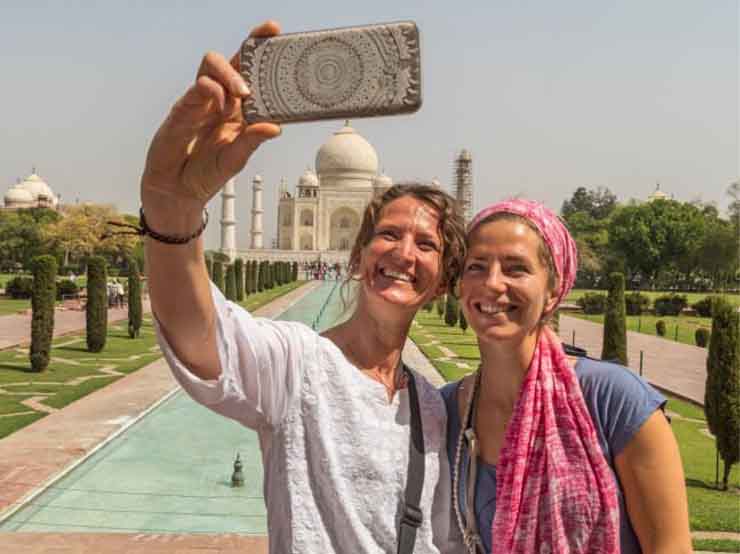
Tourism will continue to play a major role in the Taj Mahal’s future. While millions visit each year, excessive foot traffic contributes to gradual wear and tear .
In 100 years, visiting the Taj Mahal might feel very different—think controlled entry slots, virtual reality enhancements, or restricted access to certain areas. The experience could become more curated to protect the monument while still allowing people to appreciate its beauty.
A Symbol That Endures
Despite all these potential changes, one thing is certain: the Taj Mahal will remain a global icon. Whether slightly weathered, carefully restored, or technologically protected, its story and emotional significance will continue to inspire generations.
The future Taj Mahal may not look exactly as it does today—but it will still stand as a testament to love, history, and human creativity.
Plan Your Visit Today
While the future holds many possibilities, there’s nothing like experiencing the Taj Mahal as it stands today. Discover its beauty up close and create unforgettable memories by booking your visit at https://ticketstajmahal.com.





Comment (0)