

The Taj Mahal, often celebrated as the crown jewel of Mughal architecture, shines not only for its white marble and symmetry but also for its fine artistic detail. Among its many adornments, the calligraphy on its walls holds special importance. Much of this writing uses thuluth, an elegant and fluid Arabic script that transforms the monument into both an architectural and spiritual masterpiece.
What is Thuluth?
Thuluth is a classical style of Arabic calligraphy that appeared in the 10th century. Known for its elongated verticals, broad curves, and graceful proportions, it became a favorite for architectural inscriptions and religious texts. The word thuluth means “one-third,” a reference to the size of the pen’s nib used to create sweeping, bold letters that remain clear from a distance.
Thuluth on the Taj Mahal
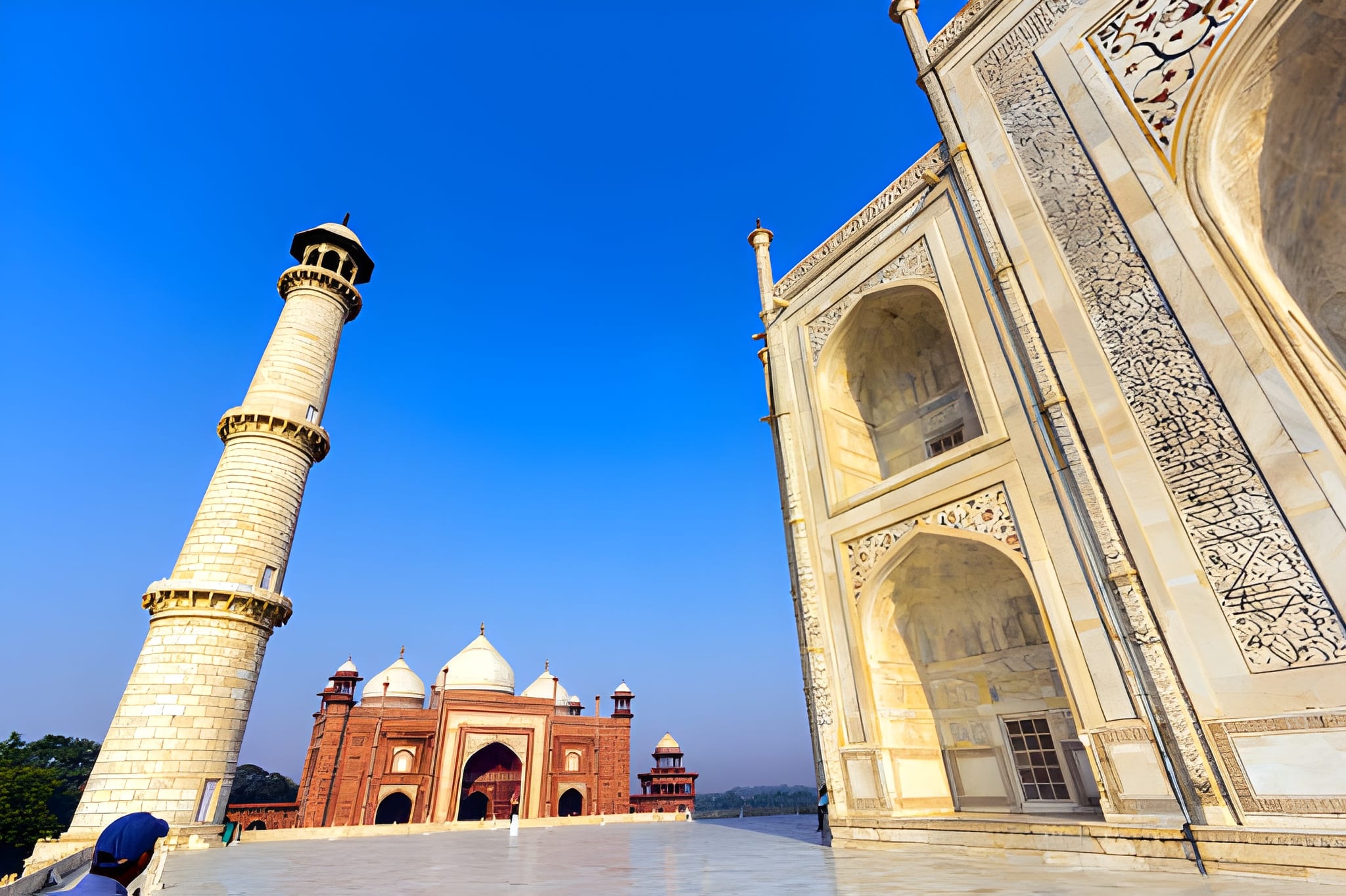
Artisans carved Qur’anic verses in thuluth across the marble surfaces of the Taj Mahal. The calligraphy does more than decorate; it guides visitors toward reflection, spirituality, and a sense of divine presence.
One striking feature lies in the scaling of the letters. Smaller inscriptions appear near the base, while larger ones rise above. This clever adjustment creates a uniform look from the ground, showing the precision and vision of the Mughal craftsmen.
You can see thuluth inscriptions on the grand gateway, the mosque, and the mausoleum itself. Black marble inlays on white marble walls create bold contrast, making the words both legible and breathtaking.
The Artistry Behind the Words
Calligraphers working on the Taj Mahal combined technical skill with deep reverence. They chose thuluth for its sweeping lines and harmonious rhythm, which perfectly matched the monument’s spiritual grandeur.
Unlike floral or geometric motifs, calligraphy carries meaning within each stroke. The Qur’anic verses remind visitors of faith, humility, and the eternal. This combination of message and artistry gives the Taj Mahal its lasting power.
Experiencing the Taj Mahal
To truly grasp the beauty of thuluth, you must see it in person. Photographs capture only fragments, but standing beneath the towering arches and reading the verses yourself creates an unforgettable moment. The Taj Mahal is more than a symbol of love—it is also a canvas for devotion and art.
When you visit, pause to study the inscriptions closely. Each one tells a story of faith, artistry, and timeless craftsmanship.
Plan Your Visit
The Taj Mahal offers more than breathtaking views. It provides a journey into history, art, and devotion. Witness the beauty of thuluth calligraphy and discover why this monument remains one of the world’s greatest wonders.
Book your tickets with ease at Ticketstajmahal.com and start planning your visit today.





Comment (0)