


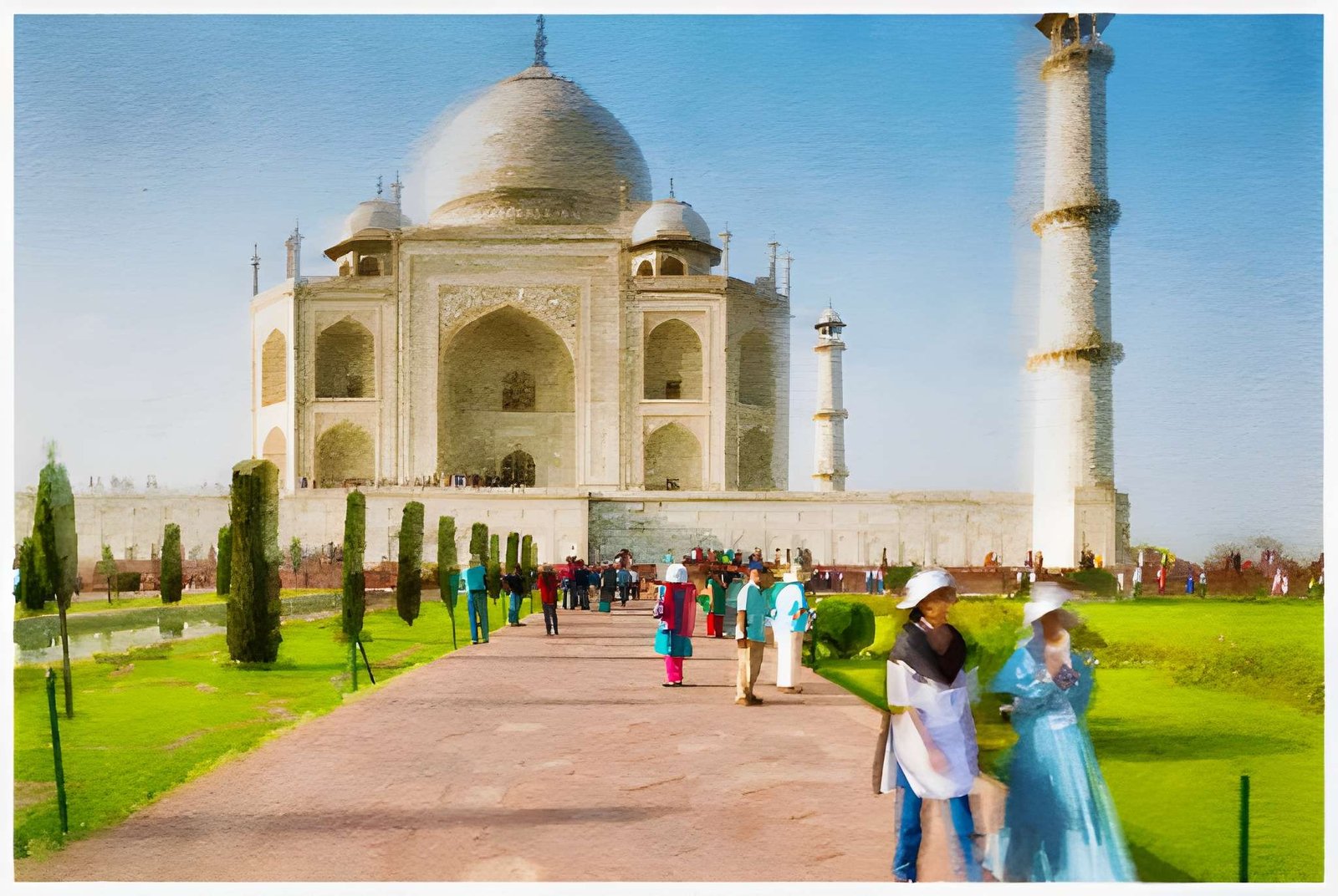
The Taj Mahal is one of the most photographed monuments in the world, yet no two photos ever look quite the same. From soft pink hues at sunrise to glowing white under the midday sun, this iconic structure seems to transform constantly. But why does it appear so different in every image? The answer lies in a fascinating mix of light, materials, atmosphere, and perspective.
1. The Magic of Changing Light
The Taj Mahal is made of white Makrana marble, a material known for its ability to reflect and absorb light. At sunrise, the monument often appears pinkish due to the warm tones of the early morning sun. By midday, it turns a bright, almost dazzling white under direct sunlight. At sunset, golden and amber hues take over, giving it a warm glow. And under moonlight, the Taj Mahal can look almost blue or silver.
Each photograph captures a unique moment in this shifting light, making every image distinct.
2. Weather and Atmosphere Effects
The atmosphere plays a huge role in how the Taj Mahal looks in photos. On a clear day, the monument appears crisp and sharply defined. However, during foggy or misty conditions, it can look soft, dreamy, and even slightly blurred.
Pollution and humidity can also influence how light scatters around the structure, subtly changing its color and contrast. This is why photos taken on different days—even at the same time—can look completely different.
3. Perspective and Camera Angles
Another reason for the variation is perspective. The Taj Mahal is designed with perfect symmetry, but the way you photograph it changes how that symmetry is perceived.
A wide-angle lens can exaggerate its size and make the foreground appear larger, while a zoom lens compresses distances and creates a more dramatic, focused look. Shooting from the central reflecting pool gives a classic, balanced image, while side angles highlight the depth and intricate details.
Even a small shift in position can dramatically alter the composition of the photo.
4. Reflections and Surroundings
The Taj Mahal is surrounded by gardens, water channels, and the Yamuna River. Reflections in the pools can double its beauty, while seasonal changes in the gardens add different colors to the scene.
During certain times of the year, lush greenery frames the monument, while in drier months, the landscape looks more muted. These elements contribute to the uniqueness of every photograph.
5. Time and Human Activity
Crowds also impact how the Taj Mahal appears in photos. Early morning shots often feel serene and empty, while later in the day, the presence of visitors adds energy and scale.
Photographers often wait for the perfect moment—when the light, crowd, and atmosphere align—to capture something truly special.
Experience It Yourself
While photos can capture the beauty of the Taj Mahal, nothing compares to seeing it in person. The way it changes throughout the day is something you have to witness firsthand.
If you’re planning your visit, make it seamless by booking your tickets in advance. Visit https://ticketstajmahal.com to secure your entry and enjoy a hassle-free experience at this breathtaking wonder.
Every photo of the Taj Mahal tells a different story—because the monument itself is always changing. And that’s exactly what makes it timeless.





Comment (0)