


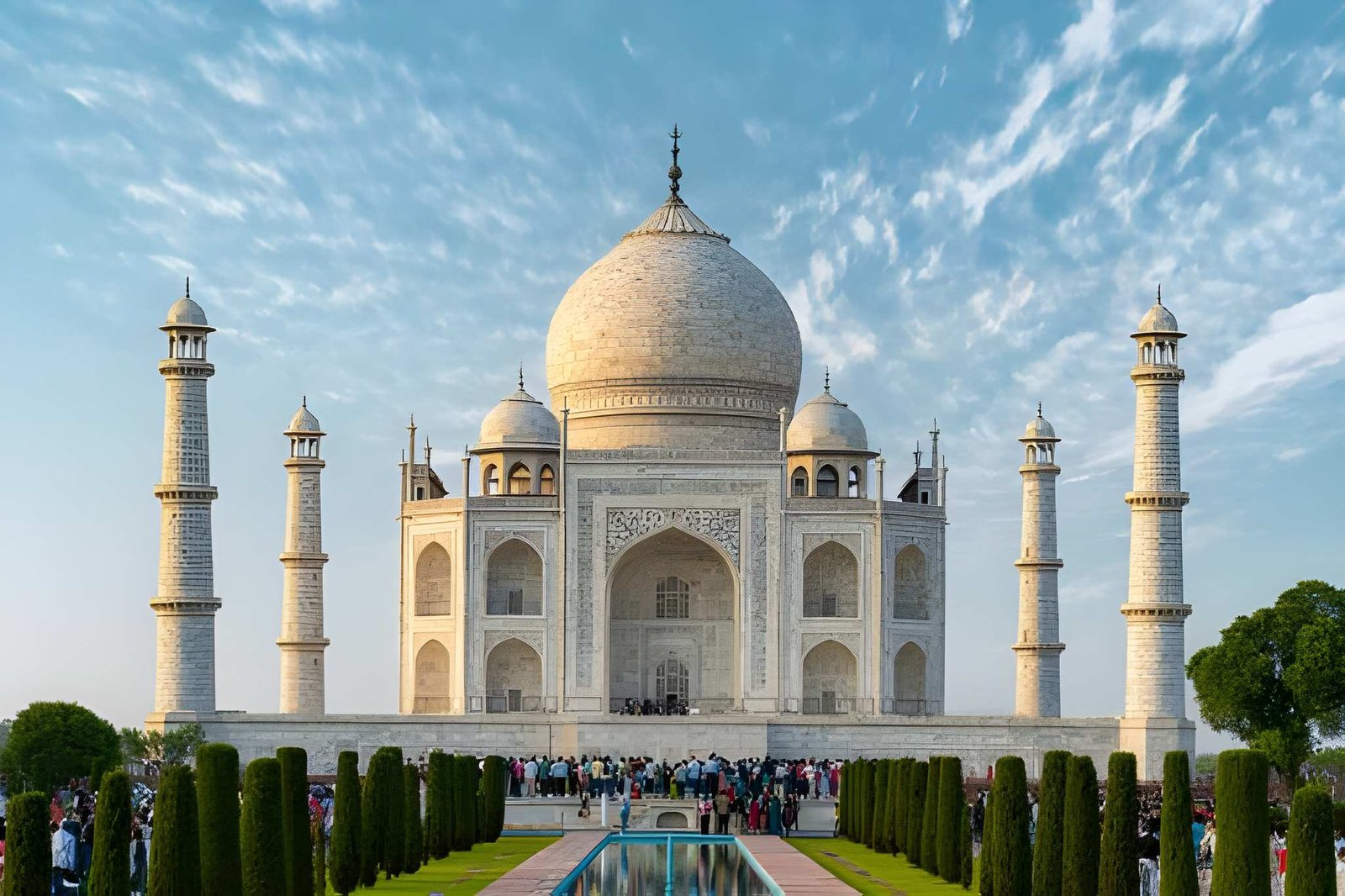
The Taj Mahal is not just a monument—it’s a living canvas that changes its mood with every season. Whether wrapped in winter mist or glowing under the summer sun, each time of year offers a unique experience. Here’s how this iconic wonder transforms throughout the year and when you might want to visit.
Winter (November to February): A Dream in the Mist
Winter brings a magical charm to the Taj Mahal. Early mornings often feature a soft blanket of fog that slowly reveals the monument like a hidden treasure. The cool temperatures make it ideal for exploring the grounds comfortably. Sunrises are especially enchanting, as the marble reflects gentle golden hues through the mist.
However, visibility can sometimes be low due to fog, so patience is key. If you’re lucky, you’ll witness one of the most ethereal views imaginable.
Spring (March to April): Gardens in Bloom
Spring is one of the most pleasant times to visit. The surrounding Mughal gardens come alive with blooming flowers, adding vibrant colors to the pristine white marble. The weather is mild, making it perfect for long walks and photography.
During this season, the Taj Mahal looks fresh and lively, with clear skies enhancing its symmetry and elegance. It’s an excellent time for visitors who want both comfort and beauty.
Summer (May to June): A Radiant Glow
Summer in Agra can be quite hot, but it gives the Taj Mahal a striking brilliance. Under the intense sunlight, the marble shines brightly, almost glowing against the deep blue sky.
If you visit during this season, early mornings and late afternoons are the best times to avoid the heat. Despite the high temperatures, fewer crowds can make your visit more peaceful and personal.
Monsoon (July to September): A Romantic Escape
The monsoon season adds a dramatic and romantic atmosphere to the Taj Mahal. Dark clouds gather in the sky, creating a stunning contrast with the white marble. Occasional rain showers enhance the monument’s reflection on the wet pathways, making it a photographer’s dream.
The gardens turn lush green, and the air feels fresh. While rain might disrupt plans slightly, the unique scenery makes it worth the visit.
Autumn (October): Perfect Balance
Autumn offers a balance between pleasant weather and clear skies. The humidity of the monsoon fades, leaving behind crisp air and excellent visibility. The Taj Mahal appears sharp and radiant, making it one of the best times for photography.
Crowds begin to increase again, but the overall experience remains comfortable and rewarding.
Plan Your Visit
No matter the season, the Taj Mahal never loses its charm—it simply tells a different story each time. Choosing the right season depends on your preferences, whether it’s cool weather, vibrant gardens, or dramatic skies.
To make the most of your visit and avoid long queues, plan ahead and secure your entry tickets easily through our website: https://ticketstajmahal.com
Experience the Taj Mahal in your favorite season—and see how its beauty evolves all year round.






Comment (0)