


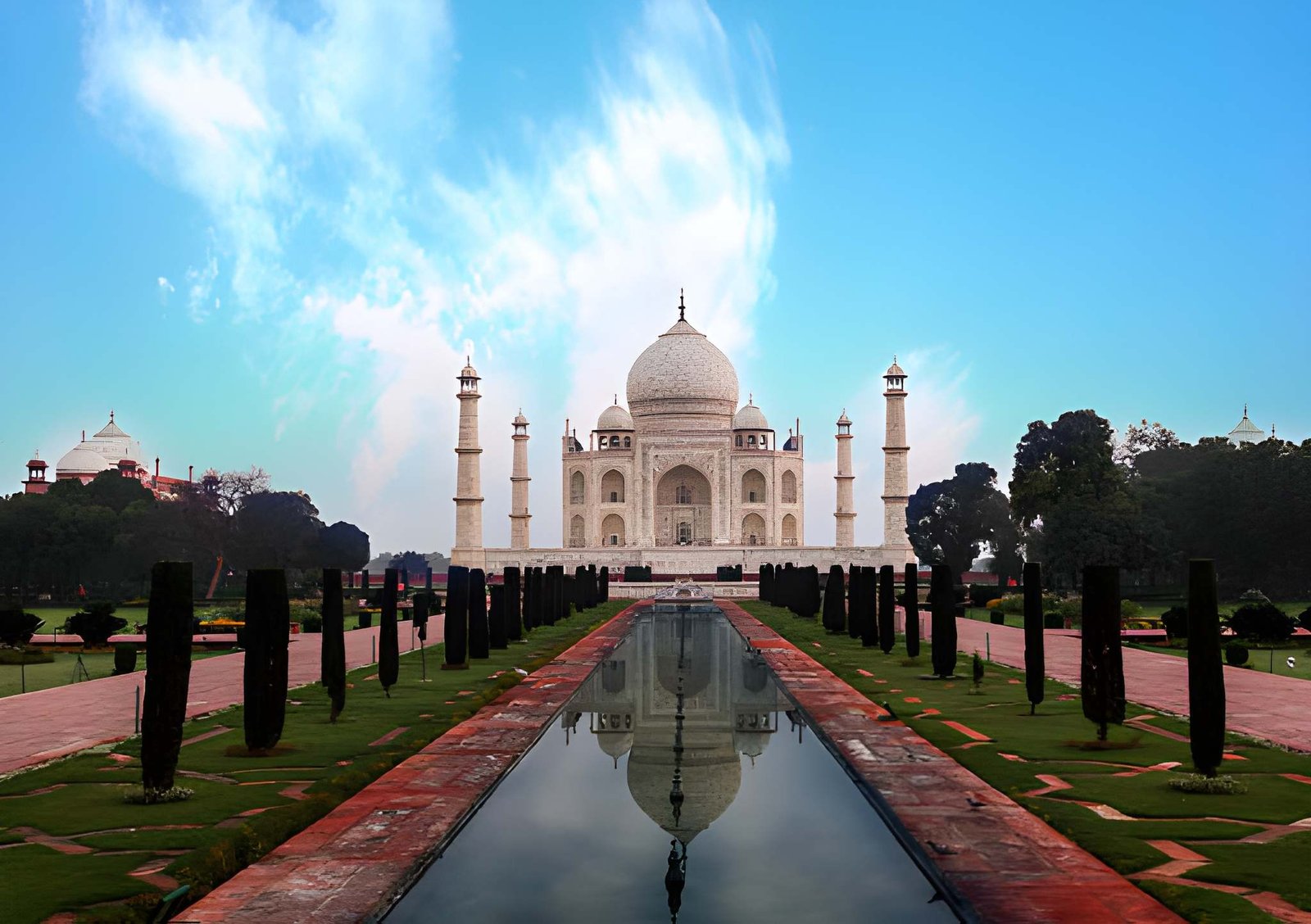
The Taj Mahal stands as one of the world’s most famous monuments. Emperor Shah Jahan built this masterpiece to honor his beloved wife, Mumtaz Mahal. Today, millions of travelers visit Agra to admire its beauty, history, and remarkable architecture. Let’s explore the key moments that shaped the story of the Taj Mahal.
The Tragic Loss of Mumtaz Mahal (1631)
The history of the Taj Mahal began in 1631 when Mumtaz Mahal died during childbirth. Shah Jahan deeply loved her, and her death devastated him. As a result, he decided to create a magnificent memorial that would preserve her memory forever. This emotional decision later inspired one of the greatest architectural wonders in history.
Construction of the Taj Mahal Begins (1632)
In 1632, workers started building the Taj Mahal on the banks of the Yamuna River in Agra. Shah Jahan gathered skilled artisans, architects, and craftsmen from across India and Central Asia. Together, they combined Persian, Islamic, and Indian architectural styles to create a truly unique monument.
Moreover, the builders used white marble and precious stones to craft intricate floral patterns and decorative designs. Their attention to detail gave the Taj Mahal its timeless elegance.
Completion of the Main Mausoleum (1648)
By 1648, craftsmen completed the central mausoleum. Visitors immediately admired its massive marble dome, symmetrical structure, and detailed artwork. In addition, the reflective pools and carefully designed gardens enhanced the monument’s beauty.
The Taj Mahal soon became a symbol of eternal love and Mughal architectural excellence.
Completion of the Entire Complex (1653)
Workers finished the full Taj Mahal complex in 1653. The site included a mosque, guest house, grand gateways, and beautiful gardens. Furthermore, the architects carefully planned every pathway and viewpoint to create a perfect visual experience for visitors.
Because of this thoughtful design, the Taj Mahal continues to impress travelers from every corner of the world.
UNESCO World Heritage Recognition (1983)
In 1983, UNESCO added the Taj Mahal to its World Heritage List. This recognition increased global appreciation for the monument and encouraged stronger preservation efforts. Since then, historians, architects, and tourists have continued to celebrate its cultural and artistic importance.
Modern Preservation Efforts
Today, pollution and heavy tourism threaten the Taj Mahal’s beauty. Therefore, conservation teams regularly clean and protect the marble surfaces. The Archaeological Survey of India also monitors the structure to preserve its original appearance.
Thanks to these ongoing efforts, future generations will continue to experience the monument’s breathtaking beauty.
The Taj Mahal Today
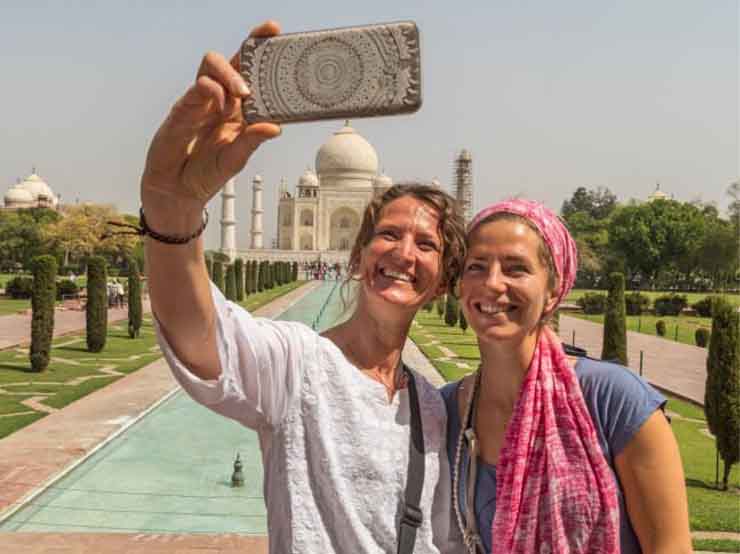
Today, the Taj Mahal remains one of the New Seven Wonders of the World. Travelers especially enjoy visiting during sunrise and sunset when the marble changes color under natural light.
If you plan to visit this incredible monument, book your experience through Tickets Taj Mahal for a smooth and memorable journey.





Comment (0)