


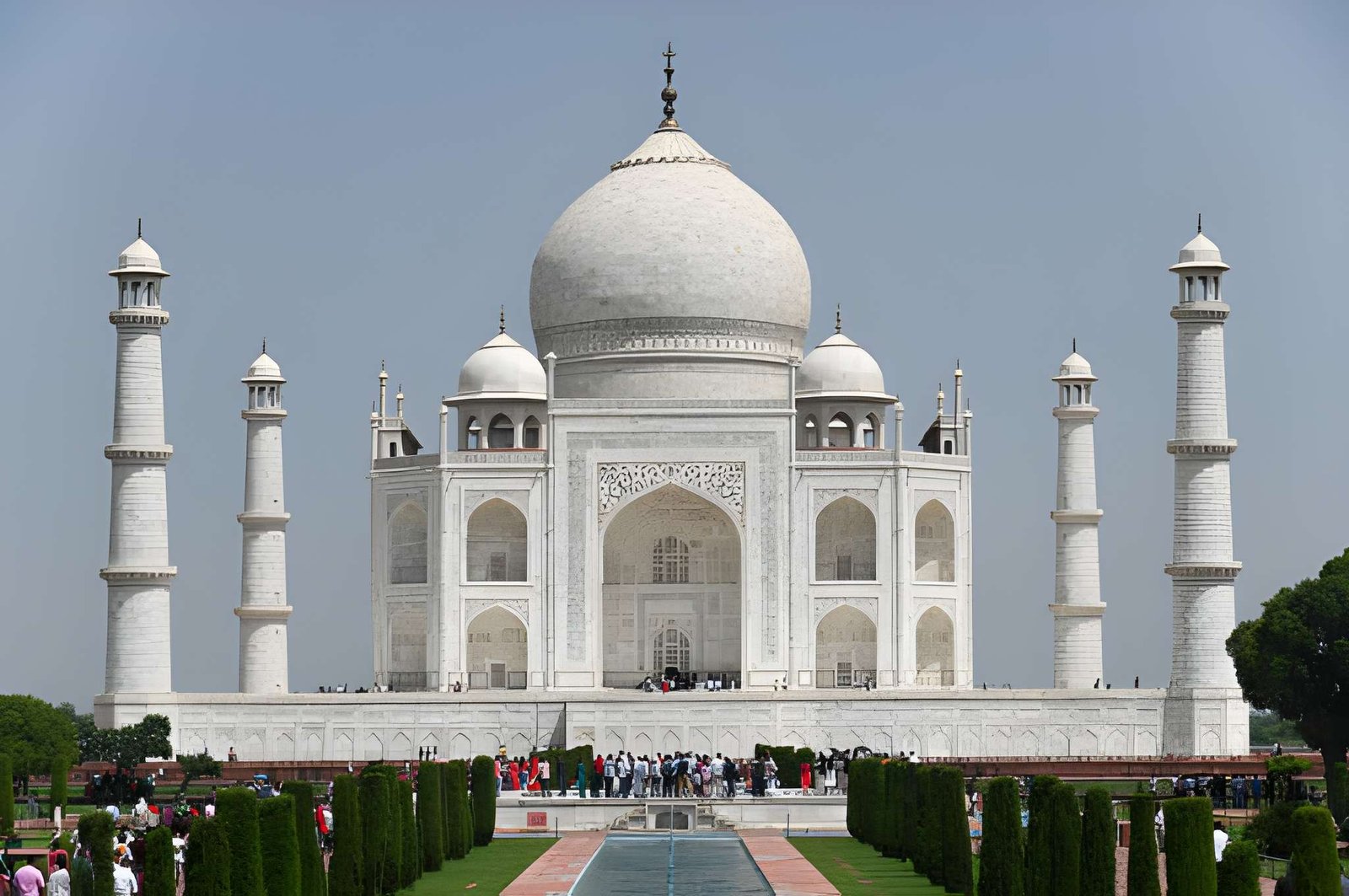
The Taj Mahal stands as one of the world’s most admired monuments. With its white marble beauty and unforgettable history, it continues to attract millions of visitors every year. Moreover, the monument tells a powerful story of love, loss, and architectural brilliance. Here’s a look at the fascinating timeline of the Taj Mahal, from its origin to the present day.
1631: A Love Story Begins
In 1631, Mumtaz Mahal, the beloved wife of Mughal Emperor Shah Jahan, died during childbirth. As a result, the grieving emperor decided to create a magnificent memorial in her honor. His vision later became the Taj Mahal, now known across the globe as a symbol of eternal love.
1632: Construction Officially Starts
Soon after Mumtaz Mahal’s death, workers began constructing the Taj Mahal in Agra near the Yamuna River. Shah Jahan gathered skilled artisans, architects, and craftsmen from India, Persia, and Central Asia to work on the grand project. In addition, the emperor used the finest marble and precious stones to create a masterpiece unlike any other.
1643: The Main Mausoleum Takes Shape
By 1643, builders completed most of the central mausoleum. The massive white dome, delicate carvings, and detailed inlay work quickly impressed visitors and royal guests alike. Furthermore, the symmetrical design reflected the elegance of Mughal architecture at its peak.
1653: Completion of the Taj Mahal Complex
After more than 20 years of hard work, craftsmen finished the entire Taj Mahal complex around 1653. The completed site included beautiful gardens, a mosque, a guest house, and a grand entrance gate. Consequently, the Taj Mahal became one of the greatest architectural achievements in history.
1666: Shah Jahan Joins Mumtaz Mahal
After Shah Jahan died in 1666, his family buried him beside Mumtaz Mahal inside the mausoleum. Today, visitors can still see the tombs at the heart of the monument. Therefore, the Taj Mahal continues to represent their enduring love story centuries later.
1983: UNESCO Honors the Taj Mahal
In 1983, UNESCO recognized the Taj Mahal as a World Heritage Site because of its cultural and historical importance. Since then, preservation efforts have helped protect the monument for future generations.
2007: A New Wonder of the World
In 2007, people around the world voted the Taj Mahal as one of the New Seven Wonders of the World. Because of this recognition, tourism increased even further, drawing travelers from every corner of the globe.
Present Day: A Timeless Attraction
Today, the Taj Mahal remains one of India’s most visited landmarks. Travelers admire its beauty at sunrise, explore its rich Mughal history, and capture unforgettable memories. Whether you visit for history, architecture, or photography, the monument offers an experience like no other.
Planning your visit? Book your entry tickets easily with Tickets Taj Mahal and enjoy a smooth, hassle-free journey to one of the world’s greatest wonders.





Comment (0)