


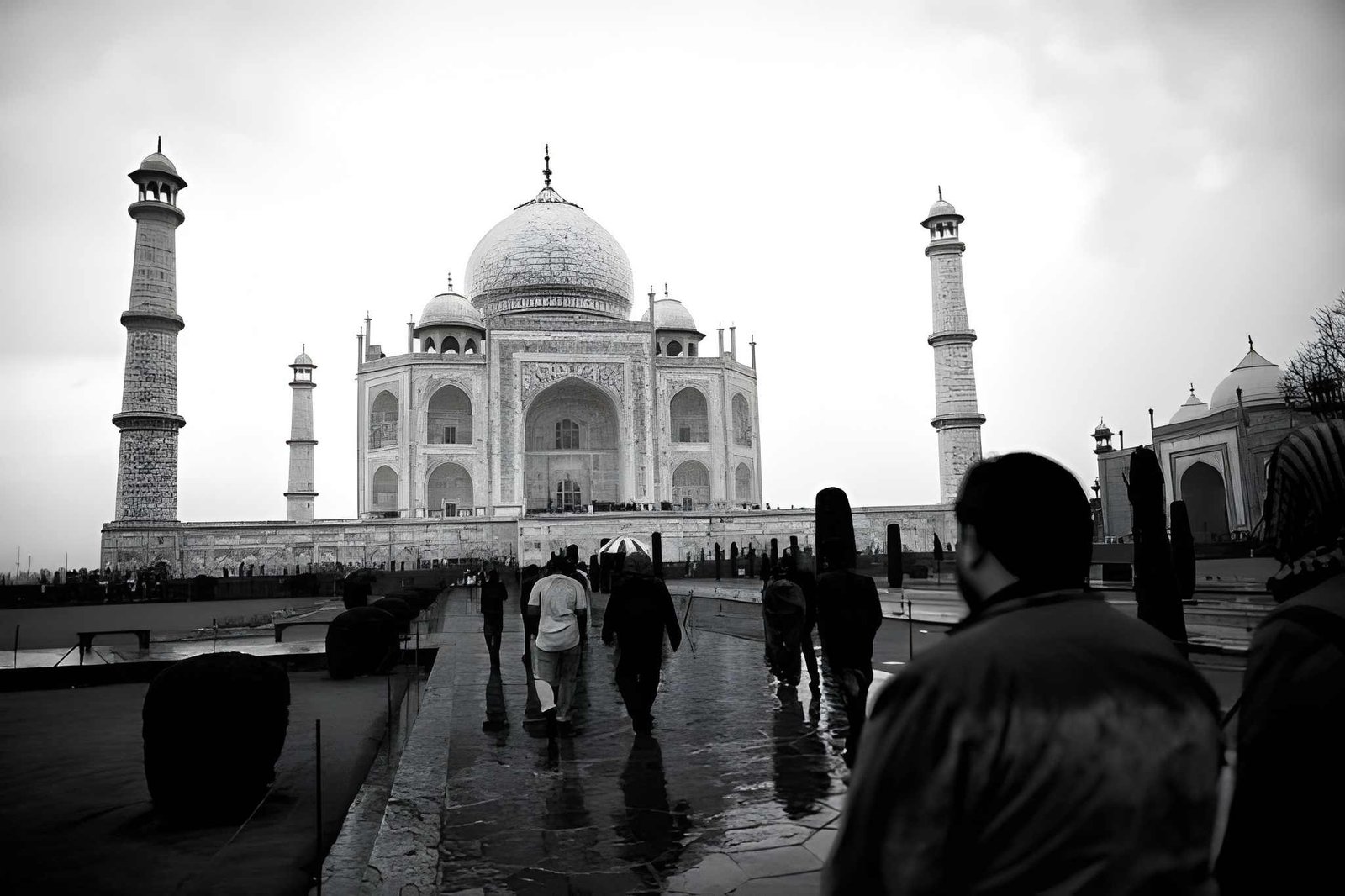
The Taj Mahal is famous for its glowing white marble and timeless beauty, but very few travelers experience it during the rain. While most visitors imagine sunny skies over Agra, the monsoon season reveals a completely different side of this world wonder — peaceful, dramatic, and unforgettable.
A Magical Transformation in the Rain
When rain falls over the Taj Mahal, the monument takes on an almost dreamlike appearance. Dark monsoon clouds create a striking contrast against the white marble, while raindrops enhance the reflective surfaces around the gardens and pathways. Puddles often create mirror-like reflections, making the monument even more photogenic.
The marble itself appears brighter after rainfall, giving the structure a fresh glow that many visitors never get to witness. Mist rising around the domes and minarets adds a mysterious atmosphere that feels entirely different from a typical sunny-day visit.
Fewer Crowds, Better Experience
One of the biggest advantages of visiting during the monsoon season is the smaller number of tourists. Compared to peak winter months, rainy days offer a quieter and more relaxed experience. Travelers can spend more time admiring the architecture, taking photographs, and enjoying the gardens without heavy crowds.
For photographers, this is one of the best times to capture unique shots of the Taj Mahal. Soft lighting from cloudy skies reduces harsh shadows and gives images a cinematic look.
The Romance of Monsoon Season
Rain and the Taj Mahal are a perfect combination. Since the monument itself symbolizes eternal love, the monsoon weather adds an emotional and romantic charm to the experience. The cool breeze, scent of wet earth, and gentle sound of rainfall create an atmosphere that feels calm and deeply memorable.
Many travelers say that seeing the Taj Mahal in the rain feels more intimate and authentic than visiting on a crowded sunny afternoon.
Helpful Tips for Visiting During Rain
If you plan to visit during monsoon season, here are a few useful tips:
- Carry a lightweight umbrella or raincoat
- Wear comfortable, waterproof footwear
- Visit early morning for softer light and fewer crowds
- Protect your camera or phone from sudden rain showers
- Check the weather forecast before your trip
Monsoon season in Agra usually lasts from July to September, bringing cooler temperatures and refreshing scenery.
Experience the Taj Mahal Differently
The Taj Mahal during rain is not just a sightseeing experience — it is a mood, a feeling, and a rare perspective that many travelers miss. From shimmering marble reflections to peaceful gardens under cloudy skies, the monument becomes even more captivating in the monsoon season.
Plan your unforgettable visit today with Tickets Taj Mahal and book your tickets in advance for a smooth and memorable journey.





Comment (0)