


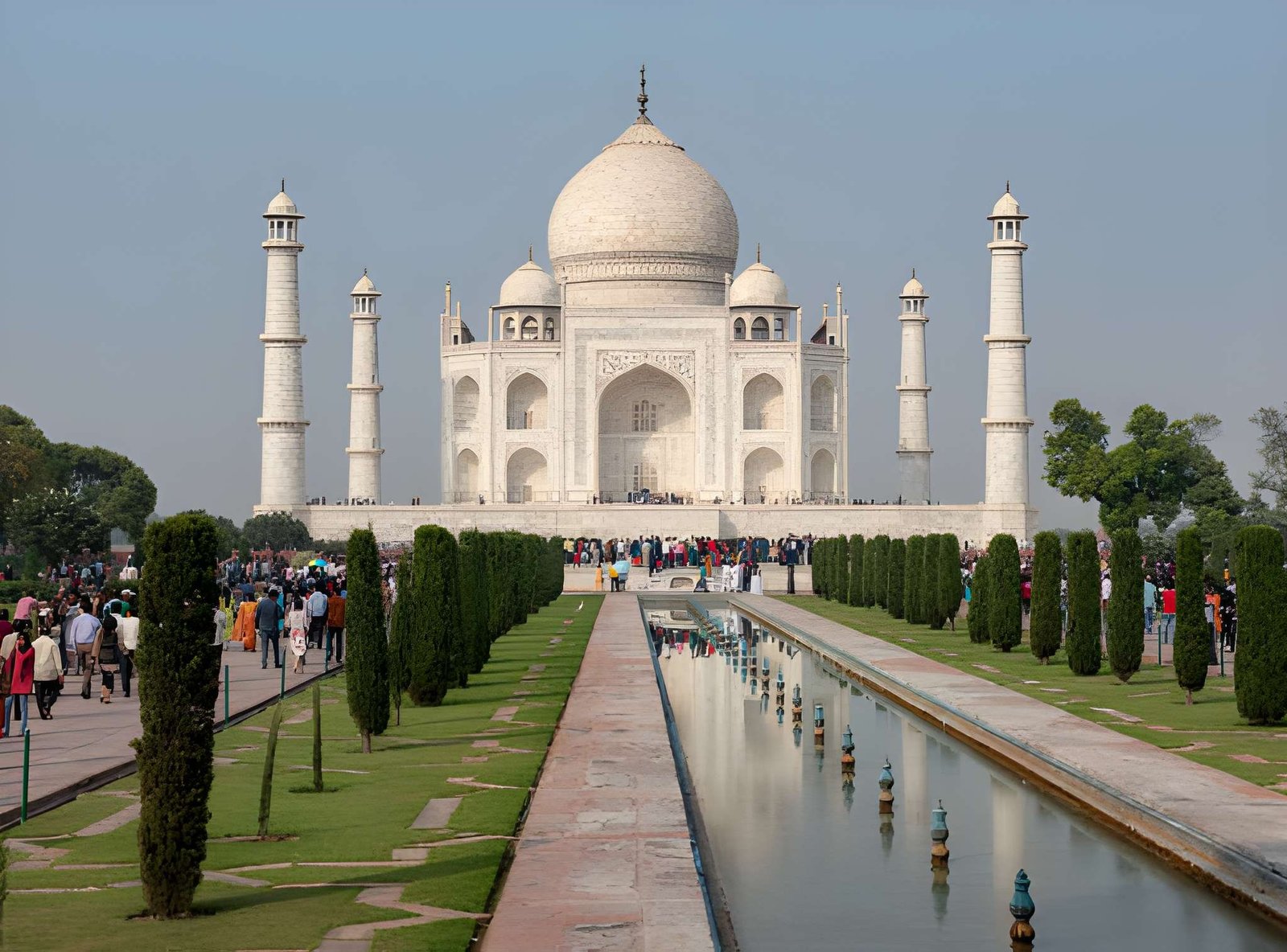
The Taj Mahal is one of the world’s most admired monuments, known for its stunning white marble architecture and timeless beauty. However, over the decades, air pollution has become a serious threat to this UNESCO World Heritage Site. Scientists and conservation experts have warned that pollution is gradually changing the appearance and condition of the monument.
Why the Taj Mahal Is Changing Color
Originally built with bright white Makrana marble, the Taj Mahal has slowly developed yellow, brown, and even green stains in some areas. Research shows that airborne particles such as black carbon, dust, and pollutants from fossil fuels are major causes of this discoloration.
Pollution from vehicle exhaust, nearby factories, construction dust, and the burning of waste releases harmful particulate matter into the air. These particles settle on the marble surface and reduce its natural shine over time. Studies conducted around Agra found high concentrations of fine particulate matter responsible for the monument’s gradual browning.
The Role of Industrial and Urban Pollution
Agra’s growing population and industrial activities have significantly increased pollution levels around the Taj Mahal. Brick kilns, diesel vehicles, and industrial emissions release sulfur dioxide and nitrogen oxides into the atmosphere. These gases can react with moisture in the air and create acidic compounds that weaken marble surfaces.
Experts also point to dust from roads and nearby agricultural areas as another contributor. The combined effect of these pollutants slowly erodes the monument’s beauty and structural integrity.
Conservation Efforts to Protect the Taj Mahal
To preserve the Taj Mahal, Indian authorities introduced the Taj Trapezium Zone (TTZ), an environmental protection area designed to reduce pollution around the monument. Industries using coal were either closed or shifted away from the region, and stricter pollution controls were introduced.
The Archaeological Survey of India (ASI) also performs regular cleaning using a special mud-pack treatment called the “Multani Mitti” process. This clay treatment helps remove stains and restore the marble’s brightness without damaging the structure. Visitors today still admire the monument’s beauty thanks to these ongoing restoration efforts.
Why Preservation Matters
The Taj Mahal is more than a historic building — it is a symbol of love, culture, and India’s rich architectural heritage. Protecting it from pollution is essential for future generations. Continued monitoring of air quality and stronger environmental policies will play a major role in preserving this masterpiece for years to come.
If you are planning to witness the beauty of the Taj Mahal in person, book your tickets and guided experiences through Tickets Taj Mahal for a smooth and memorable visit.





Comment (0)