


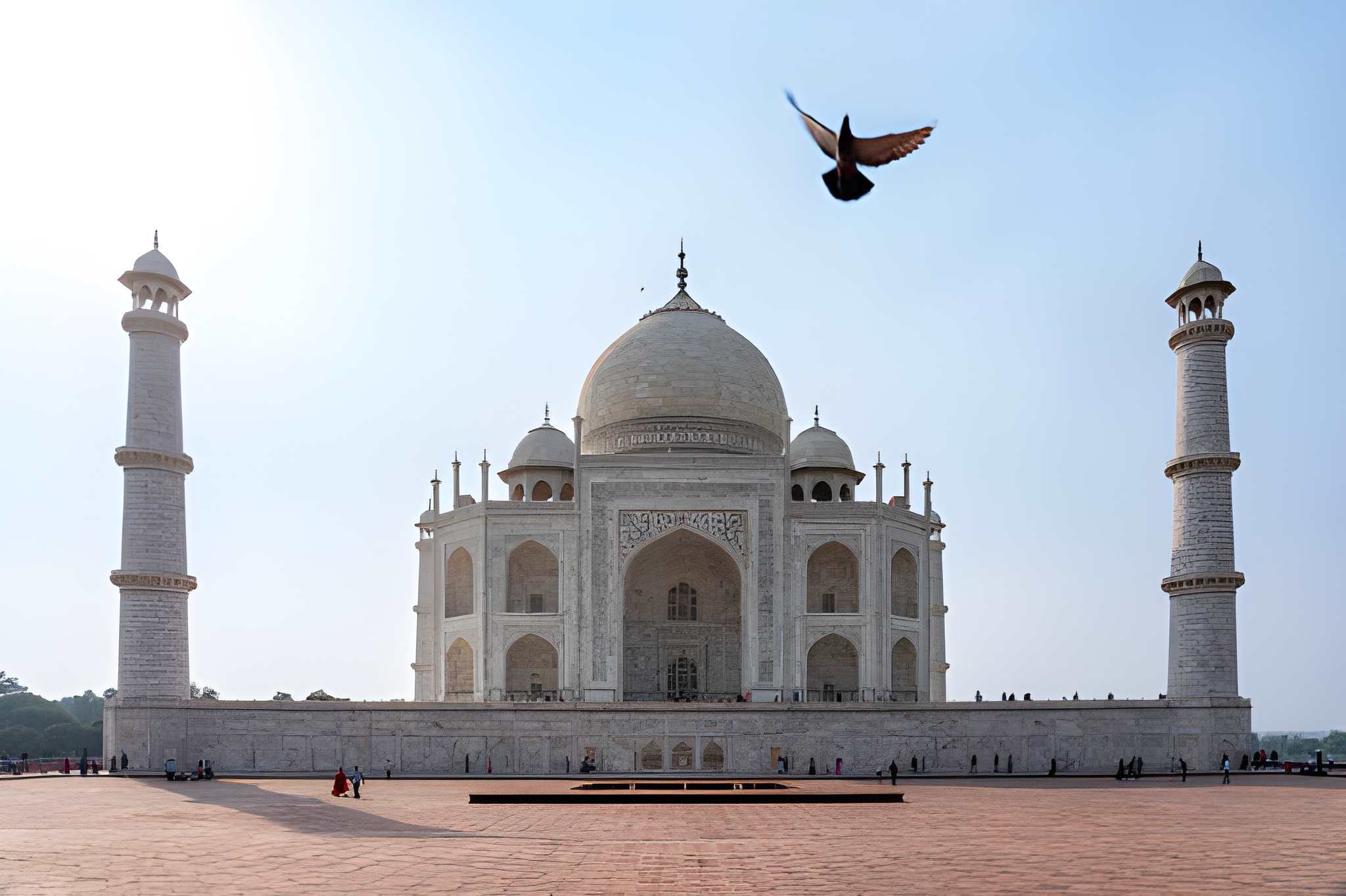
A Monument Shaped by Many Cultures
The Taj Mahal stands on the banks of the Yamuna River in Agra. It represents one of the world’s greatest artistic achievements. More than a monument, it reflects collaboration across cultures and borders.
Mughal emperor Shah Jahan commissioned the Taj Mahal in the 17th century. He built it in memory of his wife, Mumtaz Mahal. Artisans arrived from India, Persia, Central Asia, and the Ottoman regions. Together, they pursued a single artistic vision.
The Brilliance of White Marble
White marble defines the Taj Mahal’s timeless beauty. Builders sourced this marble from Makrana in Rajasthan. Craftsmen carved and polished every surface by hand. The result is remarkable precision and balance.
Light transforms the marble throughout the day. Morning brings soft pink tones. Midday reveals a radiant white glow. At sunset, the structure turns golden. This shifting color gives the monument a living presence.
Pietra Dura: Precision in Stone
The Taj Mahal showcases exquisite pietra dura craftsmanship. Artisans inlaid semi-precious stones into marble with extreme care. They used jade, lapis lazuli, turquoise, and carnelian. These stones form delicate floral patterns across walls and panels.
Each design required patience and accuracy. The motifs draw inspiration from Persian art. Indian craftsmanship brought those influences to life. The result feels both intricate and natural.
Calligraphy and Perfect Proportion
Elegant Quranic calligraphy frames the Taj Mahal’s entrances. Artists created the script using black marble. The letters increase in size as they rise upward. This technique keeps the text visually balanced from ground level.
Geometry governs every aspect of the structure. Symmetry defines the layout, the dome, and the gardens. Islamic design principles blend seamlessly with regional styles. Nothing feels accidental or out of place.
A Legacy That Endures
The Taj Mahal continues to inspire visitors from around the world. Its beauty comes from shared knowledge and human skill. No single culture defines it. Many traditions shape its form.
Seeing the Taj Mahal in person reveals its true scale and detail. Plan your visit in advance for a smooth experience. Book your entry easily through ticketstajmahal.com. Discover a monument that proves art knows no borders.





Comment (0)