


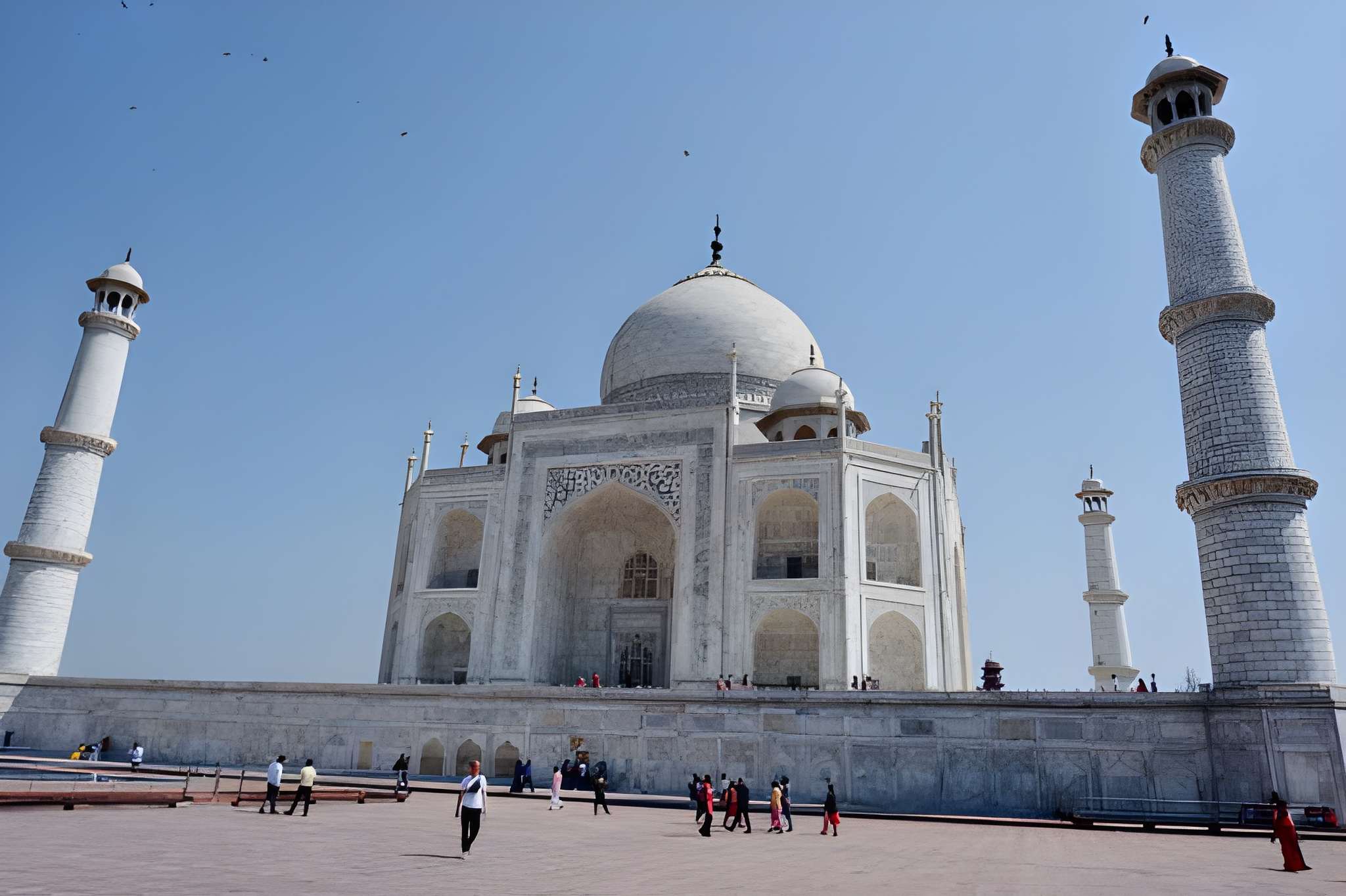
People around the world admire the Taj Mahal as a symbol of love and beauty. Behind its elegance, however, stands a triumph of science and engineering. In the 17th century, Mughal emperor Shah Jahan commissioned a structure that combined mathematics, material science, and environmental insight. These choices helped the monument survive for nearly four hundred years.
A Foundation Designed for Stability
The Taj Mahal rises near the Yamuna River, where soft soil threatened long-term stability. Mughal engineers addressed this challenge with a deep well foundation system. They dug vertical shafts and filled them with stone, rubble, and timber to distribute weight evenly.
The builders chose wood with intention. Constant groundwater exposure keeps the timber strong and prevents decay. This clever solution continues to support the structure today.
Geometry That Creates Balance
Perfect symmetry defines the Taj Mahal. Architects aligned the central dome, minarets, gardens, and gateways with precise mathematical ratios. This balance gives the monument its calm and harmonious appearance.
Engineers also planned for natural disasters. They angled each minaret slightly outward. During an earthquake, the towers would fall away from the main tomb, protecting the central structure.
Materials Chosen for Endurance
Craftsmen brought white marble from Makrana, more than 300 kilometers away. This marble resists heat, rain, and aging while maintaining its luminous finish. Builders selected it for strength as much as beauty.
Artisans embedded semi-precious stones directly into the marble using the pietra dura technique. Jade, lapis lazuli, and turquoise form floral patterns that still appear sharp and vibrant.
Architecture That Responds to Climate
The Taj Mahal reflects an advanced understanding of climate control. Thick marble walls slow heat transfer and keep interior spaces cooler. Gardens and water channels lower surrounding temperatures through evaporation.
Sunlight transforms the monument throughout the day. The marble appears pink at dawn, white at midday, and golden at night. Natural light and moisture create this effect without artificial treatment.
Science Behind Modern Preservation
Experts continue to rely on science to protect the Taj Mahal. Conservation teams apply clay-based mud packs to remove stains without harming the marble. Authorities monitor air quality to reduce pollution damage. These efforts help preserve the monument’s integrity.
Experience the Genius Firsthand
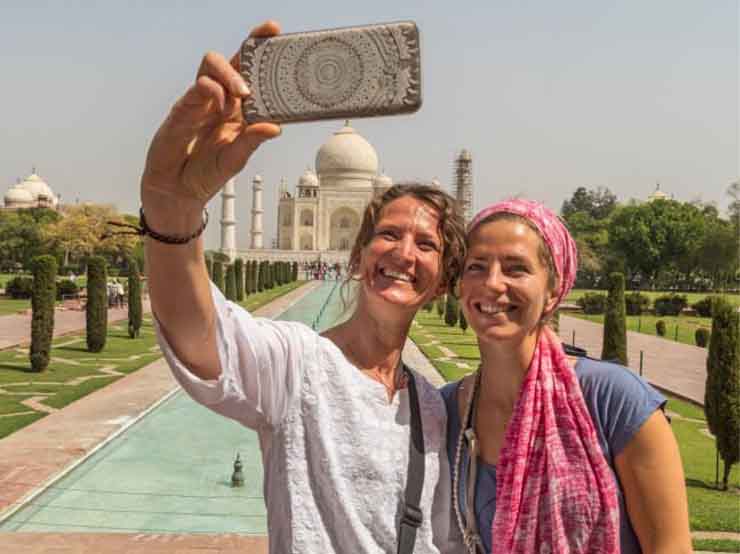
A visit to the Taj Mahal reveals details that photographs cannot show. Every measurement and material choice reflects human ingenuity and foresight.





Comment (0)