


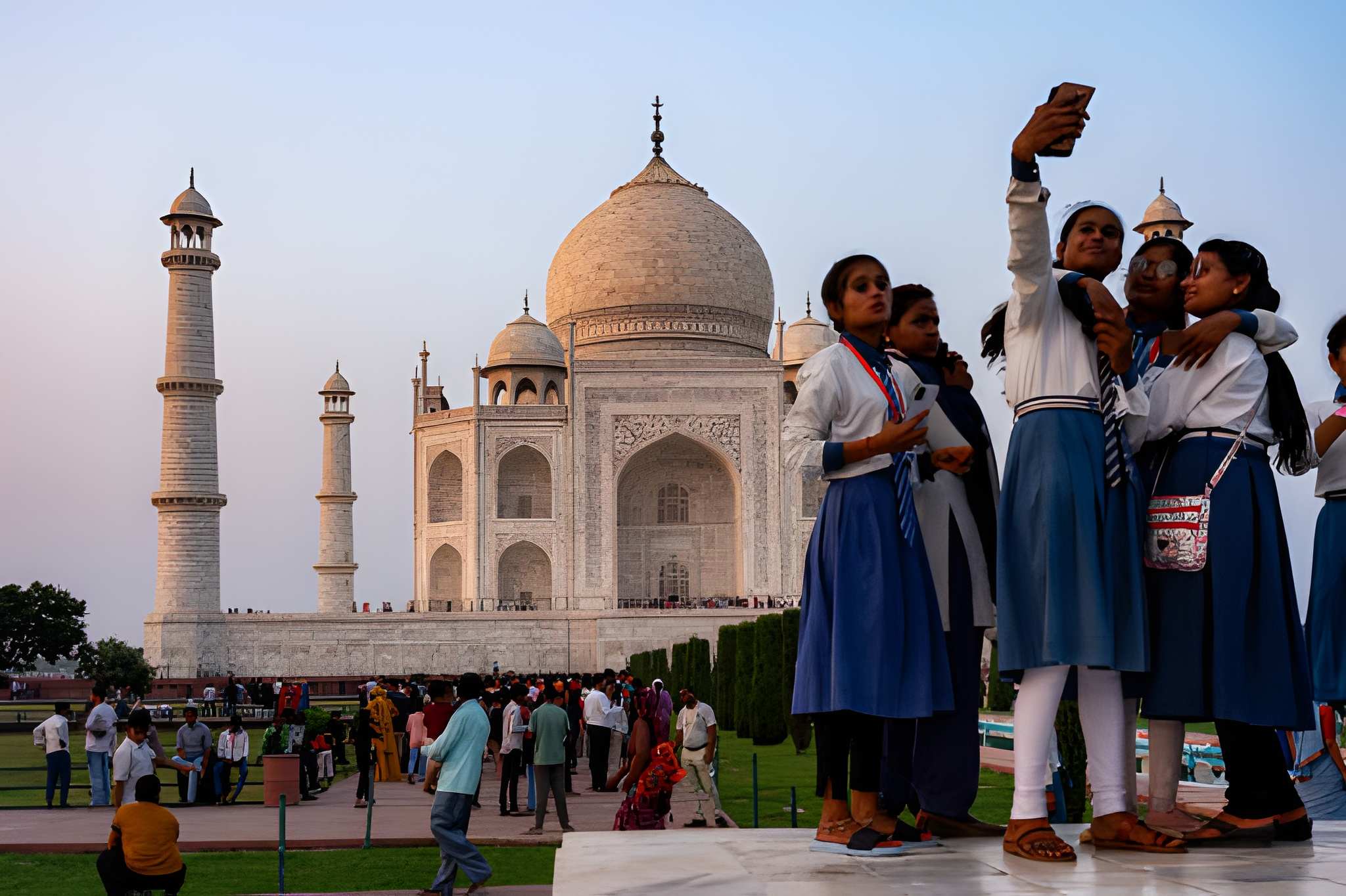
The Taj Mahal is more than a famous landmark—it’s a powerful blend of history, art, and culture. For students who want to understand India’s heritage, this monument offers an inspiring glimpse into the Mughal era and the emotions that shaped it.
Why the Taj Mahal Matters
Shah Jahan built the Taj Mahal in Agra in memory of his wife Mumtaz Mahal. Completed in 1653, it stands as one of the greatest examples of Mughal architecture. The blend of Persian, Islamic, and Indian styles gives it a unique identity. Its white marble walls, detailed carvings, and perfect symmetry draw millions of visitors every year.
For students, the Taj Mahal highlights India’s artistic brilliance, architectural innovation, and deep cultural history.
Best Time to Visit
The Taj Mahal changes throughout the day as sunlight falls differently on the marble. Early morning offers a calm, soft glow that’s perfect for both learning and photography. Evening light also creates beautiful colors across the monument.
From October to March, the weather stays cool and pleasant. If you plan to visit during these months, consider booking early because this season attracts many travelers.
What to Look For
1. The Main Mausoleum
The central dome and four minarets form the Taj Mahal’s signature look. Study the floral patterns and Quranic calligraphy created with semi-precious stones. The craftsmanship shows the Mughal empire’s dedication to detail and beauty.
2. The Gardens
The “charbagh” gardens surrounding the Taj Mahal represent the Islamic idea of paradise. They feature water channels, pathways, and neatly divided sections that create a peaceful, symmetrical layout.
3. The Mosque and Guest House
Two red sandstone buildings sit on either side of the main structure. Their warm color contrasts with the marble and reveals how Mughal architects balanced different materials and styles.
Tips for Student Travelers
-
Book Tickets Online: Avoid long lines by reserving your entry at ticketstajmahal.com.
-
Bring Your Student ID: Students often receive discounted entry.
-
Travel Light: Security checks can take time, and large bags aren’t allowed.
-
Stay Hydrated: Agra’s daytime heat can surprise visitors.
-
Respect the Monument: Follow the guidelines and remember that the Taj Mahal holds deep emotional and cultural meaning.
Learning Beyond the Taj Mahal
Your visit can extend into a broader educational journey. Agra Fort offers insight into Mughal military power and lifestyle. Mehtab Bagh gives you a perfect sunset view of the Taj Mahal from across the river. Fatehpur Sikri, the former Mughal capital, adds more context to the empire’s history and architecture.
Final Thoughts
A visit to the Taj Mahal can enrich your understanding of India’s heritage and artistic traditions. Students who explore the site gain meaningful insight into a remarkable period of history. With a bit of planning—and an online ticket from ticketstajmahal.com—your trip can be smooth, memorable, and educational.





Comment (0)