


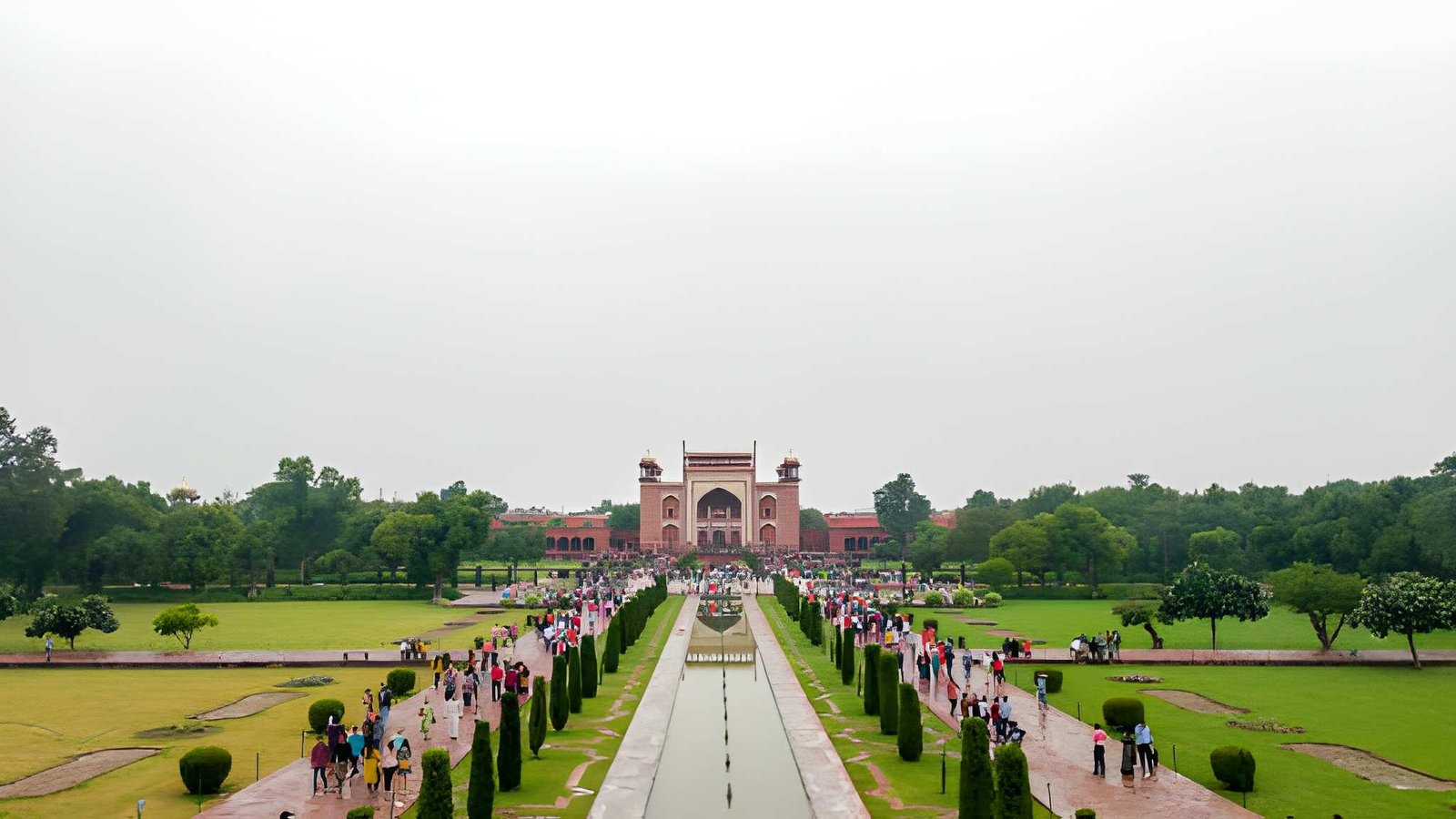
The Great Gate (Darwaza-i-Rauza) stands at the entrance of the Taj Mahal complex in Agra, India. It welcomes visitors into one of the world’s most famous monuments. In addition, it sets the tone for the beauty that lies ahead.
Mughal Emperor Shah Jahan commissioned the gate in the 17th century. Architects designed it as more than an entrance. Instead, they created a symbolic passage into a space that represents paradise on earth.
Architectural Design and Features
The gate uses red sandstone as its main material. However, builders enriched it with elegant white marble inlay work. This contrast creates a striking visual effect.
The structure follows a symmetrical layout. A large central arch forms the main passage. Meanwhile, smaller arches sit on both sides to balance the design. As a result, the gateway looks both grand and harmonious.
Four octagonal towers rise at the corners. Each tower includes a chhatri, or small dome. These elements add height and elegance to the structure. Moreover, they give the gate a strong yet refined presence.
Artists also added floral patterns and Quranic calligraphy across the walls. They used marble inlay to highlight these details. Therefore, the gate combines art, faith, and architecture in one design.
From the archway, visitors can see the Taj Mahal perfectly framed in the distance. This view is intentional. It builds anticipation and directs attention toward the main mausoleum.
Symbolism and Meaning
The Great Gate carries deep symbolic meaning. It marks the transition from the outside world into a sacred space. In other words, it separates everyday life from a place of peace and reflection.
As visitors walk through it, they enter the Charbagh garden layout. This garden design represents paradise in Islamic tradition. Therefore, the journey through the gate becomes both physical and symbolic.
A Lasting Mughal Legacy
The Darwaza-i-Rauza shows the skill of Mughal architects. It also reflects their attention to beauty and balance. In addition, it enhances the emotional experience of visiting the Taj Mahal.
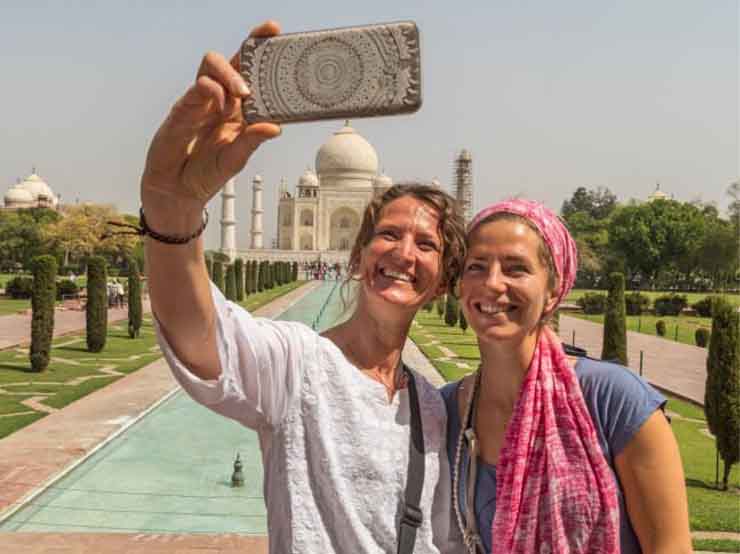
Today, the gate remains one of the most admired parts of the complex. Many visitors stop here to take photos and admire the view. As a result, it continues to connect history with modern travel experiences.
Plan Your Visit
Experience the beauty of the Taj Mahal and walk through the historic Great Gate yourself.
Book your visit here: https://ticketstajmahal.com





Comment (0)