


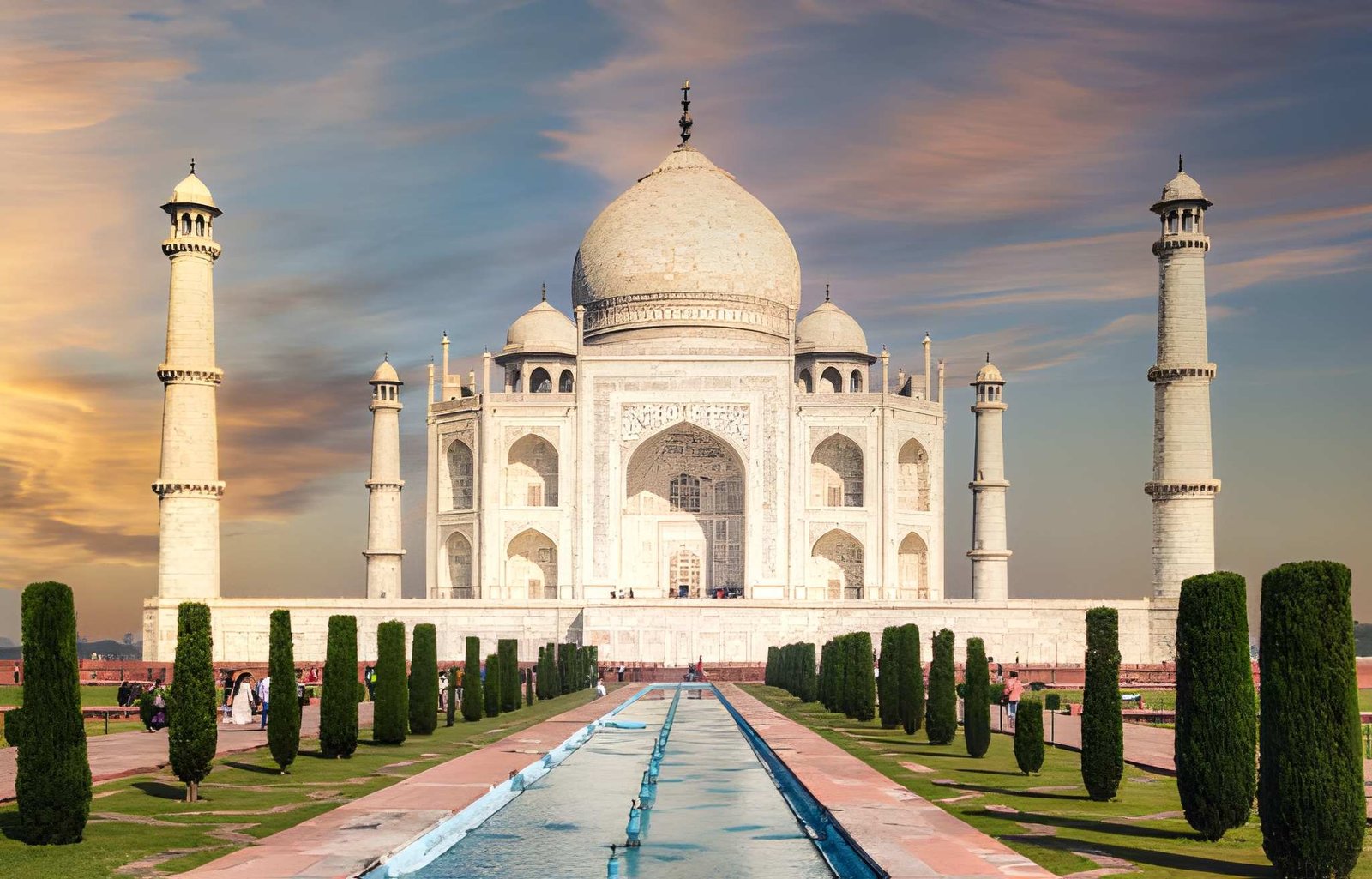
The Taj Mahal is one of the world’s most photographed monuments, yet many visitors overlook the subtle details that make it an architectural masterpiece. Beyond its famous white marble exterior lies a world of hidden artistry, clever engineering, and symbolic design.
The Taj Mahal Changes Color Throughout the Day
One fascinating detail many tourists miss is how the marble appears to change color depending on the time of day. At sunrise, the monument glows pinkish-gold, turns bright white during the afternoon, and reflects soft blue or silver tones under moonlight. This effect comes from the semi-translucent marble and the changing natural light.
The Optical Illusion at the Main Gate
As you walk through the grand entrance gate, the Taj Mahal appears enormous. Surprisingly, as you move closer, it seems to shrink slightly instead of growing larger. This was an intentional optical illusion created by Mughal architects to increase the monument’s dramatic impact.
The Minarets Are Slightly Tilted
Most people assume the four minarets surrounding the mausoleum stand perfectly straight. In reality, they lean slightly outward. This subtle engineering decision protected the central tomb in case of earthquakes because collapsing towers would fall away from the main structure.
Hidden Details in the Calligraphy
The Quranic verses decorating the walls are another hidden marvel. The lettering increases in size higher up the walls, creating the illusion that every line is the same size when viewed from the ground. This perspective trick demonstrates the extraordinary precision of Mughal craftsmanship.
The “Perfect Symmetry” Isn’t Actually Perfect
The Taj Mahal is famous for its flawless symmetry, but there is one intentional imbalance. Mumtaz Mahal’s cenotaph sits perfectly centered, while Shah Jahan’s tomb was added later beside hers, slightly off-center. It is the only major asymmetrical feature in the entire complex.
Pietra Dura: The Hidden Gemstone Art
Many visitors admire the marble walls without realizing they contain delicate inlays of semi-precious stones such as jade, lapis lazuli, turquoise, and carnelian. This intricate art form, known as pietra dura or parchin kari, creates floral patterns that glow beautifully under sunlight.
Secret Chambers Beneath the Monument
Beneath the visible structure are sealed chambers and corridors that remain closed to the public. Historians believe these underground rooms may have been used for structural support, ventilation, or storage during construction, adding even more mystery to the monument.
Experience the Taj Mahal Beyond the Surface
The Taj Mahal is far more than a symbol of love—it is a masterpiece filled with hidden engineering, artistic illusions, and symbolic meaning that most visitors never notice.
Planning your visit? Book your tickets easily and avoid long queues at Tickets Taj Mahal.





Comment (0)