


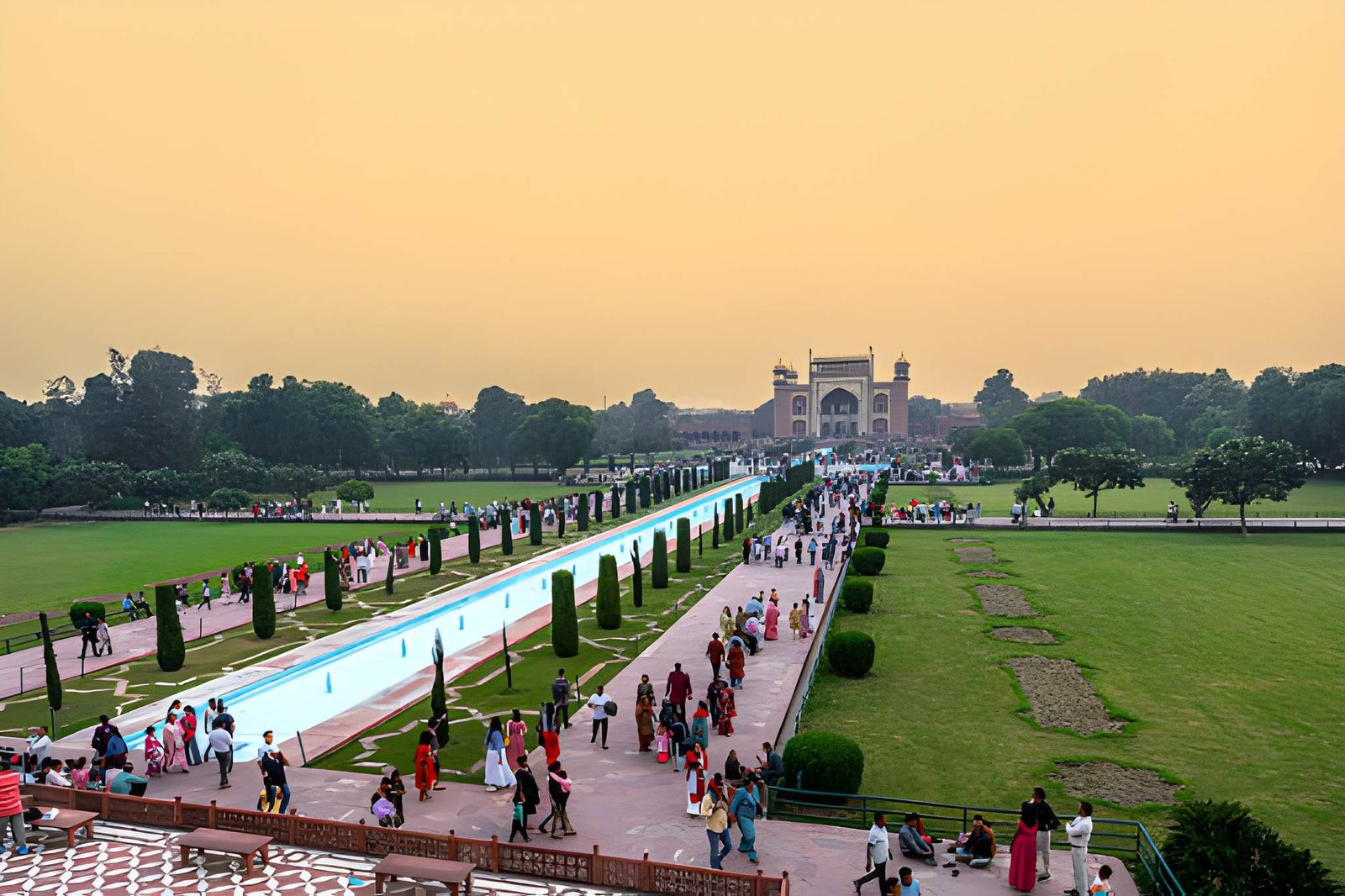
The Taj Mahal attracts millions of visitors each year, making crowd management essential for both visitor experience and monument preservation. Authorities, led by the Archaeological Survey of India (ASI), have implemented several strategic measures to ensure smooth and safe movement within this iconic site.
Why Visitor Flow Management Is Crucial
With daily footfall often ranging between 30,000 and 50,000—and even higher during holidays—managing crowds is vital to prevent damage to the monument and ensure safety.
Excessive crowding can lead to wear and tear of the marble structure and even safety risks like overcrowding at entry gates.
Daily Visitor Limits and Capacity Control
One of the most important strategies is limiting the number of visitors per day. Authorities have proposed capping entries at around 40,000 visitors to reduce overcrowding and maintain a comfortable experience.
This cap helps balance tourism demand with conservation efforts, ensuring the monument remains protected for future generations.
Timed Entry Tickets
Timed ticketing is a key tool in managing visitor flow. Instead of allowing unrestricted access, visitors are assigned specific time slots for entry.
This system:
- Prevents overcrowding at peak hours
- Encourages better planning among visitors
- Ensures a steady flow of people throughout the day
Timed entry has proven effective in maintaining order and improving the overall experience.
Limited Visit Duration
Authorities also recommend limiting the duration of each visit to around 3 hours.
By doing this:
- More visitors can be accommodated in a day
- Congestion inside the monument is reduced
- Movement remains continuous rather than stagnant
Restricted Access to Sensitive Areas
To protect the most delicate parts of the monument, access to certain areas—like the main mausoleum—is controlled through additional ticketing or restrictions.
This reduces direct contact with the marble surfaces, which can deteriorate over time due to constant touching and foot traffic.
Smart Infrastructure and Crowd Monitoring
Authorities use a combination of physical and digital tools to guide visitors efficiently:
- Clearly marked pathways and signage
- Separate entry and exit routes
- Security checks and controlled gates
- Real-time monitoring during peak seasons
These systems help maintain a smooth flow and prevent bottlenecks.
Seasonal and Peak-Time Planning
Visitor trends are closely monitored throughout the year. Peak seasons—such as holidays and festivals—often see a surge in visitors, sometimes exceeding 70,000 in a single day.
During these times, authorities:
- Increase security and staff presence
- Issue warnings or advisories
- Adjust crowd control measures accordingly
A Balanced Approach to Tourism and Preservation
Managing visitor flow at the Taj Mahal is about striking the right balance between accessibility and conservation. Authorities continuously refine their strategies to enhance visitor experience while safeguarding this world-famous monument.
Plan Your Visit Smartly
To make the most of your visit and avoid long queues, it’s best to book your tickets in advance and choose a suitable time slot.
👉 Visit https://ticketstajmahal.com to book your tickets and enjoy a hassle-free experience at the Taj Mahal.





Comment (0)