


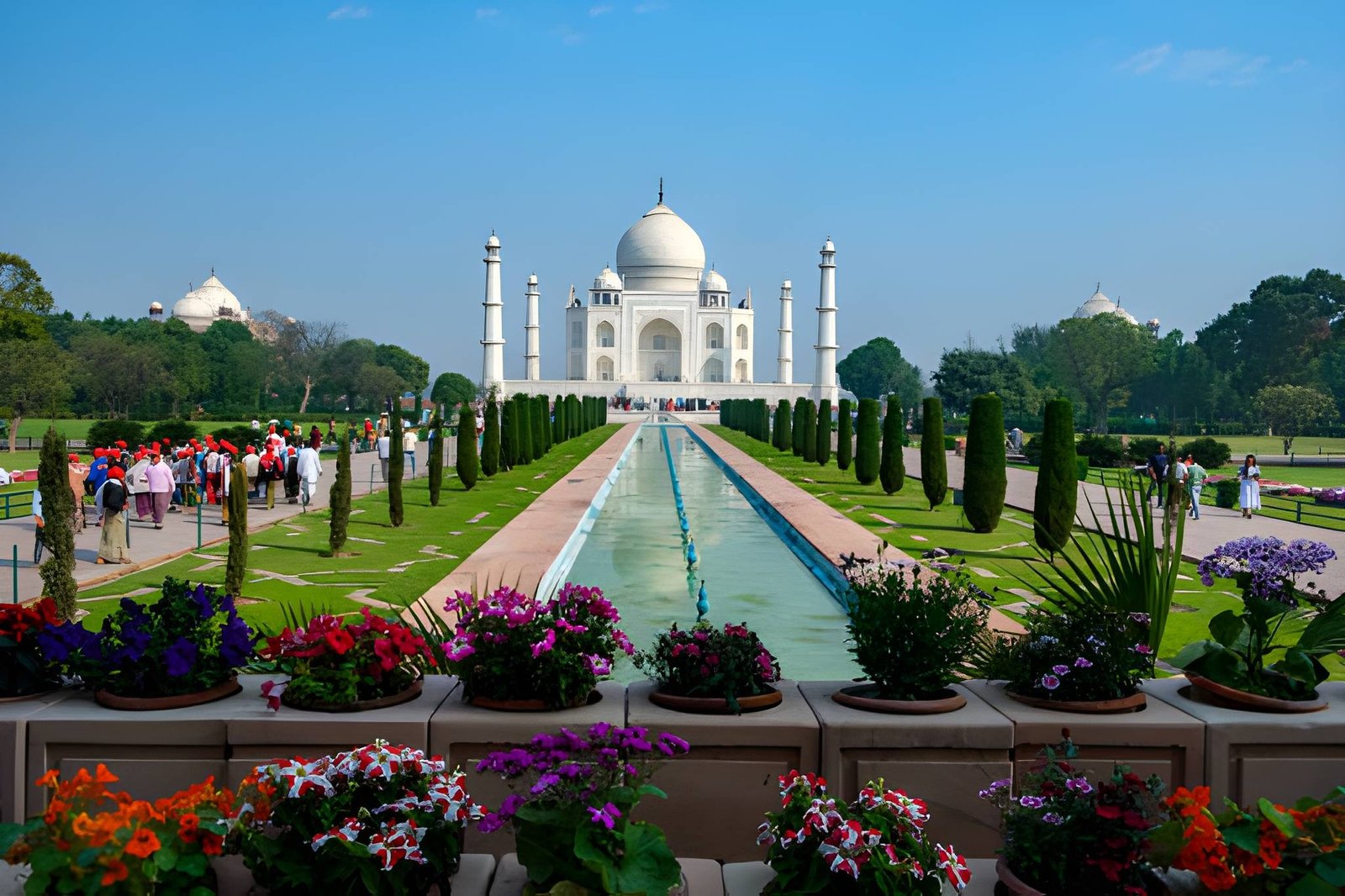
The Taj Mahal is one of the most recognizable landmarks in the world—but how much do you really know about it? Beyond its stunning white marble façade lies a rich history, surprising facts, and architectural brilliance that many visitors overlook.
A Monument of Love… But Not Just That
Most people know that the Taj Mahal was built by Emperor Shah Jahan in memory of his beloved wife Mumtaz Mahal. While this romantic story is true, the monument is also a symbol of power, wealth, and the artistic vision of the Mughal Empire at its peak.
Construction began in 1632 and took over 20 years to complete. Thousands of artisans, craftsmen, and laborers contributed to its creation, making it not just a monument of love, but also a masterpiece of collaboration and engineering.
The Marble That Changes Color
Have you ever noticed that the Taj Mahal seems to change color throughout the day? In the soft light of sunrise, it appears pinkish. Under the bright midday sun, it shines a brilliant white, and at sunset, it takes on a golden hue. On full moon nights, it glows with a magical silver tone.
This effect is due to the reflective quality of the white marble and the changing light conditions—an intentional design element that adds to its mystique.
Perfect Symmetry… Almost
The Taj Mahal is famous for its near-perfect symmetry. From the gardens to the reflecting pools, everything is carefully aligned. However, there is one exception: the tomb of Shah Jahan himself.
While Mumtaz Mahal’s tomb is placed at the exact center, Shah Jahan’s tomb was added later and slightly disrupts the symmetry. It’s a small detail that many visitors never notice.
More Than Just a Building
The Taj Mahal complex includes more than the main mausoleum. It features a mosque, a guest house, beautiful gardens, and an elaborate gateway. The gardens are designed in a Persian-style layout, symbolizing paradise.
The intricate carvings, calligraphy, and inlaid gemstones throughout the structure demonstrate extraordinary craftsmanship. Each detail tells a story and reflects the cultural influences of the time.
Hidden Myths and Misconceptions
There are many myths surrounding the Taj Mahal. One popular story claims that Shah Jahan planned to build a black marble version across the river. While intriguing, there’s little solid evidence to support this idea.
Another myth suggests that the hands of the artisans were cut off after construction to prevent them from replicating the design. Historians widely dismiss this as a legend rather than fact.
Test Your Knowledge in Person
Reading about the Taj Mahal is one thing—but experiencing it firsthand is something entirely different. Walking through its grand entrance, seeing the intricate details up close, and witnessing its beauty at different times of day brings history to life.
If you’re planning a visit, make sure to book your tickets in advance and avoid long queues. You can easily secure your entry and explore this wonder of the world by visiting:
👉 https://ticketstajmahal.com
Final Thoughts
The Taj Mahal is more than just a beautiful monument—it’s a blend of history, art, science, and emotion. Whether you’re a history enthusiast or a curious traveler, there’s always something new to discover.
So, how much did you really know about the Taj Mahal? And more importantly—when will you see it for yourself?





Comment (0)