


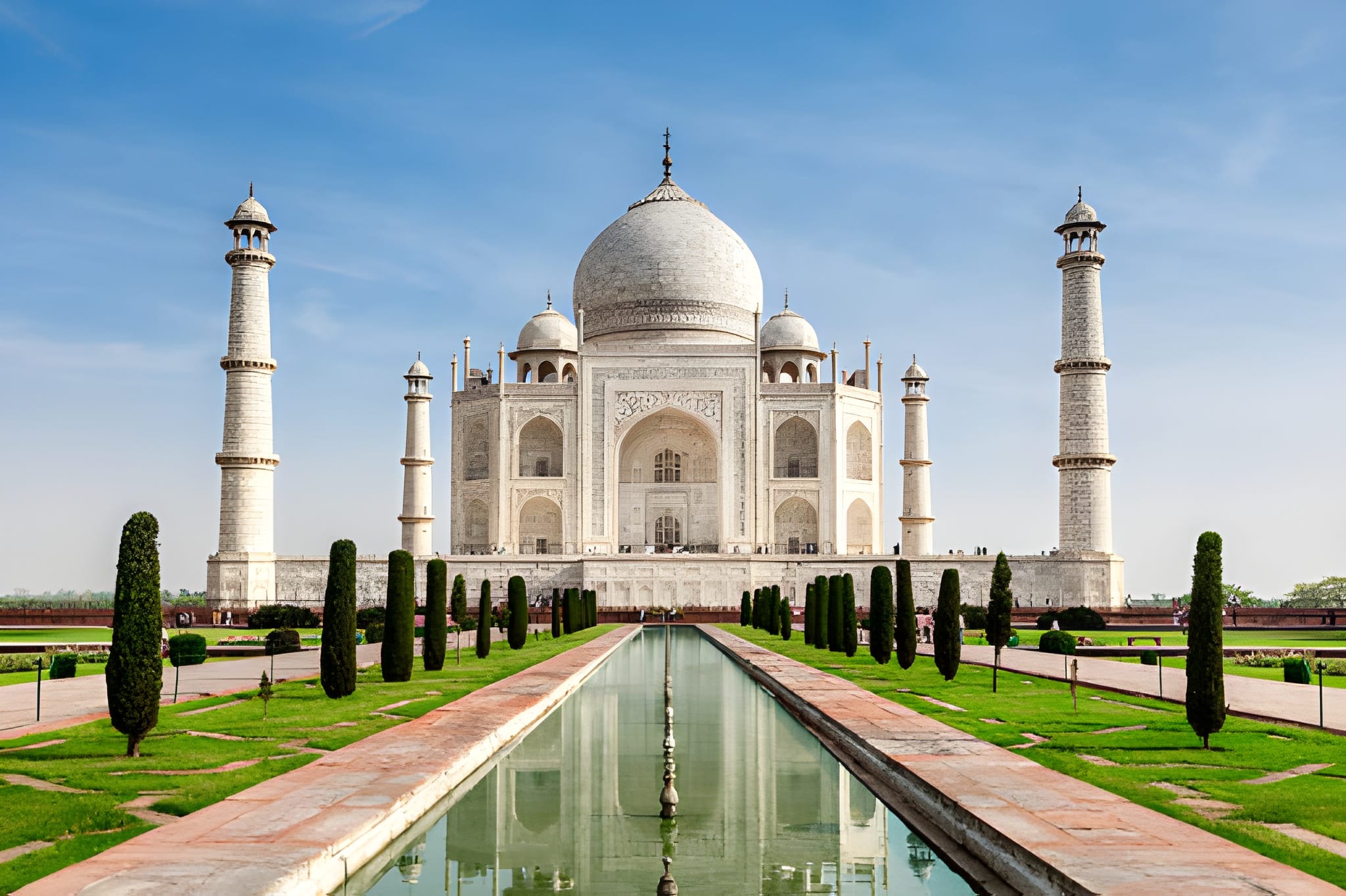
The Taj Mahal, one of the most celebrated monuments in the world, stands not only as a symbol of love but also as a masterpiece of architectural brilliance. Mughal emperor Shah Jahan built this white marble mausoleum in the 17th century to honor his beloved wife, Mumtaz Mahal. For this reason, its origins and design reflect a blend of history, devotion, and artistry that continues to inspire awe among millions of visitors every year.
The Origins of the Taj Mahal
Shah Jahan ordered construction of the Taj Mahal in 1632, shortly after Mumtaz Mahal’s passing. From the very beginning, he envisioned a grand monument that would immortalize her memory. More than 20,000 artisans and laborers, guided by some of the finest architects of the Mughal court, worked on the project. As a result, the main mausoleum took about a decade to finish, while the entire complex—with its gardens, mosques, and additional structures—reached completion in just over 20 years.
Historical accounts describe Shah Jahan’s personal involvement in key design choices, ensuring the monument reflected his vision of eternal love. Even today, UNESCO recognizes the Taj Mahal as a World Heritage Site, and travelers from around the globe flock to Agra to witness its timeless beauty.
Architectural Grandeur
The Taj Mahal represents the height of Mughal architecture, blending Persian, Islamic, and Indian traditions. Above all,perfect symmetry defines the entire complex, with the mausoleum rising from a raised marble platform at the center. The white dome gleams brilliantly at sunrise, sunset, and under the glow of the moon.
The central onion-shaped dome reaches about 73 meters in height, while four slender minarets frame the structure, adding balance and harmony. Moreover, craftsmen used pietra dura, an inlay technique with semi-precious stones, to form intricate floral and geometric motifs across the marble. In addition, calligraphers inscribed verses from the Qur’an in black marble, enhancing the sanctity of the monument.
Lush Mughal gardens surround the mausoleum in the charbagh style, symbolizing paradise on earth. Consequently, the reflecting pools and walkways create a serene setting, while a red sandstone mosque and guest house provide striking contrast to the gleaming white marble.
A Timeless Symbol
The Taj Mahal’s beauty goes beyond its physical form—it tells a story of love, craftsmanship, and cultural fusion. For this reason, the design showcases the genius of Mughal artisans, and its presence endures as one of humanity’s greatest architectural achievements.
If you are planning a visit to India, experiencing the magnificence of the Taj Mahal in person will stay with you forever. To make your journey easier, book your tickets online at Ticketstajmahal.com.






Comment (0)