


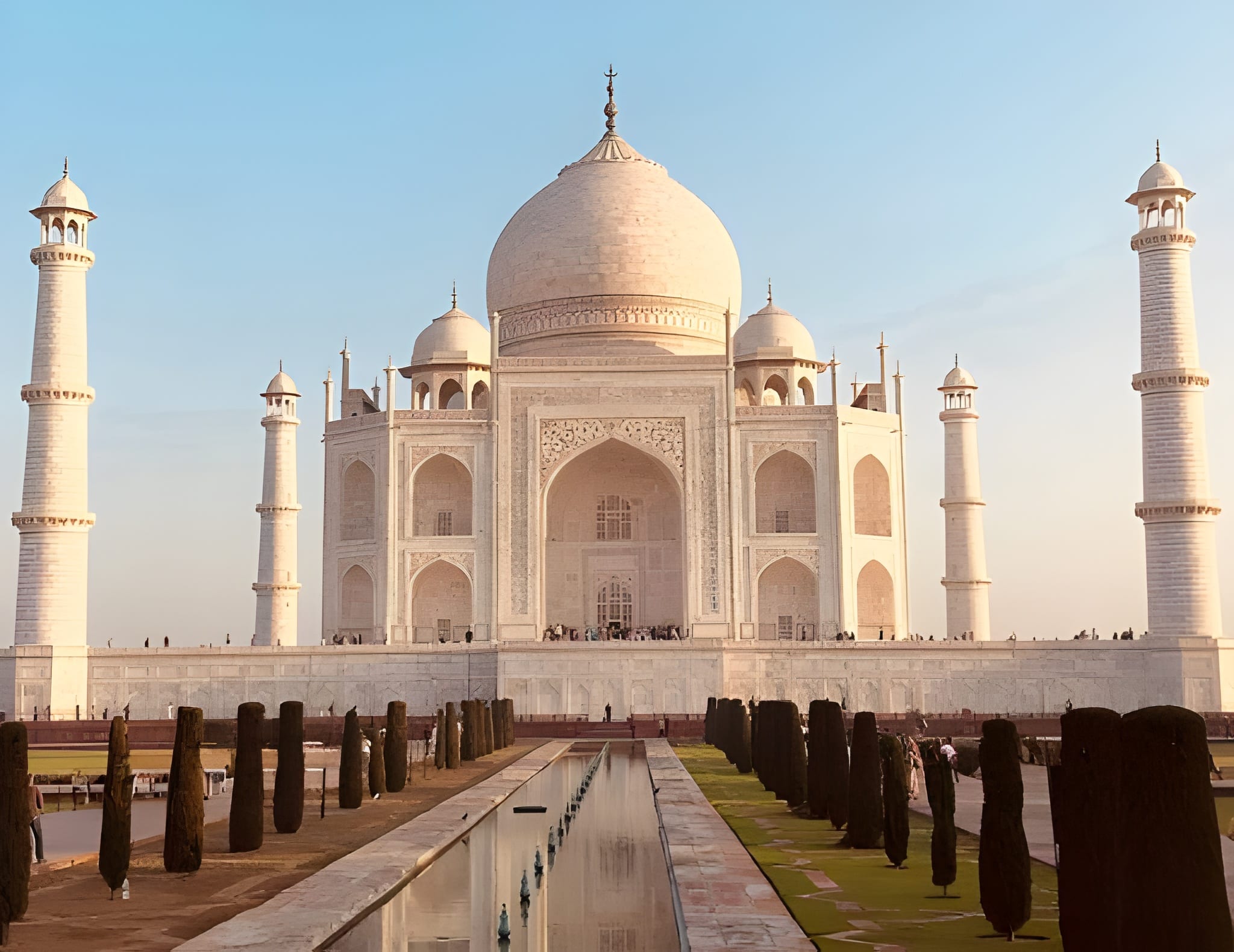
The Taj Mahal is more than just a monument; it is a timeless symbol of love and devotion. Situated on the serene banks of the Yamuna River in Agra, India, this marble masterpiece continues to captivate millions of visitors every year. Built by Mughal Emperor Shah Jahān in memory of his beloved wife, Mumtaz Mahal, the Taj Mahal stands as one of the greatest architectural achievements in human history.
A Love Story Etched in Stone
Shah Jahān was the fifth ruler of the Mughal Empire, a period often described as the golden age of art, culture, and architecture. However, his life changed forever when his cherished wife, Mumtaz Mahal, died during childbirth in 1631. Grief-stricken, he decided to build a monument so magnificent that it would immortalize their love for eternity.
Consequently, in 1632, construction of the Taj Mahal began. Over 20,000 artisans and craftsmen from across India, Persia, and the Ottoman Empire worked tirelessly for more than two decades. The result was a stunning white marble mausoleum that perfectly blended Persian, Islamic, and Indian architectural styles.
A Marvel of Design and Symbolism
The Taj Mahal is celebrated not only for its beauty but also for its symmetry and symbolism. Moreover, its color changes with the light — glowing pinkish at dawn, dazzling white in the afternoon, and shimmering golden under moonlight. Every detail, from the carved floral motifs to the semi-precious stones embedded in the marble, reflects both artistic mastery and spiritual meaning.
In addition, the complex includes a grand entrance gate, a mosque, a guesthouse, and lush Mughal gardens that symbolize paradise. The central dome rises majestically, while the reflecting pool mirrors its perfect symmetry, creating an unforgettable sight.
A Legacy Beyond Time
Over the centuries, the Taj Mahal has inspired poets, travelers, and dreamers from around the world. In fact, it has become a universal symbol of eternal love. Visitors often describe the experience of standing before the monument as both peaceful and emotional — a reminder that true love transcends life and death.
Furthermore, the Taj Mahal’s enduring beauty has earned it a place among the New Seven Wonders of the World, making it a must-see destination for anyone traveling to India.
Planning Your Visit
If you’re preparing to visit the Taj Mahal, planning ahead is essential. The site attracts thousands of visitors daily; therefore, booking your tickets in advance is highly recommended. Doing so not only saves time but also ensures a smooth entry process.
For a convenient and reliable experience, you can book your Taj Mahal tickets online through Ticketstajmahal.com. The platform offers secure payments, updated visitor information, and flexible ticket options. Moreover, it provides details on opening hours, photography rules, and the best times to visit, helping you make the most of your trip.





Comment (0)