


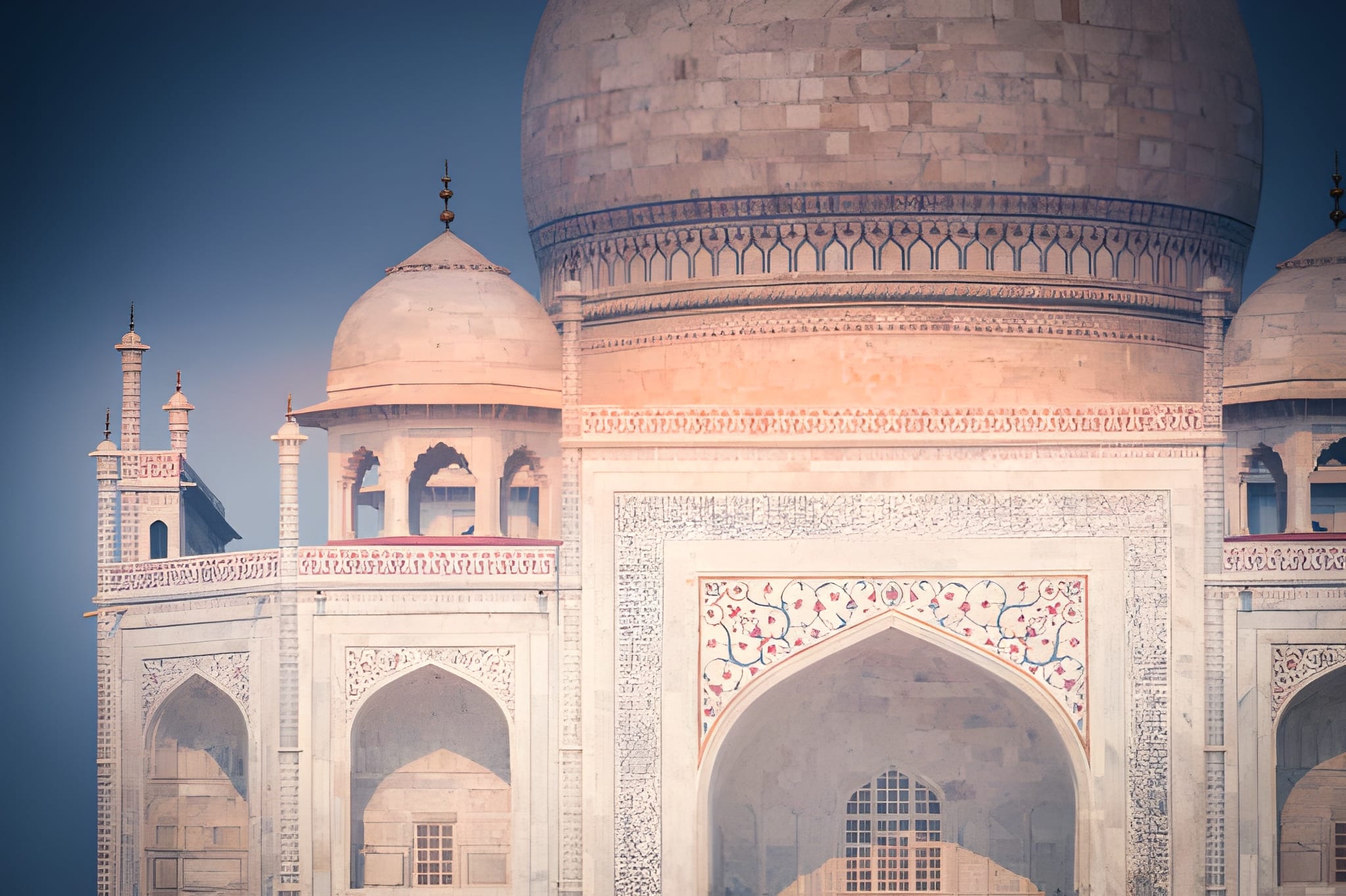
The Taj Mahal, one of the world’s most admired monuments, is celebrated not only for its breathtaking architecture but also for the intricate decorative elements that make it truly unique. Among the three main categories of ornamentation—calligraphy, vegetative motifs, and abstract forms—it is the abstract designs that stand out for their mesmerizing patterns and symbolic depth. These forms transform the white marble surfaces into canvases of geometry and symmetry, reflecting the genius of Mughal artistry.
The Language of Geometry
Abstract forms at the Taj Mahal are primarily based on geometry. Skilled artisans used interlacing patterns, stars, polygons, and tessellations to create endless sequences of design. These patterns are not just decoration but also carry spiritual significance. In Islamic art, geometry often symbolizes the infinite nature of the universe and the perfection of divine creation. Every curve, angle, and repeated line on the Taj Mahal’s walls is part of a larger harmony, reminding visitors of balance and unity.
Symmetry at Its Finest
The entire Taj Mahal complex is designed with perfect symmetry, and this principle is echoed in its abstract decoration. The repeating patterns across walls, floors, and ceilings create a sense of rhythm and order. Whether you look at the marble inlay on the floors or the geometric tracery within sandstone vaults, the designs mirror one another with astonishing precision. This deliberate balance reinforces the monument’s aura of peace and eternity.
Inlay Art and Abstract Beauty
One of the most striking features of the Taj Mahal is pietra dura—the intricate inlay of precious and semi-precious stones into marble. Many of these inlays form abstract patterns such as hexagons, stars, and lattice-like compositions. The smooth contrast of colored stones against pure white marble adds depth and vibrancy. These abstract designs catch the eye of every visitor, shifting in appearance depending on the light and angle of view.
Abstract Forms Beyond the Main Tomb
While the main mausoleum receives much attention, the surrounding sandstone buildings also showcase abstract artistry. Their domes and vaults are enhanced with tracery and painted geometric motifs. Courtyards, pathways, and garden layouts likewise incorporate abstract principles, reminding visitors that the Taj Mahal is not a single structure but a carefully designed ensemble.
A Journey Through Art and Meaning
For many, the abstract patterns of the Taj Mahal serve as a visual meditation. The repetition of forms suggests infinity, while their flawless arrangement reflects order in chaos. Visitors often find themselves pausing to admire these details, realizing that the monument’s beauty lies not just in its grand silhouette but also in its smallest, most intricate designs.
The Taj Mahal is more than an architectural wonder—it is a masterpiece of abstract art, where geometry, symmetry, and spirituality come together in timeless harmony.
If you wish to experience this artistic brilliance up close, plan your visit today. Book your tickets easily at Ticketstajmahal.com and step into the world of beauty, history, and inspiration.





Comment (0)