


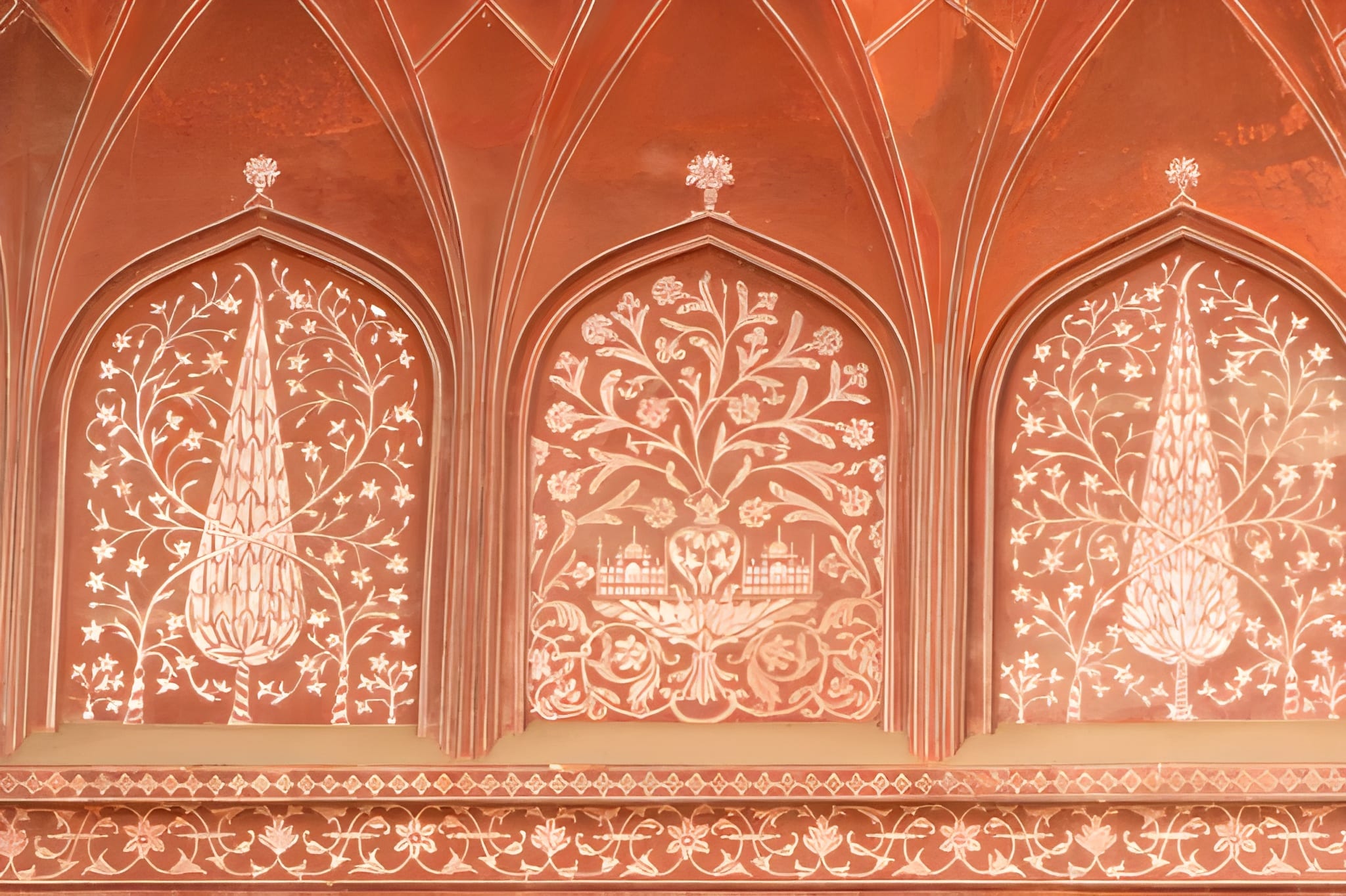
The Taj Mahal, one of the world’s most admired monuments, is often celebrated for its grandeur and timeless elegance. While its overall architectural harmony captures immediate attention, it is the intricate details that truly bring the mausoleum to life. Among these, the vegetative motifs—delicate floral and plant-inspired patterns—stand out as some of the most captivating decorative elements. They reflect not only the artistry of the Mughal craftsmen but also the symbolic meanings rooted in Persian and Islamic traditions.
Symbolism of Floral Designs
Vegetative motifs on the Taj Mahal are far more than ornamental flourishes. They represent the idea of paradise, an eternal garden of bliss described in Islamic tradition. Every petal, vine, and leaf carved or inlaid into the marble walls echoes this vision of heaven. By surrounding the resting place of Emperor Shah Jahan’s beloved wife, Mumtaz Mahal, with eternal blossoms, the artists conveyed both beauty and spiritual promise.
Techniques of Decoration
The artisans of the Taj Mahal used several techniques to create these exquisite motifs.
-
Carving: Floral relief carvings on white marble panels showcase incredible detail, with petals, buds, and stems that appear almost lifelike.
-
Pietra Dura (stone inlay): Semi-precious stones such as carnelian, jasper, and lapis lazuli were inlaid into the marble to form vivid flowers and vines. This technique gave the motifs a striking, colorful brilliance that has endured for centuries.
-
Incised Painting: On red sandstone structures within the Taj complex, vegetal patterns were painted and outlined, further enhancing the visual richness.
Harmony in Design
These motifs are carefully arranged to maintain balance and symmetry. The flowers are often stylized rather than realistic, creating a blend of natural inspiration and artistic imagination. Each design complements the overall geometry of the monument, adding softness to the grandeur of marble domes, arches, and walls.
A Living Tribute
The vegetative motifs serve as a reminder of how art and architecture can intertwine to embody both emotion and belief. They immortalize Shah Jahan’s love story while offering visitors a glimpse into the Mughal vision of beauty and paradise.
If you wish to experience the breathtaking artistry of the Taj Mahal in person—from its monumental form to the delicate flowers etched in stone—plan your visit with us. Book your tickets easily and securely at Ticketstajmahal.com and witness the timeless wonder that continues to inspire the world.





Comment (0)