


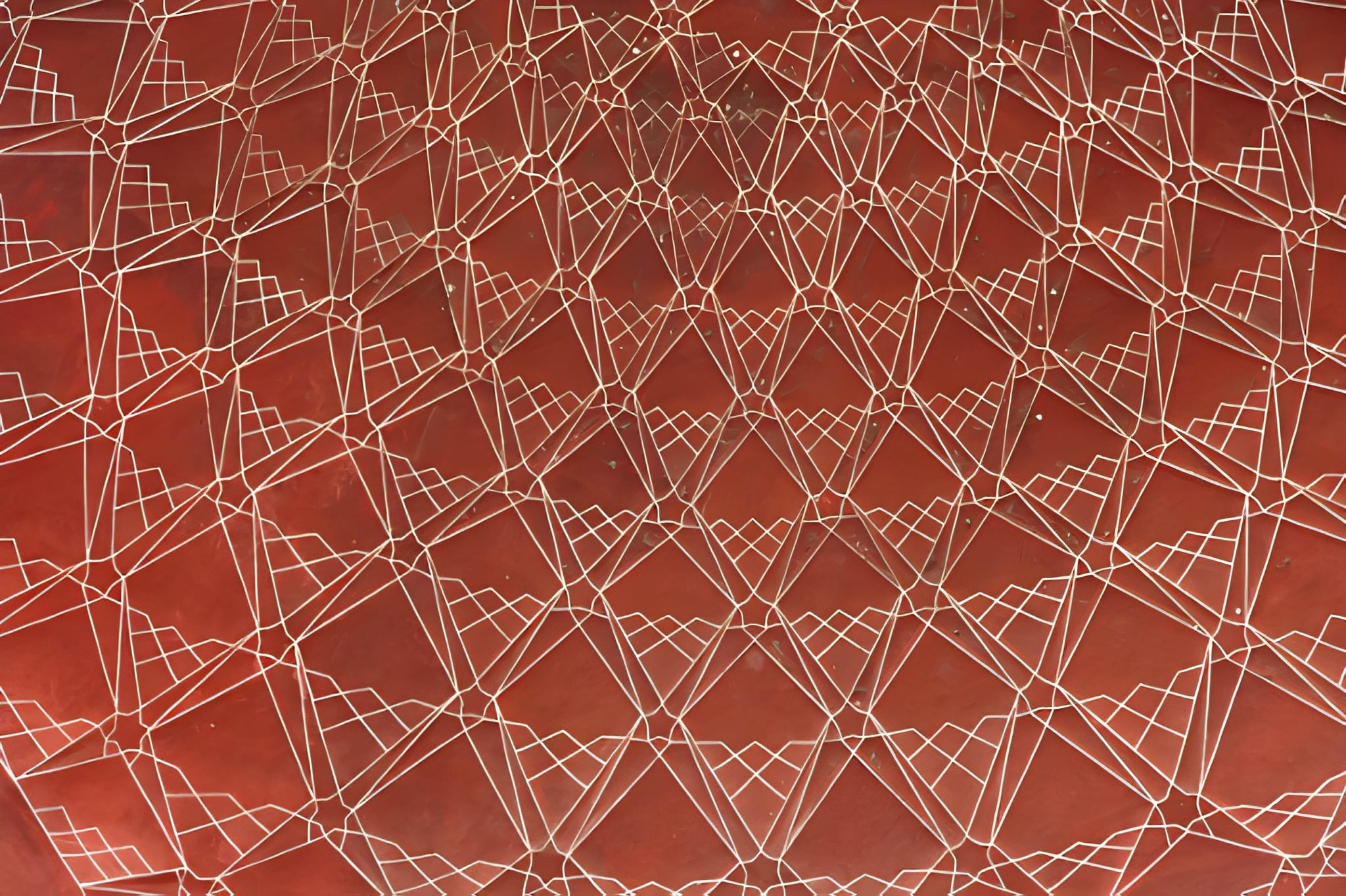
The Taj Mahal is celebrated for its breathtaking white marble, flawless symmetry, and timeless story of love. Beyond its grand architecture lies another layer of artistry that enchants visitors—the decorative techniques that bring its surfaces to life. Among these, incised painting stands out as a subtle yet intricate craft, turning plain stone into surfaces filled with geometry, color, and meaning.
What is Incised Painting?
Incised painting is an ancient decorative method where artisans carve fine designs into stone or plaster surfaces. After carving, they fill the lines with natural pigments or colored materials to create contrast and depth. This technique combines carving with painting, producing textures that engage both the eye and the touch.
In the Taj Mahal complex, especially in the red sandstone buildings around the main mausoleum, craftsmen used this method with remarkable finesse. They traced geometric designs, floral patterns, and arabesques, cutting into the stone to form precise outlines. Colored pigments then highlighted the symmetry and design.
Beauty in Geometry and Symmetry
The Mughals mastered geometry and proportion, and incised painting allowed them to extend these principles into decorative details. Vaults, arches, and domes across the Taj Mahal’s sandstone mosques and gateways display grids of stars, hexagons, and interlaced lines. The contrast of deep red sandstone with lighter pigments creates a rhythm that draws the eye across every surface.
This union of carving and color brought energy to flat walls and ceilings, ensuring that each corner of the Taj Mahal resonates with artistry—from the marble mausoleum to its surrounding structures.
Symbolism in the Patterns
The motifs in incised painting go beyond ornamentation; they carry cultural and spiritual meanings. Repeated stars and polygons symbolize infinity and the eternal nature of the divine. Vegetal motifs recall the gardens of paradise described in Islamic tradition. Together, these designs invite reflection and admiration, reminding visitors that the Taj Mahal embodies both love and spirituality.
Why It Matters Today
Visitors often focus on the marble mausoleum, but the incised paintings on the sandstone buildings reveal another side of Mughal genius. These details show that the Taj Mahal is not just a single structure but a harmonious ensemble where every wall, dome, and gateway contributes to its beauty.
Plan Your Visit
The Taj Mahal is more than one masterpiece—it is a collection of artistry, from incised painting and pietra dura to calligraphy and inlay work. Seeing these details in person is the only way to appreciate their brilliance.
Make your visit seamless by booking your tickets online at Ticketstajmahal.com. Discover not only the iconic dome but also the delicate art forms like incised painting that make this monument a wonder of the world.





Comment (0)