


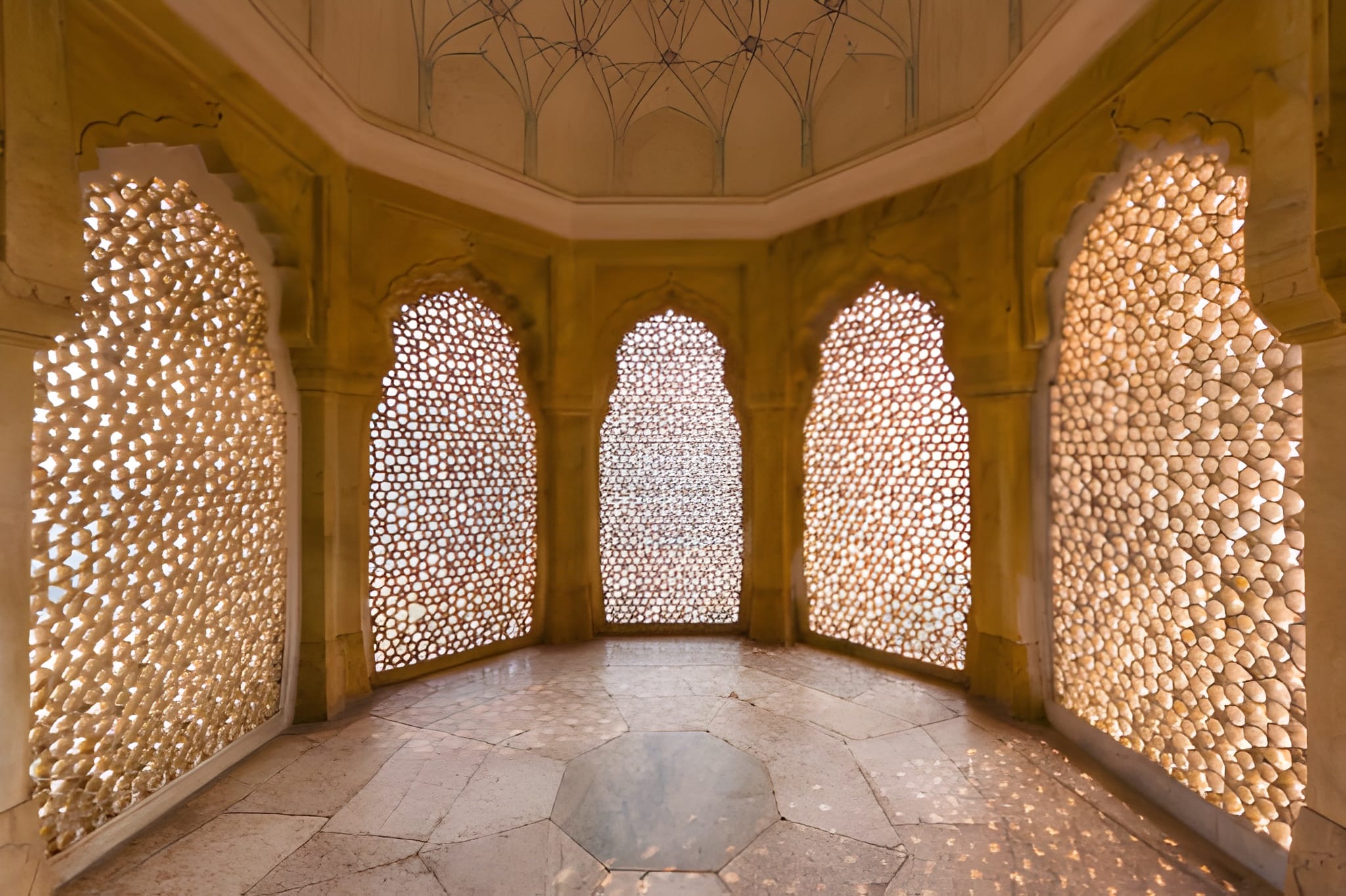
The Taj Mahal is celebrated not only for its grand white marble dome and symmetrical gardens, but also for the intricate details that make the monument a masterpiece of Mughal architecture. Among these details are the four central upper arches that form balconies or viewing areas, each adorned with exquisitely crafted jali screens. As a result, beauty and function blend seamlessly throughout the design of the Taj Mahal.
The Central Upper Arches
At the heart of the mausoleum, four grand arches rise above the central chamber. These arches lead to balconies that serve as elevated vantage points, offering sweeping views of both the interior and the surrounding grounds. In addition, each balcony frames a window decorated with an intricate marble jali, which further enriches the monument’s character.
Intricate Jali Windows
The word jali refers to finely carved lattice screens often seen in Mughal architecture. In the Taj Mahal, artisans shaped marble into breathtakingly delicate patterns. Consequently, the jalis do more than attract the eye—they also filter natural light into the interior chamber, creating a serene and spiritual atmosphere.
The craftsmanship of these screens highlights the artistry of the Mughal period. Furthermore, each jali achieves a perfect balance of geometry and elegance, turning solid stone into lace-like designs that leave visitors in awe.
Light and Space in the Main Chamber
Openings along the main axes of the inner wall hold the jali screens, connecting the exterior light with the central chamber. Because of this design, sunlight flows gently through the patterns, softly lighting the cenotaphs at the chamber’s core. The shifting glow adds depth and tranquility, transforming the marble hall into a space alive with light.
Moreover, visitors often describe this play of light and shadow as unforgettable. Watching sunlight pass through the jalis offers a moment of peace and reflection, and it remains one of the highlights of exploring the monument.
A Living Legacy of Mughal Art
The balconies and jali screens of the Taj Mahal stand as more than decorative features. Instead, they embody the Mughal vision of architecture as both art and innovation. These elements merge beauty with function, creating harmony between design and purpose.
Plan Your Visit
The Taj Mahal remains one of the world’s most awe-inspiring monuments, and its balconies, jali windows, and radiant interiors invite admiration at every step. Therefore, planning ahead ensures you can fully experience this wonder.Book your tickets easily at Ticketstajmahal.com and secure your entry to one of history’s most iconic landmarks.






Comment (0)