


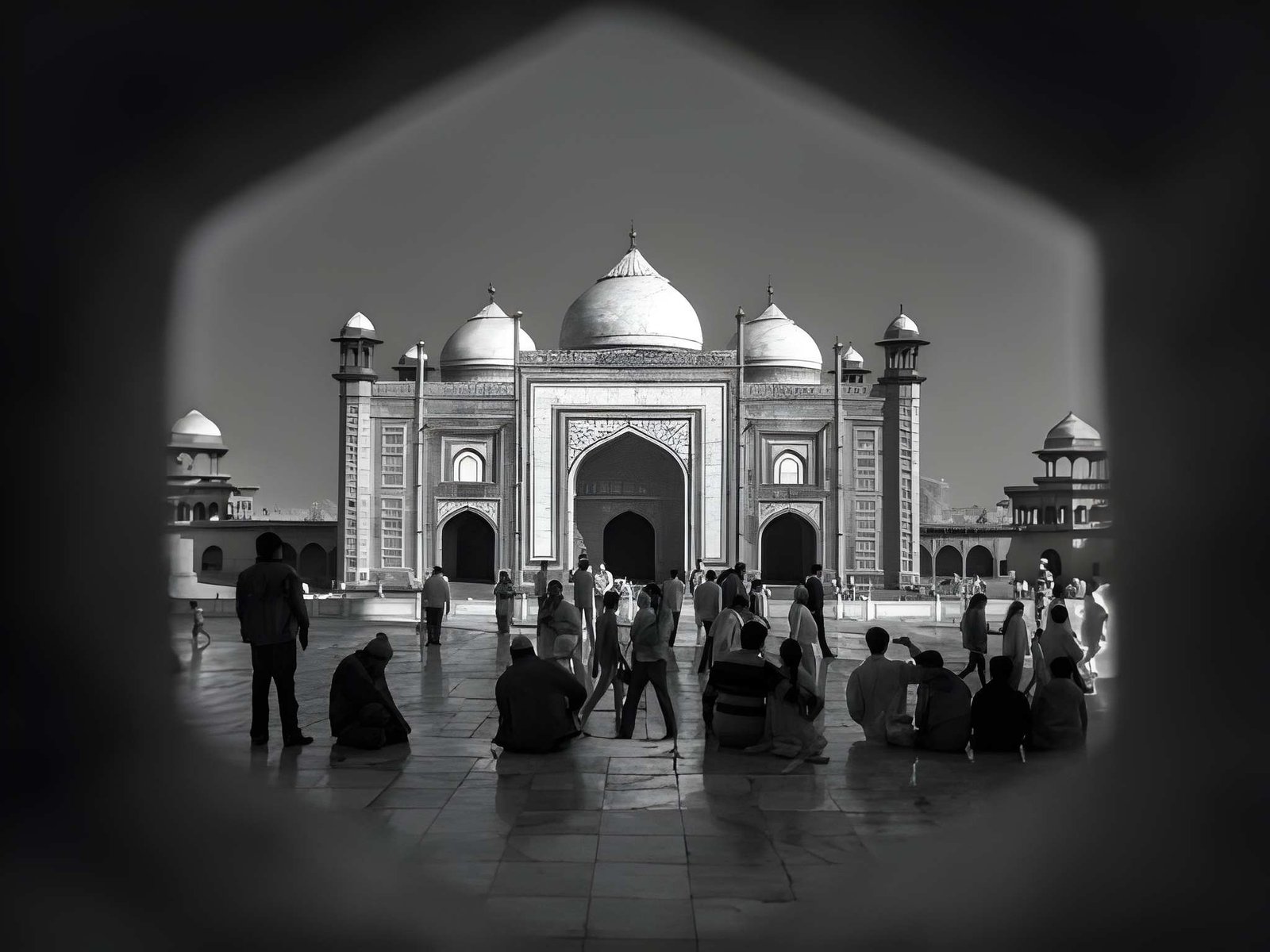
The Taj Mahal is admired for its beauty, symmetry, and timeless architecture. But beyond its white marble elegance lies a series of fascinating optical illusions that continue to amaze visitors from around the world. Built in the 17th century by Shah Jahan, this masterpiece was carefully designed to create visual effects that make every visit unforgettable.
Why the Taj Mahal Looks Different from Every Angle
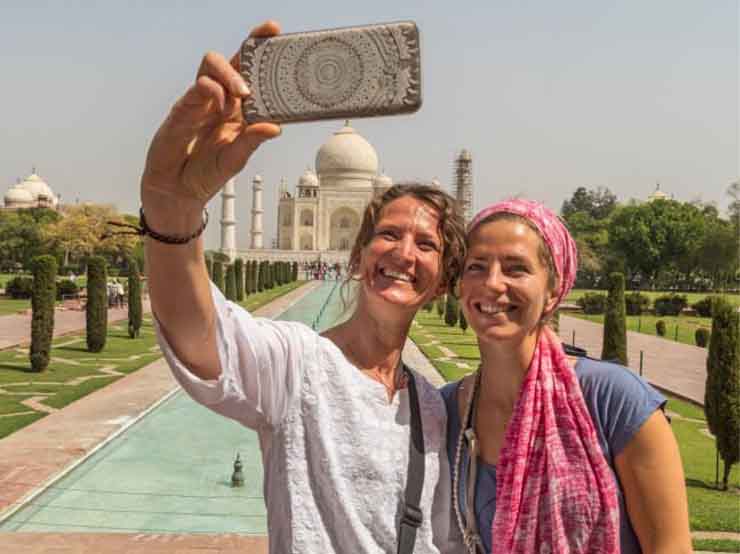
One of the most famous illusions of the Taj Mahal is how its size appears to change as you move closer. From the main entrance gate, the monument looks surprisingly small and distant. However, as visitors walk toward it, the Taj Mahal gradually appears larger and more majestic.
This effect was intentionally created by Mughal architects using perspective techniques. The large gateway frames the monument perfectly, manipulating the viewer’s sense of distance and scale.
The Minarets Lean Slightly Outward
At first glance, the four minarets surrounding the Taj Mahal seem perfectly straight. In reality, they are slightly tilted outward. This subtle architectural trick was designed for both safety and visual balance.
If an earthquake were ever to occur, the minarets would fall away from the main mausoleum rather than onto it. At the same time, the outward tilt creates the illusion of perfect vertical alignment when viewed from the center.
The Changing Colors of the Marble
Visitors often notice that the Taj Mahal changes color throughout the day. In the early morning, it appears soft pink. During midday, it becomes bright white, and under moonlight, it glows with a bluish silver tone.
This stunning visual effect comes from the reflective quality of the white Makrana marble used in its construction. Sunlight, weather conditions, and the surrounding sky all influence the monument’s appearance, making every visit unique.
Calligraphy That Always Looks Uniform
Another brilliant illusion can be seen in the Quranic calligraphy decorating the entrance. The letters near the top are actually much larger than those below. This clever scaling technique ensures the script appears evenly sized when viewed from the ground.
Without this adjustment, the higher text would seem smaller due to perspective distortion.
A Perfect Example of Mughal Engineering
The optical illusions of the Taj Mahal show the extraordinary skill of Mughal architects and craftsmen. Every detail was carefully planned to create harmony, balance, and wonder for visitors centuries later.
Whether it is the shifting colors, changing proportions, or hidden architectural tricks, the Taj Mahal remains one of the world’s greatest examples of artistic and engineering brilliance.
Plan Your Visit to the Taj Mahal
Experience these incredible illusions in person and explore the beauty of one of the world’s most famous monuments. Book your tickets through Tickets Taj Mahal for a smooth and memorable visit.





Comment (0)