


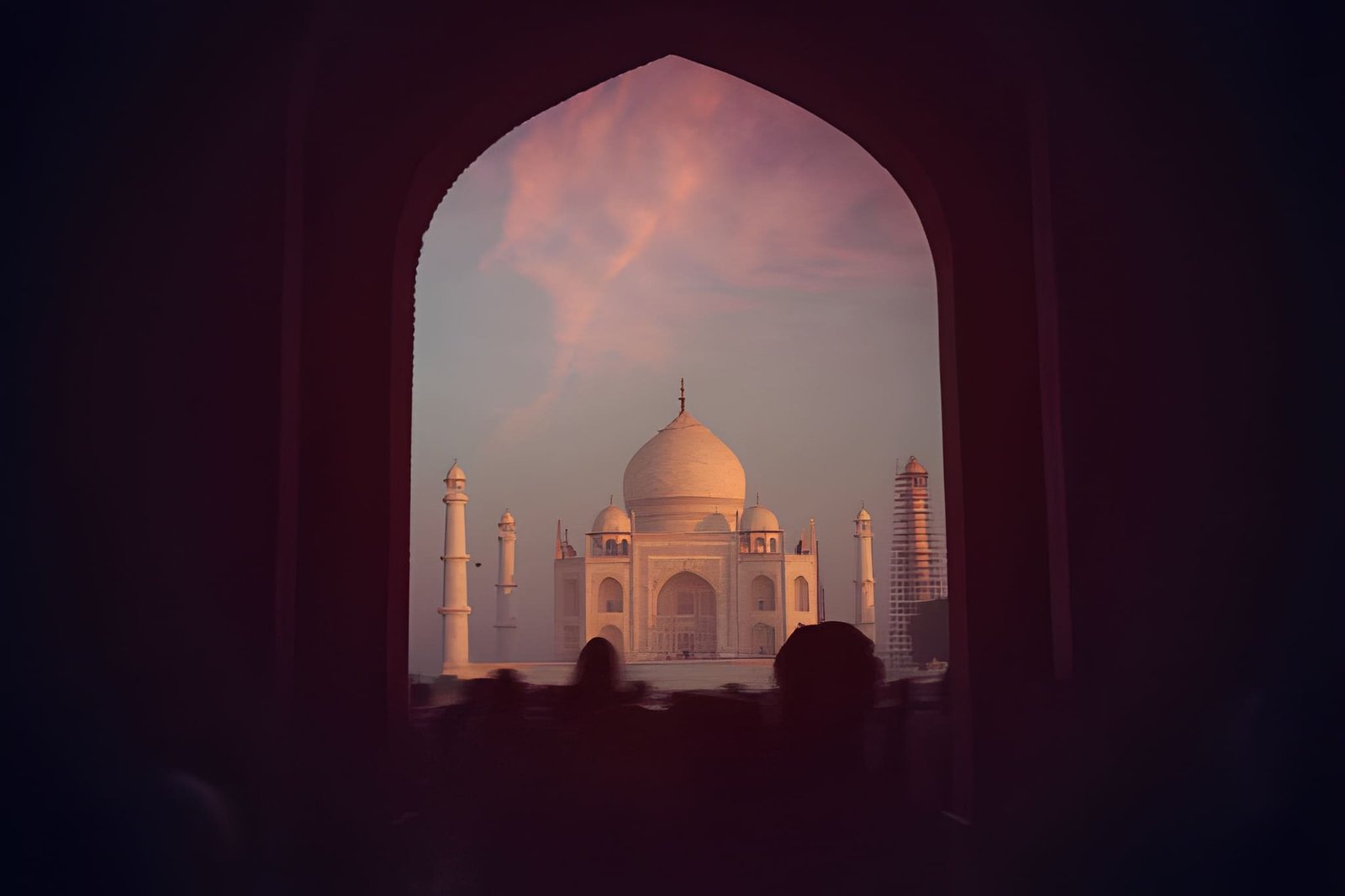
The Taj Mahal is more than a monument—it is a visual experience that feels crafted for cinema. From its dramatic symmetry to its shifting colors at sunrise and sunset, every angle of this architectural wonder tells a story worthy of the big screen.
Built between 1631 and 1648 by Mughal emperor Shah Jahan in memory of Mumtaz Mahal, the Taj Mahal remains one of the world’s most admired masterpieces of architecture.
A Perfect Scene of Symmetry
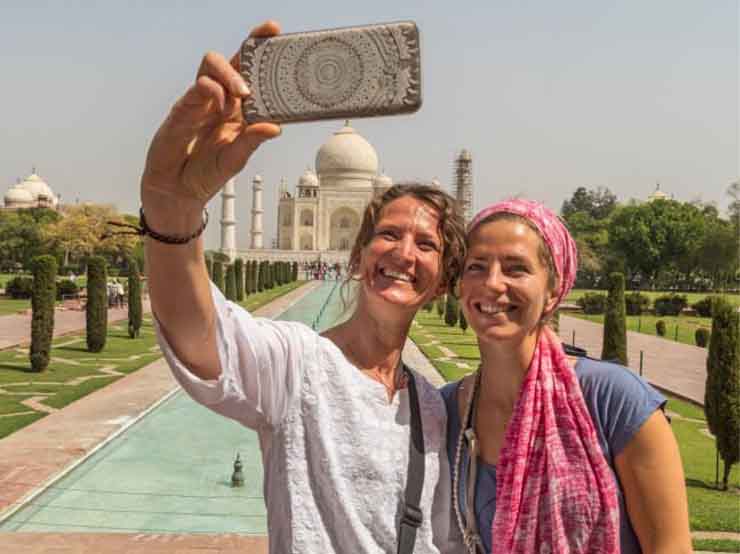
What makes the Taj Mahal so cinematic is its flawless balance. The monument’s reflection in the long water channels creates a frame that feels almost unreal. Directors, photographers, and travelers alike are drawn to its perfect composition because every shot looks intentional.
The white marble mausoleum stands at the center of a carefully planned Mughal garden, surrounded by pathways, fountains, and towering minarets. UNESCO describes it as a masterpiece of Indo-Islamic architecture celebrated for its harmony and craftsmanship.
The Magic of Light and Color
Few places in the world transform with light the way the Taj Mahal does. At dawn, the marble glows with soft pink tones. During midday, it shines bright white, and by sunset it reflects golden hues. Under moonlight, the monument becomes almost dreamlike.
This changing mood is one reason filmmakers and photographers consider the Taj Mahal a living canvas rather than just a building. The translucent marble reacts beautifully to natural light, creating scenes that look different every hour of the day.
A Story of Love That Feels Eternal
Every cinematic masterpiece needs emotion, and the Taj Mahal is built on one of history’s greatest love stories. Shah Jahan commissioned the monument after the death of his beloved wife Mumtaz Mahal, turning grief into timeless beauty.
That emotional depth is why visitors often describe the Taj Mahal as more than architecture. It feels personal, poetic, and unforgettable. The monument’s beauty is not only visual—it carries centuries of devotion and human emotion within its walls.
Architectural Details Worthy of a Close-Up
From intricate floral carvings to precious stone inlays, the Taj Mahal rewards close attention. The craftsmanship includes pietra dura artistry, Arabic calligraphy, geometric patterns, and detailed marble relief work that continue to inspire artists and architects worldwide.
Even the minarets were designed with artistic and structural precision, leaning slightly outward to protect the main tomb in case of earthquakes.
Experience the Taj Mahal Yourself
No photograph or film can fully capture the atmosphere of the Taj Mahal in person. Walking through its grand gateway and seeing the monument emerge for the first time is an unforgettable cinematic moment of your own.
Plan your visit and book your tickets easily through Tickets Taj Mahal to experience one of the world’s greatest architectural masterpieces firsthand.





Comment (0)