


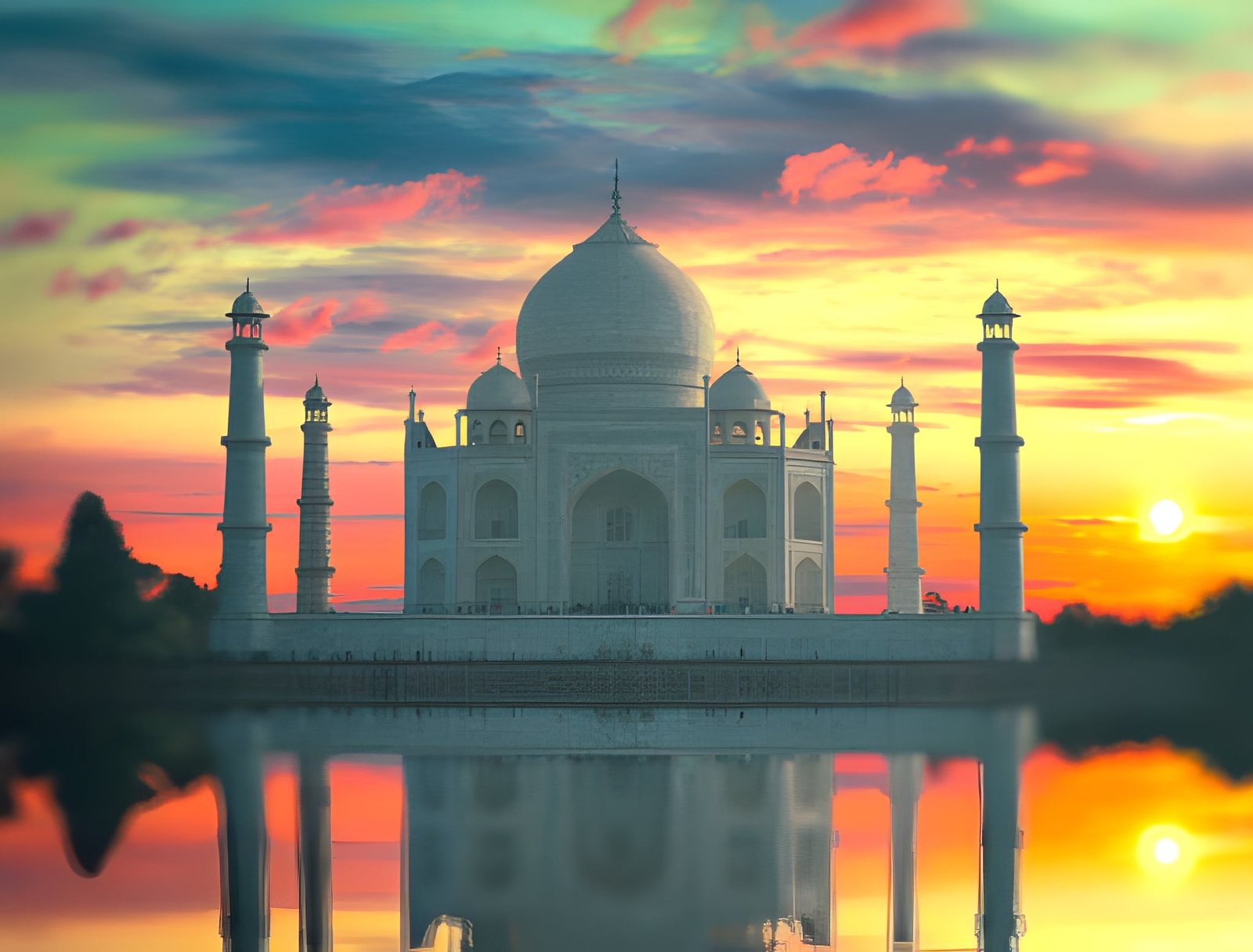
The Taj Mahal is one of the world’s most admired monuments, not only for its beauty but also for the way it seems to transform throughout the day. Visitors often notice that the marble appears soft pink at sunrise, bright white during the day, golden at sunset, and almost silver under moonlight. This magical effect is not an illusion—it is the result of remarkable craftsmanship, natural light, and the unique qualities of marble itself.
The Special Marble Behind the Magic
The Taj Mahal was built using high-quality white Makrana marble from Rajasthan. This marble is known for its purity and translucent quality, which allows light to penetrate slightly beneath the surface before reflecting back. Because of this, the monument reacts differently depending on the intensity and angle of sunlight.
Unlike ordinary stone, Makrana marble absorbs and reflects colors from the surrounding environment. The sky, clouds, dust, river mist, and even the clothing of nearby visitors can subtly influence the appearance of the monument.
Sunrise: A Soft Pink Glow
In the early morning, the first rays of sunlight create a gentle pinkish hue on the marble. At this hour, the atmosphere contains cooler tones and softer light, giving the Taj Mahal a calm and romantic appearance.
Many photographers and travelers consider sunrise the best time to visit because the monument feels peaceful and less crowded. The changing colors during dawn create a dreamlike atmosphere that perfectly matches the story behind its creation.
Midday: Brilliant White Beauty
As the sun rises higher, the Taj Mahal appears bright white and radiant. Strong daylight reflects directly off the marble, highlighting the monument’s symmetry and intricate carvings.
At this time, visitors can clearly see the delicate floral inlay work and the fine details crafted by Mughal artisans. The bright white appearance symbolizes purity and timeless elegance.
Sunset: Golden and Warm
During sunset, the marble begins to reflect warmer tones from the sky. Shades of gold, orange, and amber spread across the surface, creating a rich and dramatic effect.
This transformation happens because the sun’s rays travel through more of the Earth’s atmosphere in the evening, scattering cooler colors and leaving warmer tones behind. The result is one of the most breathtaking views in Agra.
Moonlight: Silver and Ethereal
On full moon nights, the Taj Mahal takes on a glowing silver-blue appearance. The soft moonlight reflects delicately from the marble, making the monument look almost unreal.
Moonlight viewing is limited and highly popular, offering visitors a rare opportunity to experience the monument in its most mystical form.
More Than a Monument
The changing colors of the Taj Mahal represent more than just science. Many historians believe the shifting appearance symbolizes changing emotions and the eternal nature of love. This blend of architecture, artistry, and natural light is one reason the Taj Mahal remains one of the most unforgettable landmarks in the world.
If you’re planning a visit to the Taj Mahal, book your tickets in advance through Tickets Taj Mahal for a smooth and memorable experience.






Comment (0)