


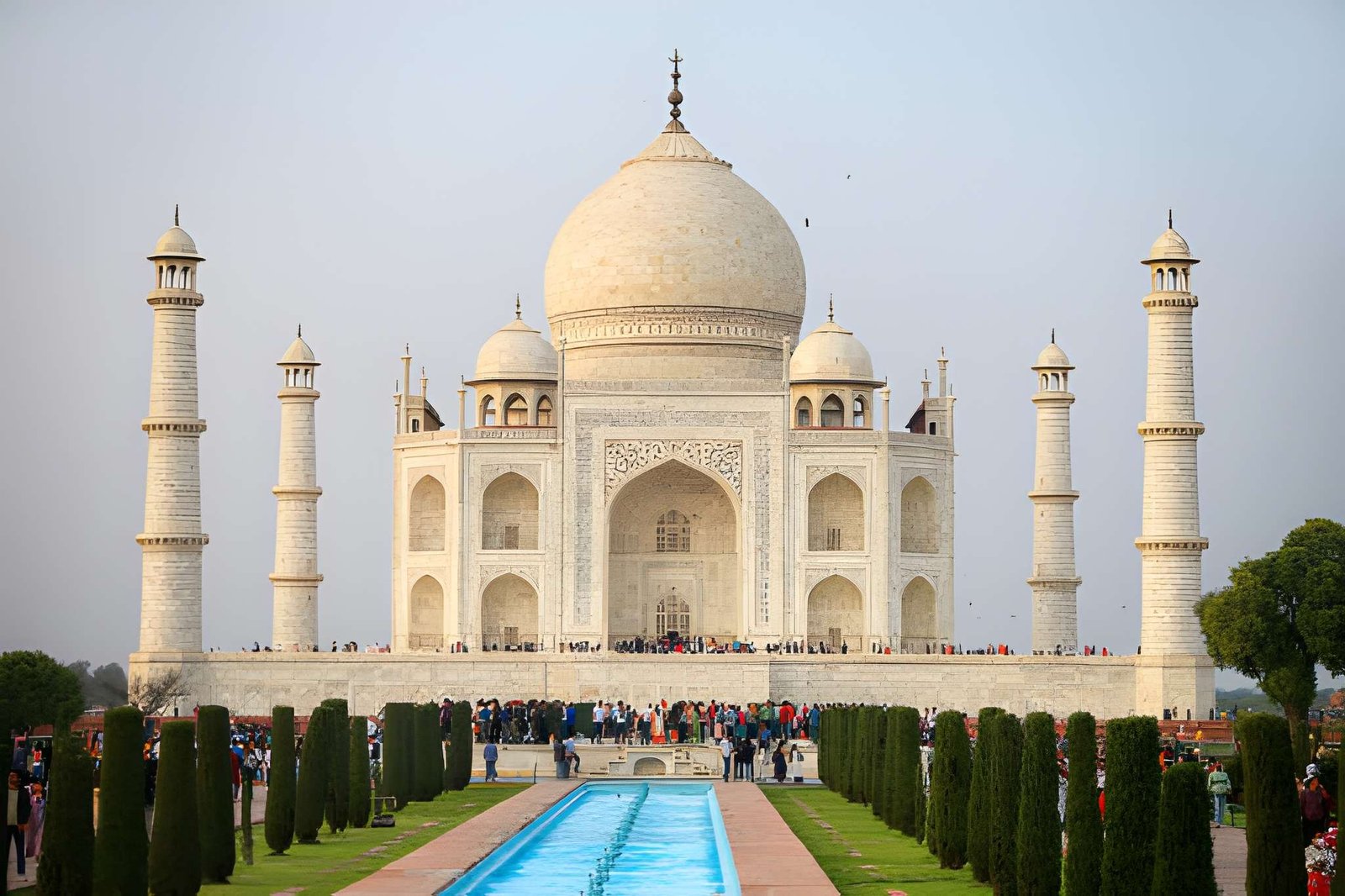
The Taj Mahal is more than a symbol of eternal love—it is also one of the greatest engineering achievements in history. Built in the 17th century by Mughal Emperor Shah Jahan, the monument has survived earthquakes, weather changes, pollution, and the passage of time for nearly 400 years. Its remarkable durability comes from intelligent design, advanced construction methods, and continuous preservation efforts.
A Strong Foundation Near the Yamuna River
One of the biggest reasons the Taj Mahal still stands strong is its deep and innovative foundation system. Since the monument was built near the Yamuna River, builders had to stabilize the soft riverbank soil. Engineers dug deep wells and filled them with stone and rubble to create a secure base for the structure. This method distributed the enormous weight evenly and prevented sinking over the centuries.
Earthquake-Resistant Minarets
The Taj Mahal’s four minarets are not perfectly straight—they lean slightly outward. This was an intentional engineering choice. In the event of an earthquake or collapse, the minarets would fall away from the central mausoleum rather than onto it. Even modern architects admire this clever safety feature today.
Durable Marble and Smart Architecture
The monument’s white Makrana marble is another reason for its longevity. This high-quality marble is known for its strength and weather resistance. The Taj Mahal’s massive dome and arches also help distribute structural pressure evenly throughout the building. Traditional Mughal architecture used geometric balance and symmetry to improve both beauty and stability.
Skilled Craftsmanship Ahead of Its Time
More than 20,000 artisans and workers contributed to the Taj Mahal’s construction over two decades. The monument combines Persian, Indian, and Islamic architectural styles with intricate stone inlay work called pietra dura. Even after centuries, much of the detailed craftsmanship remains intact because of the precision and quality of the original work.
Continuous Preservation and Restoration
The Taj Mahal survives today not only because of its original construction but also due to ongoing conservation efforts. Authorities regularly inspect the structure using modern technologies such as thermal imaging and LiDAR scans to identify cracks, seepage, or damage. Restoration work helps preserve the monument for future generations.
Experience the Timeless Wonder Yourself
Standing before the Taj Mahal is an unforgettable experience. From its glowing marble at sunrise to its incredible symmetry and rich history, every detail tells a story of genius craftsmanship and timeless beauty.
Plan your visit today with Tickets Taj Mahal and book your tickets easily online for a smooth and memorable journey to India’s most iconic monument.






Comment (0)