


The Taj Mahal stands as one of the world’s greatest architectural masterpieces. While millions admire its beauty, few notice the extraordinary craftsmanship techniques hidden within its walls. Mughal Emperor Shah Jahan commissioned the monument in the 17th century, and thousands of skilled artisans transformed his vision into reality.
The Delicate Art of Pietra Dura
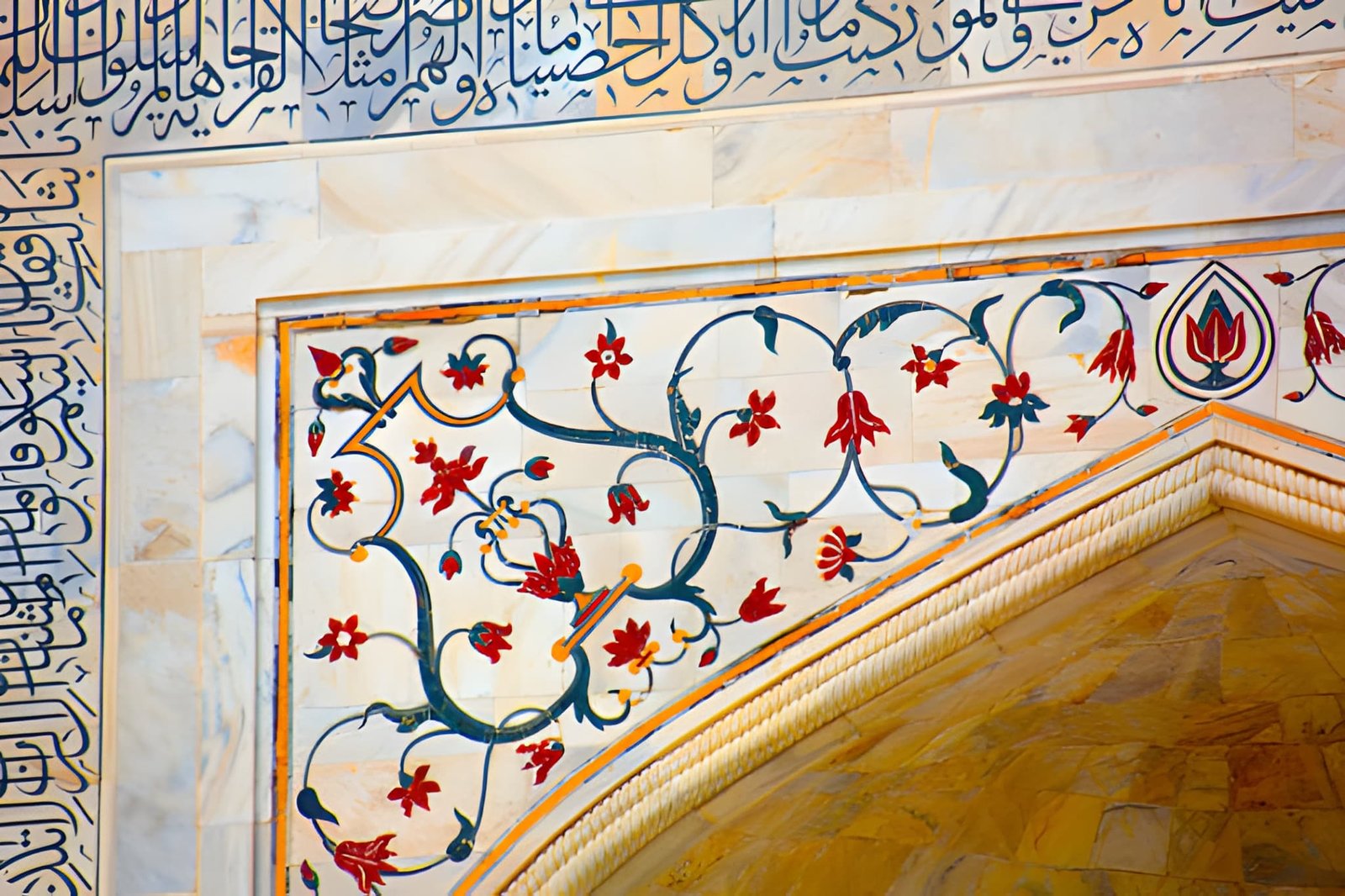
Artisans used a decorative technique called pietra dura, known in India as parchin kari, to create the Taj Mahal’s stunning floral patterns. They carefully cut semi-precious stones such as jade, turquoise, jasper, and lapis lazuli before fitting them into white marble by hand.
The craftsmen shaped every stone with incredible precision, allowing the colorful designs to blend seamlessly into the marble surface. Even after centuries, these intricate patterns continue to shine brightly.
Exceptional Marble Carving
The builders chose Makrana marble from Rajasthan because of its strength and luminous quality. Skilled craftsmen carved elegant flowers, vines, and geometric patterns directly into the marble walls.
They also created the famous marble jali screens from single slabs of stone. These delicate lattice screens allow soft natural light to enter the inner chambers while adding beauty and balance to the monument.
Calligraphy Designed for Perfection
Master calligrapher Amanat Khan Shirazi designed the Quranic inscriptions across the Taj Mahal. He used black marble inlays to create bold lettering against the white marble background.
The artists also applied a clever visual technique to maintain perfect proportions. They increased the size of the letters higher on the walls so visitors viewing them from below would see balanced and uniform text.
Brilliant Engineering and Symmetry
The Taj Mahal showcases remarkable architectural planning. Designers placed every major structure in perfect symmetry around the central tomb, creating harmony from every angle.
Engineers also tilted the four minarets slightly outward. This smart design helped protect the main mausoleum in case of earthquakes or structural damage.
The gardens, reflecting pools, domes, and archways work together to create one of the most balanced architectural designs in history.
A Timeless Symbol of Human Skill
The Taj Mahal represents far more than a monument of love. It highlights the extraordinary talent, creativity, and dedication of Mughal artisans and engineers. Every carving, stone inlay, and architectural detail reflects centuries of artistic excellence.
If you want to experience this masterpiece in person, visit Tickets Taj Mahal to book your tickets and plan your visit with ease.





Comment (0)