


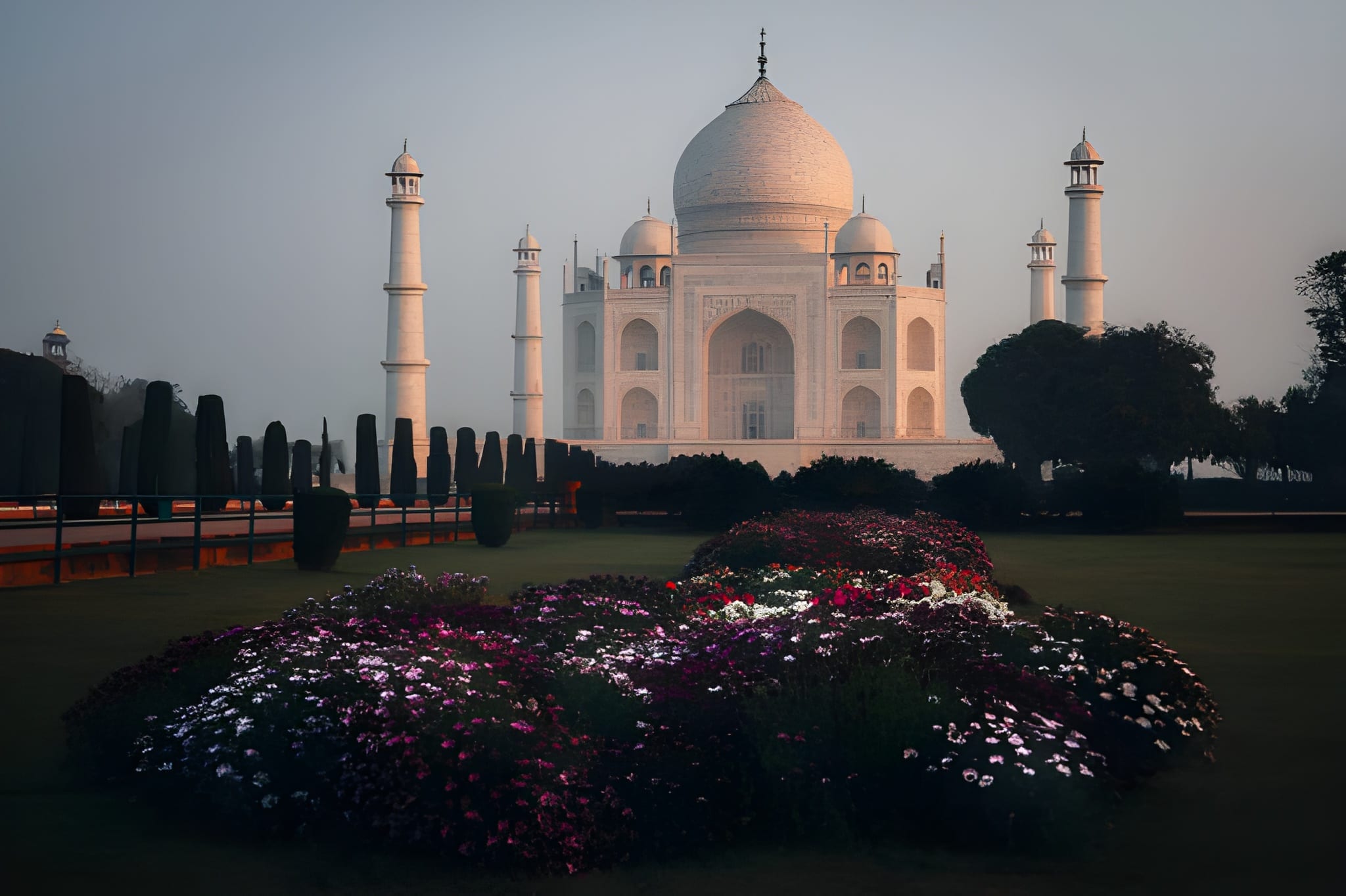
The Taj Mahal is not only a marvel of architecture but also a profound symbol of eternal love and paradise. Commissioned by the Mughal Emperor Shah Jahan in memory of his beloved wife Mumtaz Mahal, its planning and structure were designed with both precision and deep meaning. Every detail, from the gleaming white marble mausoleum to the carefully arranged gardens, reflects the idea of Mumtaz Mahal’s eternal home—a mansion in the garden of Paradise.
A Perfectly Balanced Layout
The Taj Mahal complex is a masterpiece of symmetry. At its heart lies the great mausoleum, crowned by a soaring dome and flanked by four elegant minarets. The entire building rests on a raised marble platform, elevating it above the landscape to emphasize its importance. This central structure symbolizes the eternal resting place of Mumtaz Mahal, envisioned as her celestial mansion.
The surrounding elements are no less significant. Mosques, guest houses, gateways, and courtyards are positioned with perfect harmony, creating a sense of divine balance. This precise geometry mirrors the Islamic concept of order in the universe and conveys the idea of eternal peace.
The Charbagh Gardens: A Reflection of Paradise
Stretching out from the mausoleum are the famed charbagh gardens, divided into four parts by water channels. These gardens are not merely decorative—they carry deep symbolic meaning. In Islamic tradition, Paradise is often described as a lush garden with rivers flowing beneath. The channels of water in the Taj Mahal’s garden represent these rivers, creating a vision of eternal bliss.
Each quadrant of the garden contains flowering plants, trees, and fragrant blossoms, reminding visitors of life, renewal, and spiritual beauty. The gardens serve as a serene passageway, leading visitors toward the mausoleum and deeper into the symbolic “Paradise on Earth.”
Beyond the Mausoleum: A Larger Vision
The design of the Taj Mahal extends far beyond the central tomb and gardens. The red sandstone mosque to the west and the guest house to the east provide both function and symmetry. The grand gateway, adorned with verses from the Quran, frames the mausoleum in the distance, inviting visitors to step into a sacred space.
Even the reflection pools play a part in the greater vision. When the dome and minarets shimmer across the still water, it creates an ethereal effect—as though the mansion of Mumtaz Mahal hovers both in heaven and on earth.
An Eternal Symbol of Love and Faith
Every element of the Taj Mahal is infused with meaning. Its white marble purity symbolizes the love between Shah Jahan and Mumtaz Mahal. Its symmetry and structure reflect divine harmony. And its gardens and waterways embody the eternal beauty of Paradise. Together, they transform the Taj Mahal into more than just a mausoleum—it is a timeless vision of heaven on earth, created to honor a queen.
If you’re planning to visit this wonder of the world, step into this symbolic mansion of Paradise yourself. Experience the symmetry, the beauty, and the spiritual calm that makes the Taj Mahal unlike any other monument.
Book your tickets now at Ticketstajmahal.com and witness firsthand the magnificence of this eternal masterpiece.





Comment (0)