


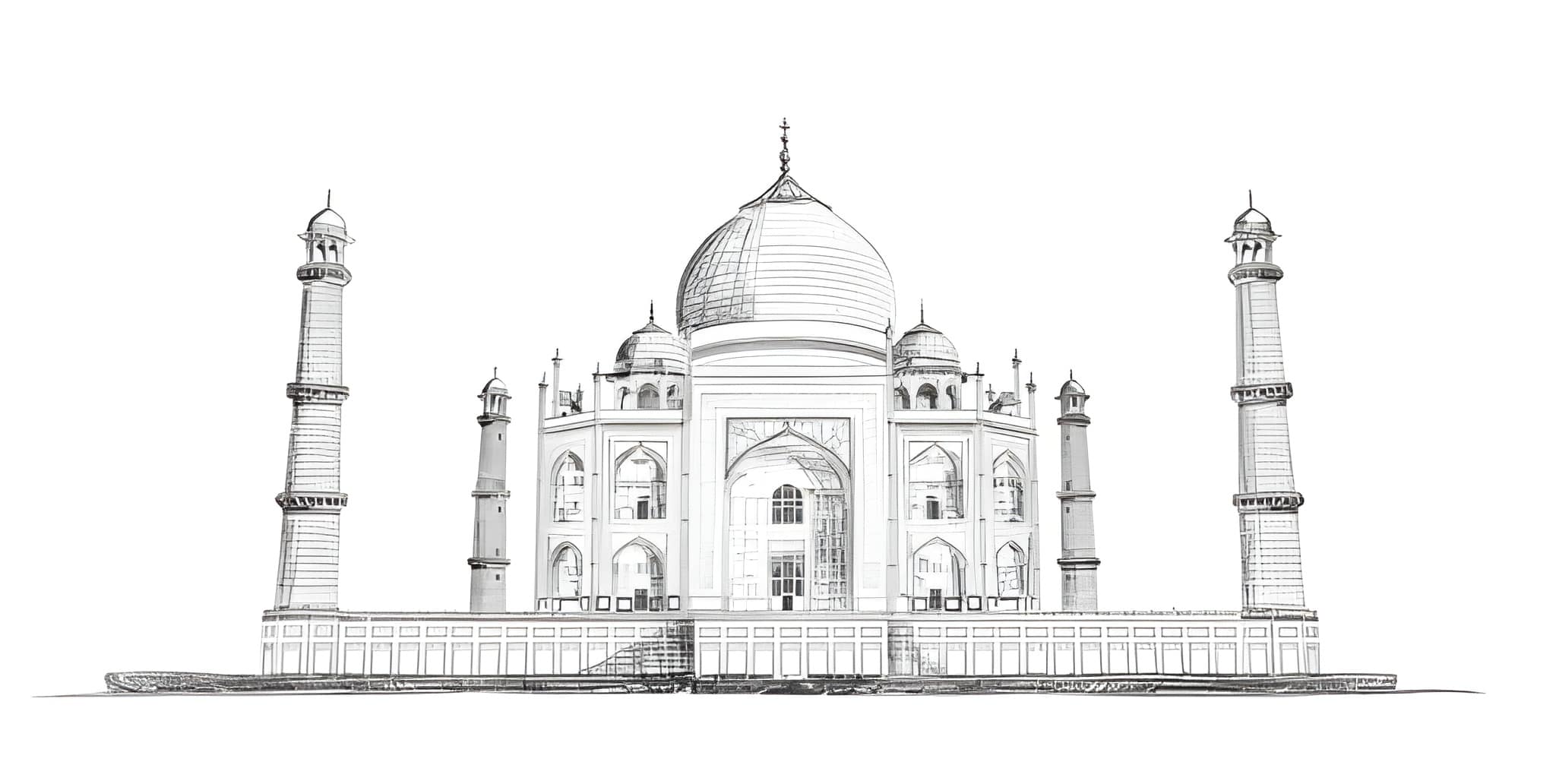
Few landmarks on Earth spark wonder like the Taj Mahal—India’s shining tribute to devotion, artistry, and perfect symmetry. Rising from the banks of the Yamuna River, this 17th-century monument blends poetry, architecture, and mathematics into a single breathtaking experience.
A Love Story Carved in Marble
In 1632, Mughal emperor Shah Jahan launched the creation of the Taj Mahal to honor his wife, Mumtaz Mahal. He poured his grief, love, and vision into the design. Every detail—from the grand dome to the delicate floral inlays—shows his determination to build a monument worthy of her memory. Visitors often describe the site not simply as a structure, but as a love story preserved in stone.
Geometry in Motion
The Taj Mahal mesmerizes travelers with its exceptional symmetry. Its architects relied on advanced geometry and precise proportions to achieve harmony across the entire complex. The central dome rises 73 meters, and four minarets frame the mausoleum with a slight outward tilt, a clever engineering choice that protects the main tomb.
When you enter through the main gate, the design immediately guides your eyes toward the marble masterpiece. The charbagh garden layout divides the grounds into four equal quadrants, symbolizing the garden of paradise. Even the smallest carvings follow geometric rules, proving that mathematics shaped the monument as much as beauty did.
Master Craftsmanship
Artisans sourced luminous white marble from Makrana in Rajasthan, choosing a stone that reacts beautifully to changing light. At sunrise it glows with soft pink tones, while sunset paints it gold. Under moonlight, the marble turns almost silver, creating a dreamlike atmosphere.
Inside the mausoleum, craftsmen used thousands of semi-precious stones—turquoise, jade, jasper, and lapis lazuli—to form intricate floral patterns. They employed the pietra dura technique, which requires patience, talent, and precision. Each motif demonstrates the extraordinary skill and discipline behind the monument.
A Symbol for the World
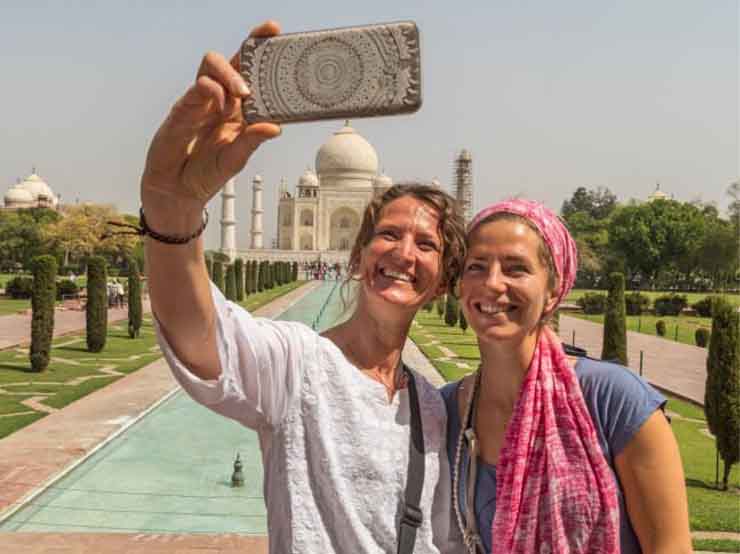
Millions of travelers from around the globe visit the Taj Mahal every year. Despite its fame, the moment you stand before it feels strangely intimate. The gentle sound of fountains, the symmetry of the gardens, and the reflection of the dome in the long pool create a quiet sense of awe. People often describe the experience as both peaceful and unforgettable.
Plan Your Visit
If the Taj Mahal sits on your travel list—whether for its history, its geometry, or its romance—you can make your visit even smoother by securing your entry in advance. Booking early helps you avoid long lines and frees you to enjoy the monument at your own pace.





Comment (0)