


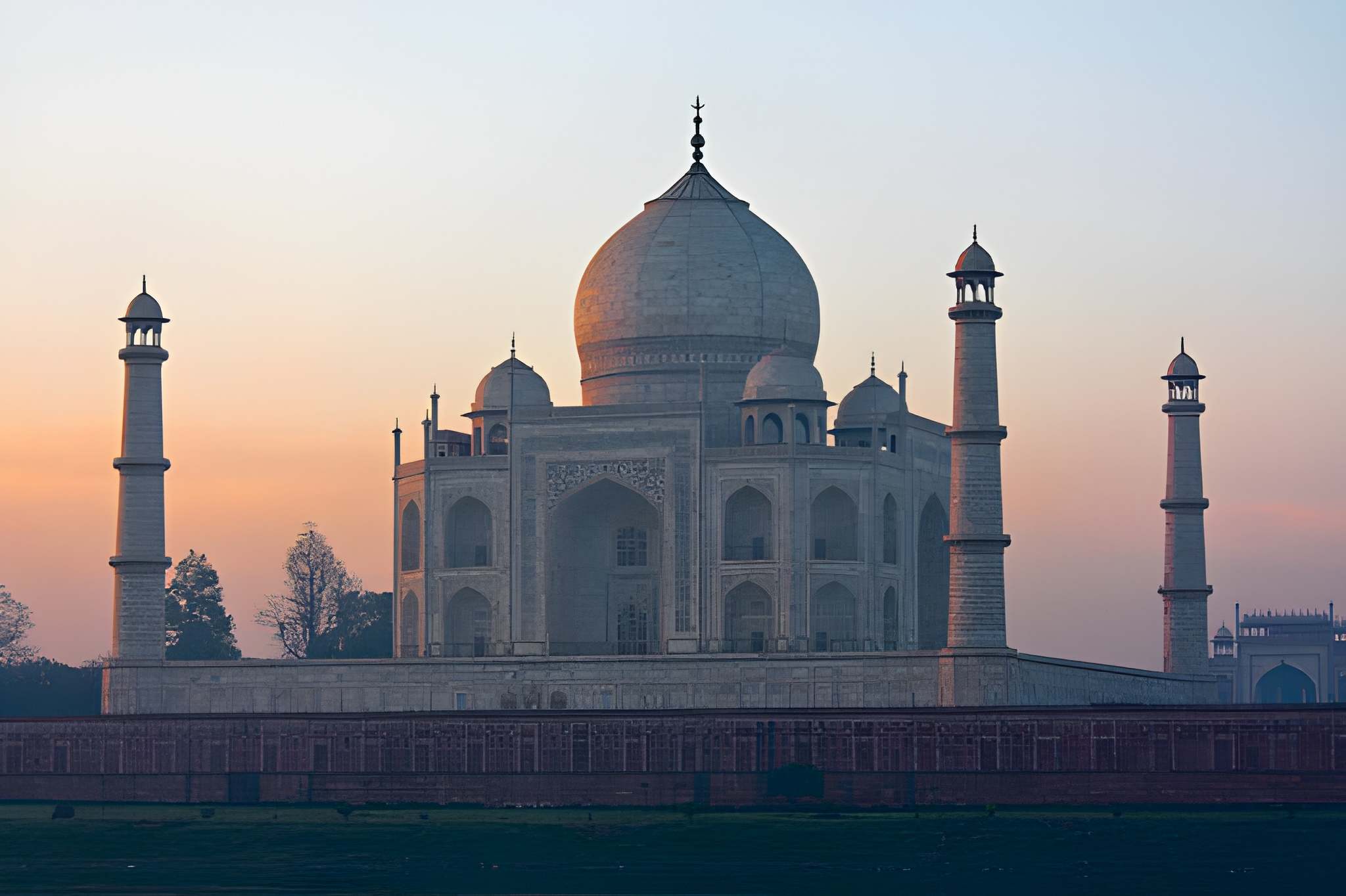
The Taj Mahal is one of the world’s most admired monuments—an architectural marvel, a symbol of eternal love, and a UNESCO World Heritage Site that attracts millions of visitors every year. But beyond its breathtaking beauty lies a world of secrets, unanswered questions, and fascinating legends. If you think you already know the Taj Mahal, these mysteries may surprise you.
1. The Changing Colors of the Taj
One of the most intriguing mysteries of the Taj Mahal is its ability to change color throughout the day. At sunrise, the monument glows with a soft pink hue. Midday brings out its bright, shining white marble, and at sunset, it appears golden. Some even say it turns bluish under the moonlight. While science attributes this to the reflective nature of Makrana marble and the play of light, many believe it symbolizes the changing moods of Mumtaz Mahal herself.
2. The Floating Dome Illusion
The massive dome of the Taj Mahal appears to float weightlessly above the structure. This isn’t magic—it’s masterful engineering. The architects used clever optical designs, such as a slightly raised foundation and perfect symmetry, making the dome look suspended from several viewpoints. Even today, architects study the Taj to understand the brilliance behind this optical illusion.
3. The Hidden Rooms and Sealed Chambers
Deep beneath the Taj are a series of underground chambers and long-sealed rooms. While restricted for preservation reasons, their purpose remains a mystery. Some theories suggest they may have been used for storing precious artifacts. Others believe they were intentionally closed off to protect delicate marble work from deterioration. Their true purpose, however, remains unknown.
4. The Black Taj Mahal Legend
One of the most famous legends claims that Emperor Shah Jahan planned to build a “Black Taj Mahal” across the Yamuna River as his own mausoleum. The idea likely arose from the dark reflection of the white Taj in the river at night. While no evidence has been found to fully support this theory, the myth continues to enchant visitors and historians alike.
5. The Perfectly Asymmetric Tomb
Although the structure of the Taj Mahal is famously symmetrical, the placement of the actual tombs inside is intentionally asymmetrical. Mumtaz Mahal’s tomb lies perfectly at the center—just as planned. But Shah Jahan’s tomb, built after his death, was placed beside hers, breaking the symmetry. Historians believe the original plan did not include Shah Jahan being buried there, supporting the Black Taj Mahal story.
6. The Calligraphy That Grows in Size
The Quranic verses carved on the main gateway appear uniform from top to bottom. But look closely, and you’ll see that the letters near the top are significantly larger than those at eye level. This clever technique creates the illusion of perfect proportion—even though the text spans several meters in height.
7. The Minarets That Lean Outward
Many people never notice that the four minarets surrounding the Taj Mahal tilt slightly outward. This was done deliberately so that, in the event of an earthquake, they would fall away from the main mausoleum, ensuring its protection.





Comment (0)