


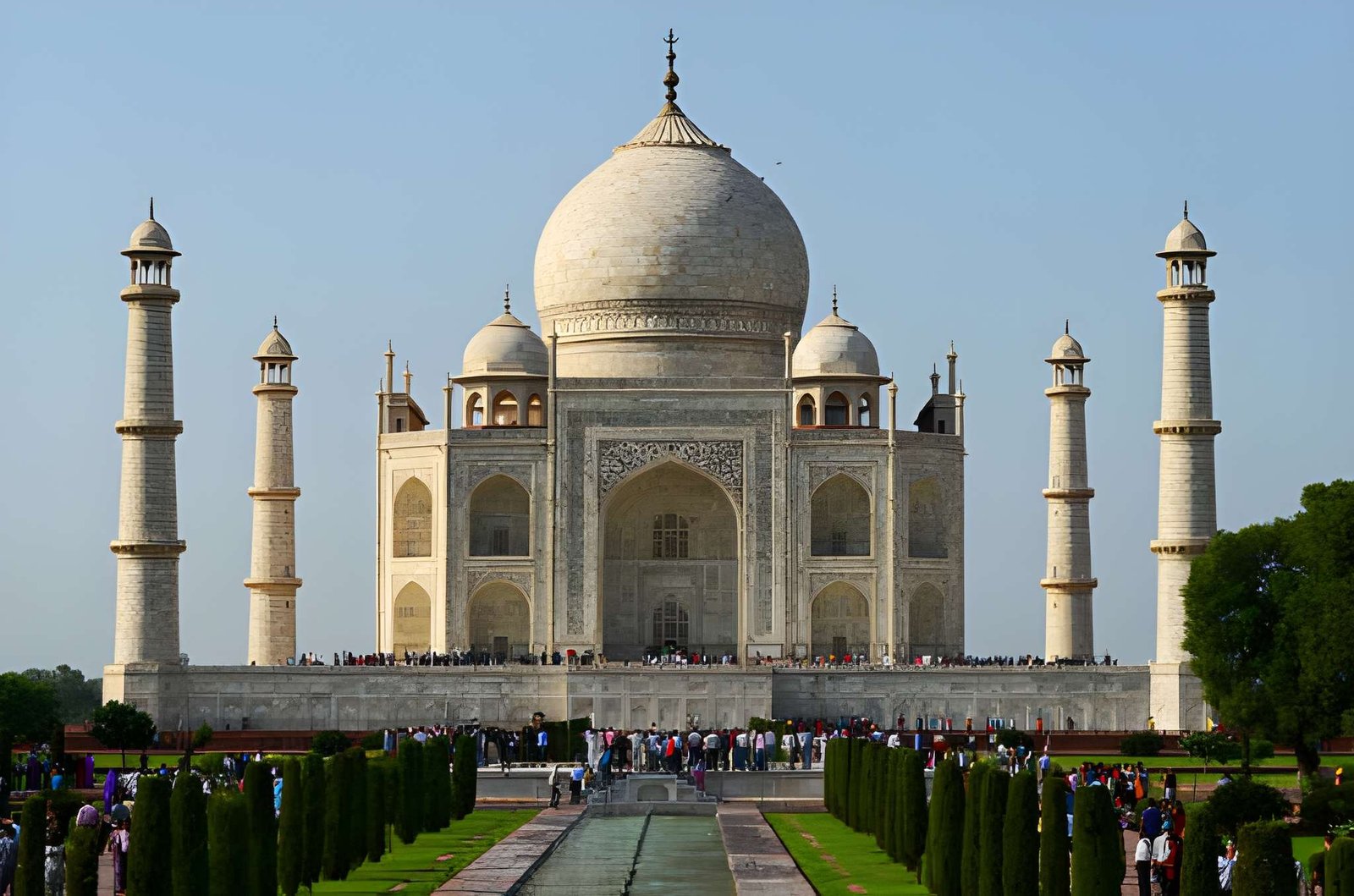
Few monuments in the world captivate visitors quite like the Taj Mahal. Known as a symbol of eternal love, it is equally admired for something less emotional but just as breathtaking: its near-perfect symmetry. But how did architects in the 17th century achieve such mathematical precision without modern technology? The answer is a fascinating blend of science, artistry, and clever design tricks.
A Vision Rooted in Balance
Commissioned by Shah Jahan in memory of his wife Mumtaz Mahal, the Taj Mahal was designed to represent harmony and paradise. Symmetry wasn’t just aesthetic—it was symbolic. In Islamic architecture, balance reflects divine perfection, and every element of the complex was planned with this philosophy in mind.
From the central dome to the gardens and reflecting pools, everything aligns along a precise axis. The mausoleum sits at the heart of a carefully proportioned layout, creating a sense of calm and order that visitors instantly feel.
Architectural Precision Without Modern Tools
The builders of the Taj Mahal relied on geometry and skilled craftsmanship rather than digital tools. Using grids, measuring ropes, and proportional formulas, they ensured that each section mirrored the other. The four minarets, for example, are placed at equal distances from the main structure, forming a perfect square around it.
Even more impressive is how the entire complex adheres to strict ratios. The height of the dome, the width of the façade, and the spacing of arches all follow consistent mathematical relationships, giving the monument its harmonious appearance.
The Illusion of Perfect Symmetry
Interestingly, the Taj Mahal isn’t perfectly symmetrical—at least not entirely. One of the most famous “imperfections” lies inside the mausoleum. While Mumtaz Mahal’s tomb is centered, Shah Jahan’s tomb was added later and slightly disrupts the symmetry.
However, from the outside, the illusion remains flawless. Architects cleverly designed perspectives and alignments so that the imbalance is nearly impossible to detect. Even the calligraphy on the entrance appears uniform, though the letters subtly increase in size as they go higher—an optical trick to maintain visual balance from ground level.
The Role of the Gardens and Reflection
The surrounding Mughal gardens play a crucial role in enhancing symmetry. Divided into four equal sections by water channels, they mirror the structure itself. The long reflecting pool creates a near-perfect reflection of the Taj Mahal, doubling its symmetry and amplifying its visual impact.
This design transforms the monument into not just a building, but a complete, immersive experience of balance and beauty.
Experience the Wonder Yourself
The mystery of the Taj Mahal’s symmetry is something best experienced in person. Photos can’t fully capture the precision, scale, and subtle illusions that make it so extraordinary.
If you’re planning a visit, explore guided tours and seamless booking options at https://ticketstajmahal.com to make your journey effortless and unforgettable.
The Taj Mahal remains a timeless example of how art and mathematics can come together to create something truly magical—where every detail, seen or unseen, contributes to its perfect harmony.






Comment (0)