


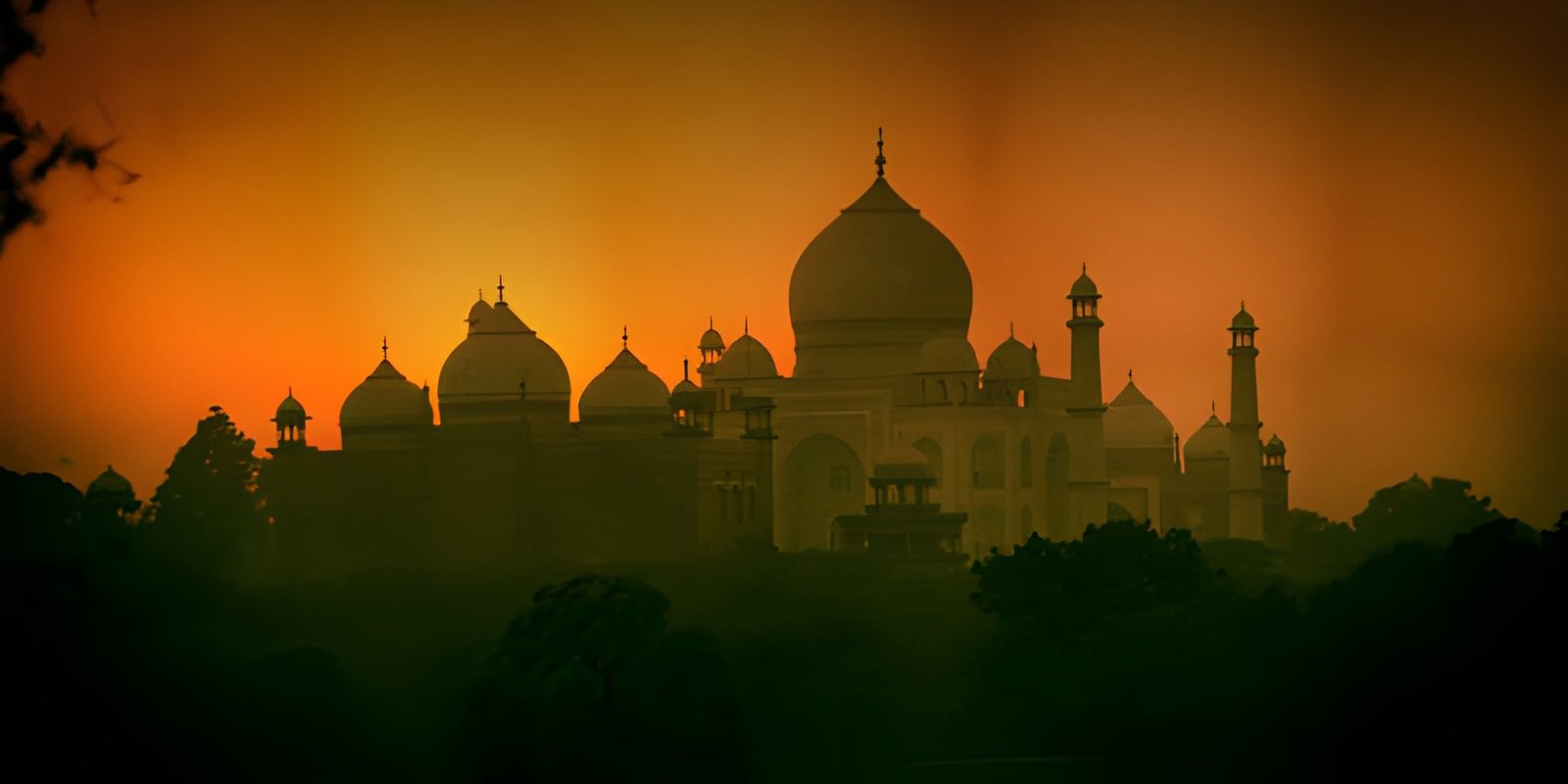
The Taj Mahal is more than a symbol of love — it is a masterpiece of light and architecture. One of the most fascinating things about this world-famous monument is how its appearance changes throughout the day. From soft pink tones at sunrise to glowing gold at sunset, sunlight creates a magical transformation that leaves visitors amazed.
The Magic of Makrana Marble
The Taj Mahal was built using pure white Makrana marble, known for its reflective and slightly translucent qualities. This special marble interacts beautifully with natural light, allowing the monument to appear in different shades depending on the time of day.
The marble does not actually change color. Instead, the changing angle and intensity of sunlight alter the way our eyes perceive the monument.
Sunrise: A Soft Pink Glow
Early in the morning, the Taj Mahal often appears pinkish or light orange. This happens because the sun is low on the horizon, and its light passes through more layers of the atmosphere. Warmer tones such as red and orange become more visible, creating a gentle and romantic glow across the marble surface.
This is one of the most peaceful times to visit, with fewer crowds and cooler weather adding to the experience.
Midday: Brilliant White Beauty
By noon, the Taj Mahal looks bright white and dazzling. The sunlight is more direct, allowing the marble to reflect the full spectrum of light evenly. This is when visitors can best admire the monument’s intricate carvings, floral patterns, and precious stone inlays.
The strong daylight highlights the architectural perfection that has made the Taj Mahal one of the world’s most admired monuments.
Sunset: Golden and Dreamlike
As evening approaches, the Taj Mahal transforms once again. The setting sun casts warm golden and amber tones across the marble, giving the monument a dreamy appearance. Dust particles and atmospheric conditions enhance these rich colors, making sunset one of the most photogenic moments of the day.
Many travelers consider sunset the most magical time to experience the monument.
Moonlight: A Silver Glow
On full moon nights, the Taj Mahal takes on a silvery-blue appearance. The cool tones of moonlight reflected on the white marble create an almost unreal atmosphere. This rare experience is limited to selected nights each month and is highly sought after by visitors from around the world.
Why Every Visit Feels Different
Weather, seasons, and even air quality can influence how the Taj Mahal looks on any given day. Foggy mornings, monsoon clouds, or winter sunlight each create a unique visual effect.
This constant transformation is part of what makes the Taj Mahal so unforgettable. No two visits are ever exactly the same.
If you want to witness the breathtaking beauty of the Taj Mahal at different times of the day, book your visit in advance with Tickets Taj Mahal.






Comment (0)