


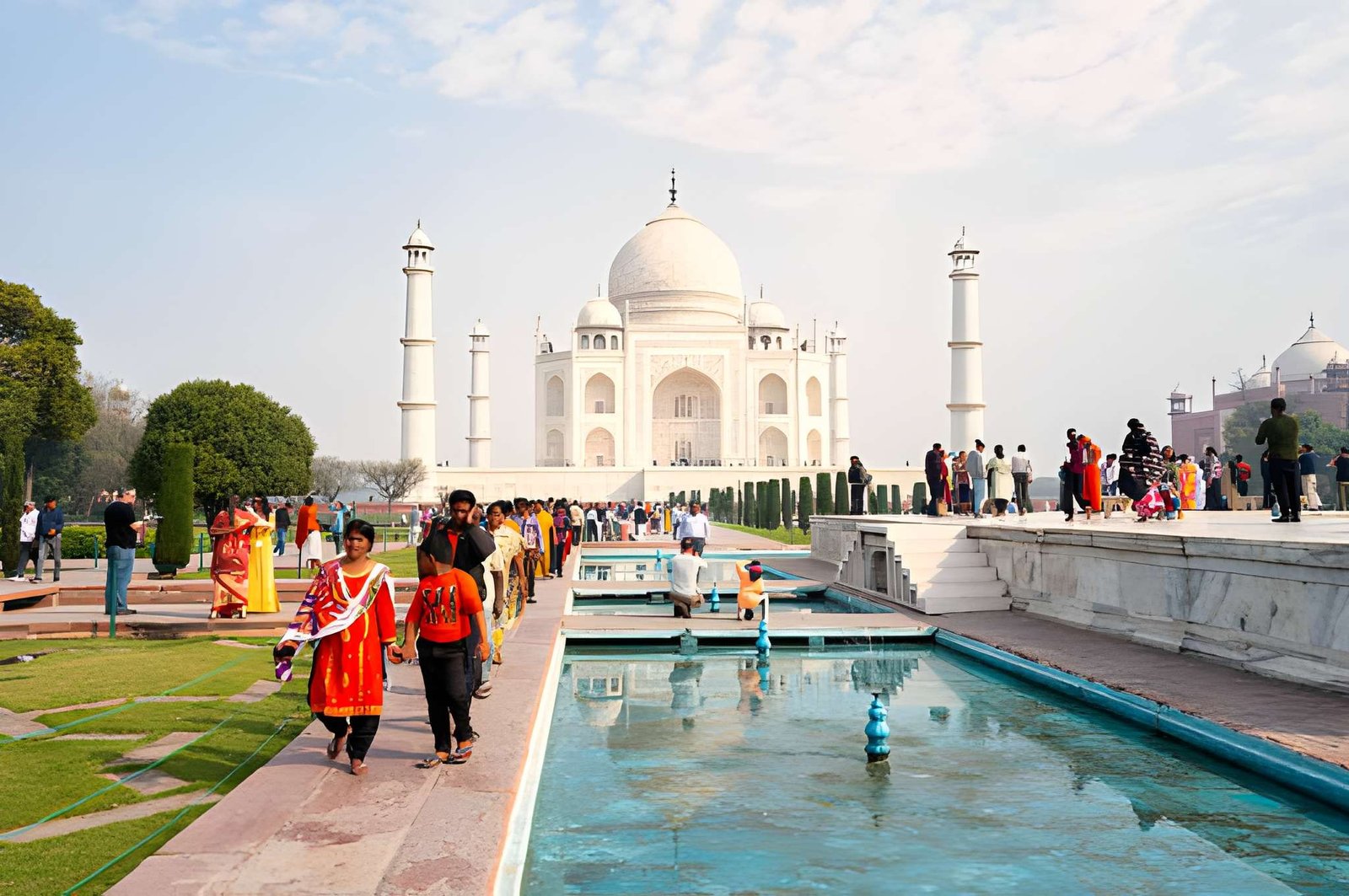
The Taj Mahal is one of the most visited landmarks in the world—and with that fame comes a serious challenge: managing millions of visitors without damaging its delicate beauty.
With nearly 6.9 million visitors annually, the monument faces constant tourism pressure that requires careful planning, strict rules, and innovative solutions.
The Scale of the Challenge
On an average day, the Taj Mahal welcomes between 15,000 and 20,000 visitors, with numbers rising dramatically during peak seasons and holidays.
At times, daily footfall can exceed 60,000 people, creating congestion, long queues, and potential risks to both visitors and the monument itself.
Such high volumes don’t just affect visitor experience—they also threaten the marble structure through wear, pollution, and physical strain.
Smart Visitor Limits and Time Control
To prevent overcrowding, authorities have introduced visitor caps and time restrictions. In many cases, tickets are valid for only three hours, encouraging a steady flow of tourists instead of overcrowding at peak times.
This system helps maintain balance: visitors still get to enjoy the monument, while the site avoids dangerous overcrowding.
Structured Entry and Movement
The Taj Mahal operates through designated entry gates and controlled pathways to guide the flow of people.
Vehicles are restricted near the monument, and visitors must walk or use electric transport from parking zones.
This reduces pollution and ensures smoother movement inside the complex—critical for preserving the white marble that defines its beauty.
Pricing Strategies That Manage Demand
A tiered ticket pricing system also plays a role in managing crowds. Domestic visitors pay a lower fee, while international tourists pay more, helping regulate demand and generate funds for conservation.
Additionally, premium tickets and add-ons allow visitors to access certain areas, further distributing crowds across the site.
Conservation Meets Tourism
Tourism revenue is essential for maintaining the Taj Mahal, but it must be balanced carefully.
Large crowds can accelerate wear and tear, making conservation efforts—such as cleaning the marble and limiting exposure—more important than ever.
Experts continue to stress that managing visitor numbers is key to preserving the monument for future generations.
Tips for a Better Visit
For travelers, understanding how the Taj Mahal manages tourism can make a big difference in your experience:
- Visit early in the morning for fewer crowds
- Avoid weekends and holidays when possible
- Book tickets in advance to skip long lines
- Plan your visit within the allowed time window
With millions visiting each year, a little planning goes a long way.
Plan Ahead for a Hassle-Free Experience
The Taj Mahal’s ability to handle massive tourism is impressive—but your experience depends on how well you plan.
To avoid long queues and secure your preferred time slot, book your tickets in advance here:
👉 https://ticketstajmahal.com
By planning ahead, you’ll spend less time waiting—and more time enjoying one of the world’s greatest wonders.





Comment (0)