


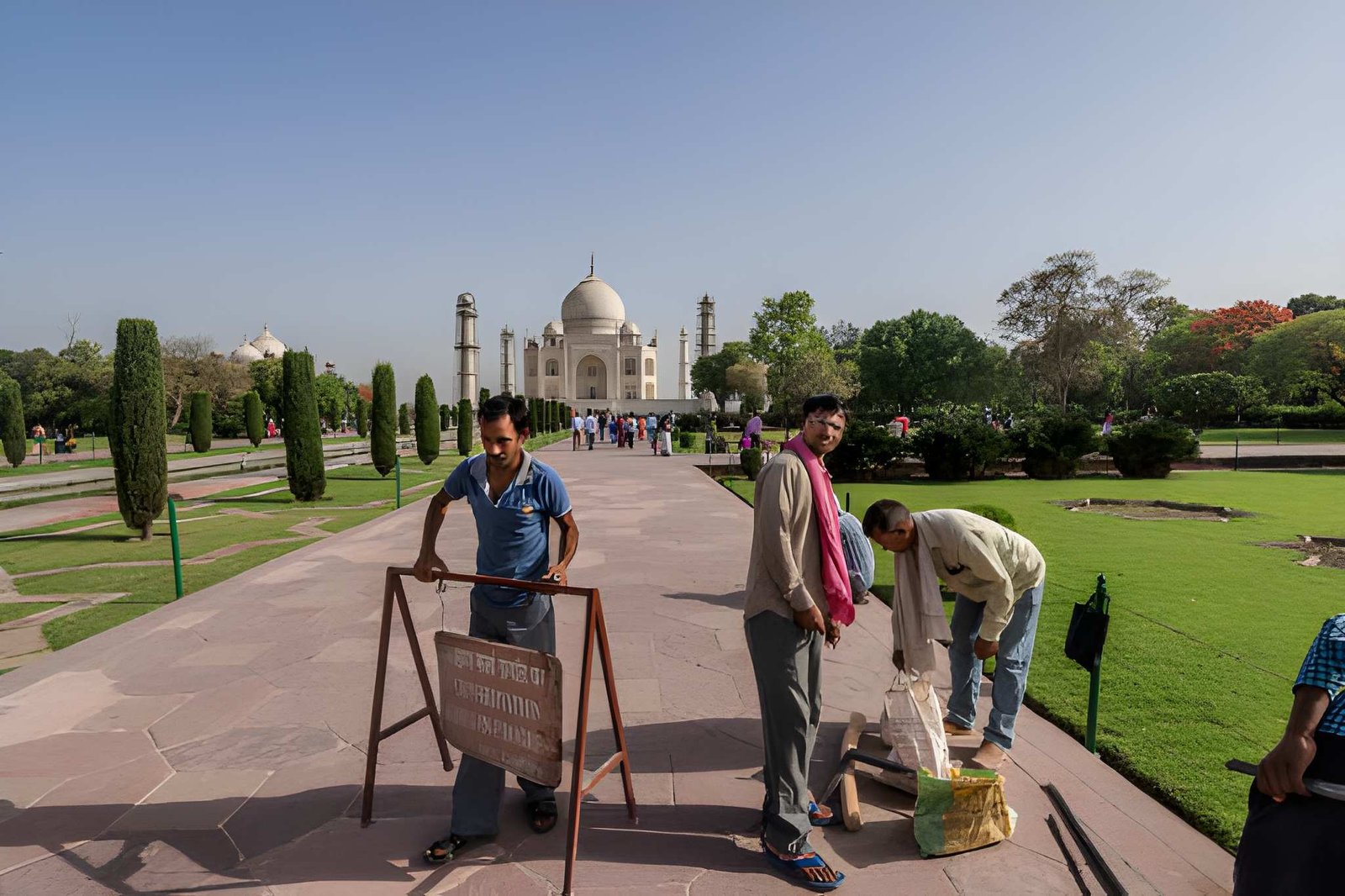
A Living Economy Around the Taj Mahal
The Taj Mahal is not only a world wonder but also the heart of a vibrant local economy. Around this UNESCO landmark, thousands of small businesses thrive daily by serving visitors from across the globe. From handcrafted souvenirs to guided tours, the monument supports an entire ecosystem of entrepreneurship in Agra.
Handicrafts and Artisan Businesses
One of the most significant contributors to the local economy is the handicraft industry. Agra is famous for its marble inlay work, inspired by the same craftsmanship seen in the Taj Mahal itself. Local artisans create miniature Taj replicas, jewelry boxes, coasters, and decorative items using traditional Mughal techniques passed down through generations.
Markets around Taj Ganj, Sadar Bazaar, and Fatehabad Road are filled with small shops where families run businesses selling marble art, leather goods, carpets, and embroidered textiles. These crafts not only preserve heritage but also provide sustainable livelihoods to thousands of artisans.
Street Markets and Local Vendors
Outside the Taj Mahal gates, small vendors line the streets offering souvenirs, snacks, and cultural items. These micro-businesses play a vital role in the visitor experience. Tourists often purchase handmade goods such as keychains, small marble statues, and textiles, directly supporting local families.
Markets like Kinari Bazaar and Sadar Bazaar add to this ecosystem by offering a mix of traditional and modern products, making them essential stops for visitors exploring Agra beyond the monument.
Tourism-Driven Entrepreneurship
Tourism fuels a wide range of small enterprises including tuk-tuk drivers, tour guides, photographers, and local cafés. Many families depend entirely on daily tourist flow for their income. Hotels, guesthouses, and travel services near the Taj Mahal also provide employment opportunities to residents in the area.
Even food vendors benefit significantly, selling local specialties such as snacks and sweets that give tourists a taste of Agra’s culture.
Challenges and Resilience
Despite their importance, many small businesses face challenges such as regulatory restrictions, competition, and fluctuating tourist numbers. However, the resilience of local entrepreneurs continues to keep this ecosystem alive. Many artisans still work from family-run workshops, ensuring that traditional craftsmanship survives in the modern tourism economy.
Supporting Local Businesses Through Tourism
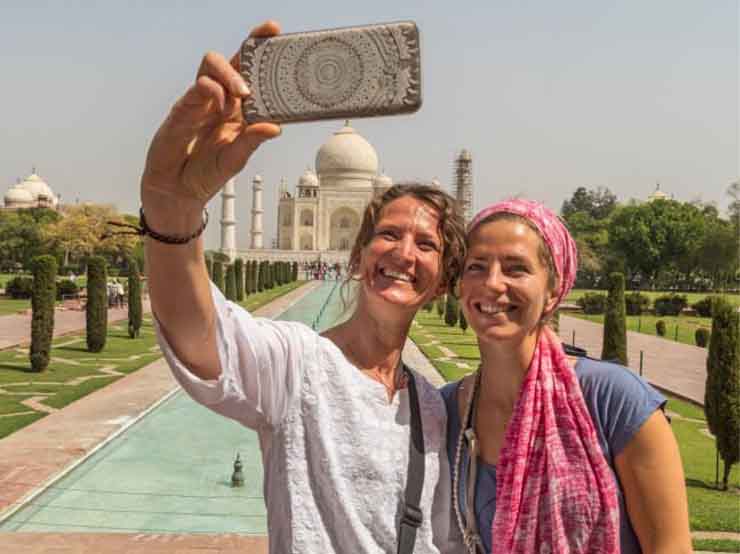
Every visit to the Taj Mahal directly contributes to sustaining these small businesses. By purchasing authentic handmade products and using local services, tourists help preserve cultural heritage and support community livelihoods.
To make your visit memorable and support local experiences, plan your journey and book tickets easily here:
👉 https://ticketstajmahal.com





Comment (0)